
Bigger Isn’t Always Better: The Warehouse Space Dilemma
As humans, we’re natural space conquerors. Give us a new house, and within weeks, the spare room is a “gym/office/storage/guest bedroom.” Move to a bigger house? Suddenly, you “need” that second sofa and a life-size beanbag chair shaped like a panda. It’s the same story with warehousing, but the consequences go beyond just awkward home décor. Let’s talk about the common warehousing blunder: poor space planning. The Tale of the Expanding Warehouse Picture this: Company XYZ starts with a small warehouse. It’s cramped, sure, but processes are tight. Picking routes are short, everyone knows where to find inventory, and the warehouse has personality. But success strikes (yay!) and operations outgrow the space. Panic ensues, followed by an excited move to a shiny, bigger warehouse. It’s a logistical glow-up, complete with extra aisles and new forklifts. Then comes the first hiccup. The space planning meeting. Someone grabs a marker and enthusiastically sketches a layout where 100% of the space is utilized because, well, why waste it? What follows is chaos: Why Does This Happen? Blame it on human nature. Give us space, and we will fill it. It’s territorial instinct. Companies forget that the goal isn’t to stretch operations across every square foot but to use space efficiently. Think of it like a kid with a new backpack. No matter how much room there is, they’ll cram in unnecessary items: three juice boxes, a rock collection, and an emergency pack of stickers. Warehouses, it seems, aren’t much different. Real Talk: Planning for Efficiency Here’s a fun fact: Most warehouse operations can function with 60-70% of the space they occupy—if designed smartly. Yet, many companies spread everything out just because they can. The result? Higher operational costs, slower workflows, and a space utilization report that’s more depressing than your last dental visit. Imagine moving into a 5-bedroom house, only to place your bed in the middle of the kitchen and your TV in the garage. Looks ridiculous, right? Yet this is what poor warehouse planning feels like. How to Break the Cycle The Moral of the Warehouse Remember, just because you have more space doesn’t mean you should use all of it. Efficiency is key, and your team will thank you when they’re not hiking through Warehouse Everest to find a single SKU. So, next time your company considers moving to a bigger warehouse, think beyond square footage. Ask yourself: are we building a space that works for us, or are we just giving ourselves more room to get lost? Spoiler alert: It’s not about how big your warehouse is. It’s about how you use it. Because, let’s face it, even the panda-shaped beanbag deserves better. Read More
What is Driving the Sudden Interest in Warehouse Automation and Digitization in India?
India’s warehousing landscape is undergoing a remarkable transformation, with over 80% of warehouses projected to embrace digital enablement or automation by 2030, according to a report by Alvarez & Marsal. This shift is intriguing, especially considering that labor costs in India have not risen significantly. Yet, the adoption of warehouse automation and digitization is surging across sectors. What are the factors behind this change? Let’s explore the key drivers that are reshaping Indian warehousing. Operational Circumstances Favoring Warehouse Automation 1. High Throughput Requirements E-commerce fulfillment centers and other high-volume warehouses are turning to automation to efficiently scale operations and meet increasing demand. 2. Complex SKU Management Facilities handling diverse product ranges, especially high-mix, low-volume SKUs, benefit from advanced technologies like automated picking systems and shuttle solutions, ensuring precision and speed. 3. Space Constraints Urban warehouses, constrained by limited space yet catering to high throughput needs, rely on vertical storage systems and automation to optimize utilization. The growing demand for quick-commerce deliveries has amplified this trend. 4. Stringent Turnaround Times In industries such as FMCG, pharmaceuticals, and perishables, fast delivery is crucial. Automated systems like sorters, conveyors, and Automated Storage and Retrieval Systems (AS/RS) help meet these tight timelines. 5. Labor-intensive Processes Repetitive tasks like order picking, palletizing, and packing are being automated to enhance productivity while reducing manual labor fatigue. 6. Seasonal Demand Fluctuations Industries with cyclical demand peaks, such as festive sales, are leveraging automation to handle spikes effectively without over-dependence on temporary labor. 7. Cold Chain Warehousing Temperature-controlled environments, particularly for pharmaceuticals and food, are increasingly adopting automation for consistent operations and minimized manual handling. 8. Need for Data-driven Operations The integration of automation with Warehouse Management Systems (WMS) and Enterprise Resource Planning (ERP) enables real-time inventory tracking, demand forecasting, and enhanced operational analytics. 9. Safety and Compliance Requirements Industries with stringent safety and hygiene regulations, such as food and chemicals, prefer automated systems to minimize human intervention and risks. 10. Global Supply Chain Expectations With businesses integrating into global supply chains, automation helps Indian warehouses meet international logistics and operational standards. Conclusion The rapid shift toward warehouse automation and digitization in India is driven by a confluence of operational needs, global expectations, and technological advancements. From enhancing throughput and managing space constraints to ensuring compliance and meeting seasonal demands, automation is addressing critical challenges while enabling efficiency and scalability. As India moves closer to 2030, the warehousing sector is poised to become a cornerstone of the country’s modern supply chain ecosystem, powered by innovation and digital transformation Read More.
A Tale of Two Order Processing Methods in Warehousing
Order processing is a crucial part of how companies fulfill customer demands. However, the way companies process orders can vary significantly depending on whether they handle business-to-business (B2B) orders or business-to-consumer (B2C) orders. Two common methods of order processing are batch processing and order streaming. While batch processing is more common in B2B warehousing, order streaming has become essential in B2C environments where consumers expect quick delivery. Let’s dive into the differences, advantages, and challenges of these two approaches in a way that’s easy to understand. Batch processing is like waiting for a group to form before taking action. In a warehouse, this means orders are collected into batches, and then all the orders in a batch are processed together. For example, in a B2B warehouse, a company might group all orders received over a certain period, like a few hours or a day, and then fulfill them in one go. This approach works well when customers (usually businesses) don’t expect instant delivery, and it can often lower operational costs since tasks are completed in bulk. Pros of Batch Processing: Cons of Batch Processing: What is Order Streaming? Order streaming is like dealing with each task as it comes. This method is used more in B2C environments where orders are processed individually as soon as they’re received, instead of waiting to be grouped with others. Today’s consumers, used to fast and sometimes even same-day deliveries, have driven the shift to this faster approach. In order streaming, each order flows through the system immediately, getting picked, packed, and shipped without delay. Pros of Order Streaming: Cons of Order Streaming: Choosing the Right Approach: When to Use Each Choosing between batch processing and order streaming depends on the type of warehouse operations, the nature of the orders, and customer expectations: Summary Both batch processing and order streaming have their place in warehousing, and understanding the unique needs of the business and its customers will help determine which method to adopt. B2B operations benefit from the efficiency of batch processing, while B2C operations thrive with the speed of order streaming. As businesses grow and evolve, the trend is toward increased automation to handle the challenges of each method. Modern warehouses can use systems that allow them to switch between batch processing and order streaming based on demand. In the end, the right mix of processing methods can help a warehouse meet customer demands, control costs, and adapt quickly to a fast-changing marketplace. Read More Read More Supply Chain News
Best practices to determine safety stock, reorder point and reorder quantity
Determining safety stock, reorder point (ROP), and reorder quantity (often referred to as economic order quantity or EOQ) is crucial for effective inventory management across industries. However, the best practices for calculating these metrics can vary significantly depending on the industry, demand patterns, lead times, and other operational factors. 1. Safety Stock Safety stock is the extra inventory kept on hand to protect against uncertainties in demand or supply. It ensures that operations can continue smoothly even if there are fluctuations in demand or delays in supply. Best Practices for Determining Safety Stock: Demand Variability: Calculate safety stock based on the variability of demand. If demand is unpredictable, higher safety stock levels are necessary. Common approaches include: Lead Time Variability: If lead times are uncertain or vary significantly, safety stock should account for this variability. The formula can be adjusted to consider both demand and lead time variability. Desired Service Level: The service level is the probability that you will not run out of stock before the next replenishment arrives. Industries with high service level requirements (e.g., pharmaceuticals) will maintain higher safety stocks than those with lower requirements (e.g., non-perishable consumer goods). Supply Chain Disruptions: Consider potential supply chain disruptions. In industries with high supply risk (e.g., electronics, where components may have long lead times), higher safety stock is often maintained. Method/Approach Example Calculation Demand Variability Standard Deviation Method: Safety Stock = Z-score × Std. Dev. of Demand during Lead Time High variability: Higher safety stock Lead Time Variability Adjust Safety Stock to account for lead time fluctuations Longer lead time: Increased safety stock Service Level Set based on desired service level (e.g., 95%) High service level: Increased safety stock Supply Chain Risk Consider disruptions (e.g., natural disasters) High-risk regions: Higher safety stock Industry Variations: Industry Low Demand Variability High Demand Variability Retail & E-commerce Low High Manufacturing Moderate High Pharmaceuticals High Very High 2. Reorder Point (ROP) The Reorder Point (ROP) is the inventory level at which a new order should be placed to replenish stock before it runs out. Best Practices for Determining ROP: Industry Variations: Industry Demand Consistency Lead Time Accuracy ROP Adjustment Needed? Retail High High Minimal Manufacturing Variable Low Frequent Adjustments Food & Beverage Perishable Products Critical Adjust for Freshness & Shelf Life 3. Reorder Quantity (EOQ or Lot Size) The Reorder Quantity (EOQ) is the quantity of stock that should be ordered each time to minimize total inventory costs, including ordering and holding costs. Best Practices for Determining Reorder Quantity: Industry Variations: Industry Batch Size Constraints Storage Capacity Recommended Strategy Retail & E-commerce Minimal Moderate Use EOQ with right-sizing adjustments Manufacturing High (JIT, Batch Sizes) Large Align EOQ with production batch size Pharmaceuticals Regulatory Constraints Limited Focus on safety over cost Key Takeaways: By following these best practices and considering industry-specific factors, companies can improve inventory management, reduce costs, and maintain high service levels across their supply chains.
10 Common Warehousing Mistakes
Managing warehouses has become increasingly intricate due to supply chain bottlenecks and a surge in online sales, compounded by heightened expectations for rapid shipping. The evolving landscape places significant pressure on warehouses to deliver optimal performance. Regardless of size or experience, many companies encounter challenges in the warehouse management system. Efficient warehousing is pivotal in logistics, encompassing inventory storage, packaging, and product distribution. Leveraging comprehensive warehousing solutions is imperative for seamless operations, ensuring customer satisfaction and the smooth flow of business processes. Here are the top ten warehousing mistakes made by organizations and steps to be taken to avoid them: – Inaccurate Inventory Management The most important responsibility in warehouse management is inventory accuracy. Inaccurate inventory numbers lead to several issues like operational confusion, unfulfilled orders, need for inventory audits, failed customer SLAs, increased time for finding products in the warehouse and many more. Today’s warehouses should have a robust warehouse management system (WMS) that integrates things like inventory management and tracking, order fulfilment, shipping, receiving, reverse logistics, and more. These systems can even integrate with other technology solutions, like mobile carts, wireless headsets, and automated shelving or conveyors. Wrong KPIs Measuring KPIs such as average time for order picking or the number of time products spends on the shelves is great, but if the whole picture is missing – from receiving through shipping – it will be difficult to notice the inefficiencies and expenses that could be avoided. Understanding the critical metrics for business operations is the initial step in gathering actionable data within a warehouse. To ensure effective tracking of these metrics, implementing top warehouse management systems is crucial. Once these systems are in place, collecting and analyzing data becomes a straightforward process. If unsure about the specific information to collect for warehouse operations, consider engaging a warehouse optimization specialist or logistics consultant well-versed in top warehouse management systems. Investing in their expertise can streamline the process of determining what should be tracked, leading to the establishment of efficient processes and KPIs for continuous monitoring. Poor layout It is imperative to design the facility layout carefully to prevent non-essential movement. Involving a warehousing layout expert to design a facility with a smoother flow helps in accurately positioning & setting up different areas. When warehouse space is at a premium, it can seem a luxury to designate separate areas for shipping out orders and receiving goods. However, not separating these areas at least in some way can lead to inefficiencies and mistakes that cost money. During peak activity, mistakes like placing just-received products directly onto outbound trucks or returning a packed order to shelves can cause significant delays and inefficiencies. These errors severely impact customer satisfaction and lead to wastage. Implementing the best warehouse system and employing effective warehouse management solutions is crucial to prevent such occurrences and maintain seamless operations. Consider placing shipping and receiving in completely different bays of the warehouse so there is little chance for confusion. Proper planning of different types of storage areas and operating areas with physical and visual demarcation tremendously helps in enabling a seamless operational flow Failure to optimize Picking path Another common mistake organizations make is poor optimization of order picking paths in the warehouse. Picking costs are a significant contributor to warehousing costs. Inefficient pick planning directly impacts unit economics and profitability. Besides, optimizing picking effort helps boost employee productivity and morale. To make the best use of their time and energy, one should carefully study the location of the items about one’s pick speed. Often picking products must place in close vicinity to each other as much as possible. Achieving this type of analysis is much more complicated, but with the right software packages, one can resolve this challenge. Sticking to paper-based processes There’s no justification for warehouses to rely on paper-based workflows when numerous options in the digital realm can optimize documentation processes. Employing paper for every task raises the risk of errors and lost paperwork, demanding additional person-hours for management and causing unnecessary cost escalations. Embracing top WMS (Warehouse Management Systems) ensures streamlined and efficient documentation processes, reducing the likelihood of mistakes and enhancing overall operational efficiency. Embracing the technology that is available by installing effective software to manage data and inventory will help gain better visibility, so it can be known exactly where the products are at all times, how many are in stock, the stock levels and when is there a need to restock or filter out an obsolete item. Switching even portions of operations over to digital processes can increase efficiency and accuracy, leading to an overall decrease in costs over time. Holding excess Inventory Having too much inventory on hand can be costly in many ways. Firstly, it takes up storage space that could be used for other products. In addition to this, excess inventory can delay other processes such as picking, restocking, etc. Items that sit at the back of the warehouse can become obsolete and forgotten, preventing organizations from making profits off those items. Reducing the levels of inventory as much as possible can lead to a leaner supply chain without losses. Utilizing software packages and receiving large orders in smaller batches are both ways to accomplish this. This helps to maintain optimum inventory levels. Lack of Safety Policies Even an organized warehouse isn’t always safe. If employees are constantly injured, they will need to spend more time off work or will work slowly to prevent their injuries from getting worse. Lack of safety policies can have serious consequences. It can lead to injuries, which will invite workforce-related issues. Apart from injuries, working in an unsafe manner can slow down your process and increase labour costs. It is important to maintain strict safety policies. This ensures employees are not cutting corners and following ergonomic practices. Rules & directives have to be made to ensure strict adherence to such policies Lack of proper training & workforce development Another big challenge in warehousing is employee turnover. When a worker leaves
QR Codes For Inventory Management To Refine The Warehouse Operations
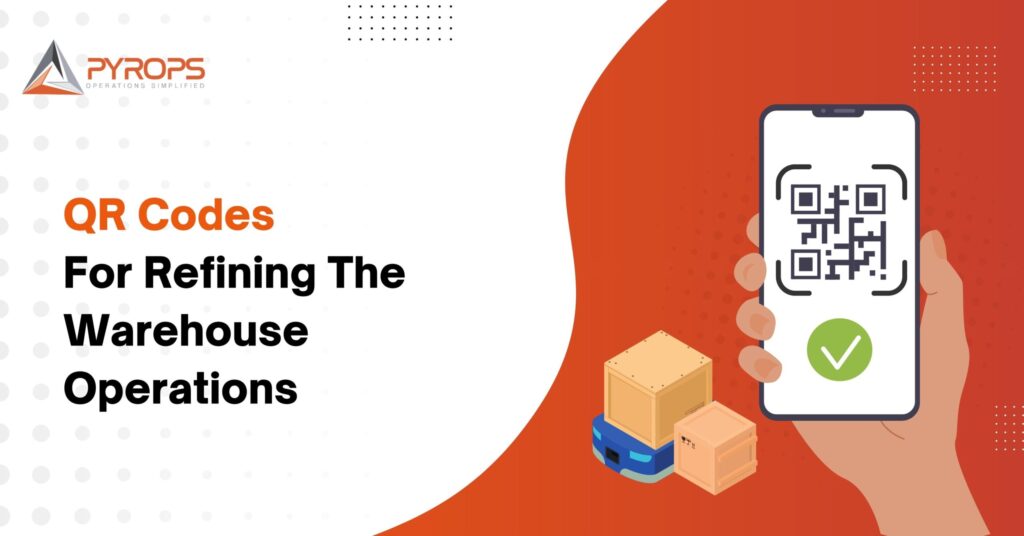
In the wake of COVID-19, warehouses look to implement scalable processes to manage unpredictable demand. Emerging technologies are focused on refining the warehouse operations through the utilization of advanced systems such as warehouse scanning systems and barcode warehouse management systems, with a particular emphasis on efficiently managing inventories. Traditional inventory management is slow, messy, and prone to errors. QR code inventory management is fast, accurate, and easy. QR code inventory management is the best solution for businesses that need to track their physical products efficiently. In the 1990s, Denso Wave Corporation innovated QR codes to encode additional information on product labels. These labels, integrated into a warehouse barcode system and utilized through barcode scanners for warehouse inventory, play a pivotal role in streamlining complex warehouse operations and expanding consumer outreach. This method serves as an effective means to store relevant product information in-store, especially for individuals who are used to spreadsheet-based solutions. WHAT IS A QR CODE? QR codes (short for “Quick Response”) are two-dimensional barcodes in a a warehouse management system. You can scan them in both directions i.e vertically and horizontally. Instead of a single linear sequence of black lines and white spaces, you’ll get small square codes that convey a lot of information about product details The QR code’s pixelated pattern strengthens its ability to store information. A single QR code stores more than 4,000 characters. The code can include product information as well as links to images, videos, and dedicated websites. Through the utilization of WMS scanners and a warehouse barcode scanning system, both employees and customers can effortlessly access crucial information about the specific part or product they are examining. QR codes offer enhanced versatility and capabilities compared to traditional one-dimensional barcodes. They can store a wealth of product information, including product details, batch numbers, serial numbers, and other relevant data. This makes them a valuable tool for warehouse management system (WMS) barcode scanners, enabling efficient inventory tracking, product identification, and data collection. QR codes for inventory management can assist you in tracking a batch number or determining where a product was manufactured or imported from. QR codes are also secure because the data can be encrypted. How To Use QR Code For Inventory Management? Establishing a warehouse inventory scanning system with QR codes may initially require time and present some challenges. However, once the system is set up, and users become acquainted with the platform, the invested effort proves to be undeniably worthwhile. Steps to set up the system: Use a QR code generator to create a unique QR code for each item in your inventory. Put a QR code on a sticker and stick it to each item in your inventory. This will make it easy to track each item. Store the QR code and important information about each item in your inventory software. To use the QR codes, just point your phone’s camera at them. This is much faster than looking up each item in your records. THE PERKS OF USING A QR CODE FOR WAREHOUSING Because QR Codes can hold more information than Barcodes, they were originally developed to modernize large inventory management systems. Today, they are used in many warehousing systems to manage large product volumes. Mainly, barcode scanners for warehouse management and the integration of barcodes in warehouse systems have become prevalent, especially for efficiently handling substantial product volumes. The following are some of the advantages of using QR code inventory management software for warehouse operations over barcodes. Readability QR codes are 360 degrees scannable and you can scan them from any direction. Assume you’ve placed a slanted QR Code on your product. You can scan it and it is directed to the key information. Storage Space When you encode information in a QR code, it does not grow vertically. Data modules are used to store the information contained in QR Codes inventory management system. As a result, the QR Code becomes denser as more information is added. As a result, QR Codes are small. It occupies less space and can easily place it on products of very small size. Data Storage QR codes for inventory tracking can store significantly more information and you can add up to 7,089 characters while one-dimensional barcodes can only store around 20-25 characters. Qr codes can store product information, website URLs, and plain text and maintain detailed information about every piece of Inventory. Damage Resistant An advantage of QR codes over barcodes is that a scanner can read partially damaged QR codes. Inventory management with QR codes can withstand up to 30% of damage. Miscounts caused by multiple scans of the same item are also excluded by QR codes. THE BENEFITS OF USING CODE BASED OPERATIONS Code-based operations are a powerful tool for warehouse management. They combine barcode scanners and warehouse management systems (WMS) to streamline processes, enhance visibility, and improve overall performance. This combination makes it easier to capture data, automate tasks, and make informed decisions, leading to a more efficient and proactive approach to warehouse management. The use of QR code inventory management software in warehouse operations bring some of the following benefits: Speed and Accuracy Code-based operations allow for faster and more accurate data transfer which benefits the tracking of materials. You can track exactly the items location and can help speed up the processes. It saves your organisation time in responding to inquiries and changes. As it provides timely data information about products, it enhances warehouse productivity and maintains accurate inventory management. Reduce Errors Data capture that is quick and accurate reduces paperwork and the risk of errors. If an employee scans the particular code, the item gets entered. This capability eliminates errors when manually entering a damaged code. Code-based scans are fast, reliable, and less time-consuming than manual data entry. When scanners read the codes, their graphics are quickly and accurately translated to a display without the errors often associated with manual data entry. CHALLENGES IN THE ADOPTION OF QR CODES It’s important to choose a system
Effective Inventory Replenishment Strategies
Inventory management is an integral part of the supply chain that influences customer loyalty and brand experience. Timely inventory availability and efficient inventory management are mission-critical in today’s fast fulfilment environment where the customer is spoilt for choice. An effective inventory replenishment strategies assists organizations in determining when a product requires restocking (before it runs out). It’s also used to figure out how much stock to add to your inventory by reordering and how much back stock to move to active inventory. WHAT IS INVENTORY REPLENISHMENT? The process of sourcing inventory from suppliers or moving inventory from reserve storage to picking locations is known as inventory replenishment. It is also known as stock replenishment. Inventory replenishment solutions can also be used to move inventory from reserve storage to primary locations within a warehouse. Customized inventory replenishment solutions can make it easier to transfer products from one warehouse to another to replenish stock levels. The goal of replenishment stock is to keep inventory moving through the supply chain at an optimal rate by maintaining efficient order and line-item fill rates. This procedure helps to avoid inventory overstocking. IMPORTANCE OF INVENTORY REPLENISHMENT A strong inventory replenishment strategy is essential for businesses to avoid costly supply chain problems like stockouts and overstocks. As mentioned earlier, stockouts don’t only mean lost sales, but can also damage customer loyalty and trust in a brand. An efficient inventory replenishment process helps companies quickly fulfill every order, meet customer demand, and increase profitability while lowering costs. Here are three reasons why retailers need to replenish their inventory. Avoid Stockouts If a merchant doesn’t replenish inventory on time, they risk having a stockout, which means that items will be out of stock when customers want to buy them. Backorders and stockouts can cause frustration to your customers. The easiest method to minimize common stockout difficulties is to keep safety stock, backup inventory, or emergency inventory on hand at all times. It is also a good idea in case a supply chain issue arises unexpectedly. Prevent overstocking A smart inventory replenishment process can also help prevent overstocking on inventory. Replenishing stock too early or without considering changes in customer demand or seasonality can lead to dead stock, which increases carrying costs by having unsellable inventory sit on shelves for too long. With the Economic Order Quantity (EOQ) Formula, you can minimize overstocking and expensive warehouse logistics costs by finding the optimal amount of inventory to have on hand to fulfil order demand. By calculating EOQ, a greater understanding of inventory, including safety stock, is gained. It helps you to keep inventory and warehousing costs down to a minimum. Reduce shipping costs Sending items from a single order in multiple shipments can increase shipping costs, create more packaging waste, and confuse customers. A best practice is to split your replenishment stock across fulfillment centers to keep inventory close to your customers. This can help you save money on shipping and improve your last-mile delivery. INVENTORY REPLENISHMENT METHODS The right inventory replenishment method ensures that your warehouse never runs out of stock, while also avoiding excess inventory. It can also help to maximize warehouse space and reduce product misplacement, leading to reduced operational costs. Stockouts can cause huge problems in terms of retention rates and customer satisfaction. Therefore, it is crucial to choose the right inventory replenishment model for your business’s needs. Your choice of inventory replenishment method will depend on a number of factors, including your purchasing process, business model, product lines, suppliers, order fulfillment methods, and more. According to Harvard Business Review, 72% of stock-outs happen due to faulty in-store ordering and replenishing practices—retailers ordering too little or too late, generating inaccurate demand forecasts, or otherwise mismanaging inventory. An efficient inventory replenishment necessitates careful planning that includes demand forecasting, inventory analysis and other supply chain metrics like in-stock status and product velocity (the rate at which an SKU sells). There are three main inventory replenishment strategies that organizations can use: Reorder Point Strategy: Inventory reorder points ensure that you always have enough stock on hand to meet customer demand. Reorder points also allow for greater financial flexibility by keeping a minimum amount of inventory on hand at all times. Based on historical order data, the reorder point formula assists you in calculating the appropriate stock levels to meet customer demand. Inventory replenishment points are a key part of any replenishment supply chain or warehouse replenishment strategy. Top off Method: When your inventory includes a lot of fast-moving SKUs, the top-off method tends to be the most suitable inventory replenishment strategy. Using this strategy, inventory levels for a particular product are “topped off” in their respective storage locations during downtime. So that you can maintain a high inventory turnover rate without encountering stockouts for pickers. Periodic Inventory Replenishment Method: Inventory is restocked at regular intervals using the periodic inventory replenishment method. Inventory levels are only evaluated at specific times or dates, regardless of how low stock levels may fall before that point. This method is most commonly used in warehouses with large storage capacities. BEST PRACTICES OF INVENTORY REPLENISHMENT It takes time and effort to build a successful inventory replenishment strategy. The following three best practices should always be considered when planning and implementing effective inventory replenishment strategies. Implement The Right Technology Implementing the right technology is a simple way to gain real-time visibility into inventory levels. It allows you to make better inventory decisions across all the locations. You can easily keep track of inventory control, inventory trends. It also avoids common stock issues by using inventory automation tools for inventory optimization. Use inventory replenishment data Knowing which items are slow-moving and which are fast-moving allows you to make better decisions about replenishment of inventory. With this data, you can improve demand forecasts, calculate safety stock numbers. It also identifies inventory turnover rates for your products. It addresses the other issues that may have a financial impact on your business. Better Inventory Management Strategies Regular inventory audits, standard
Warehouse Management Best Practices For FMCG
What is a warehousing management system? A Warehouse Management System (WMS) solution plays a pivotal role in efficiently overseeing the reception, storage, and movement of materials within a warehouse, as well as facilitating their timely shipment to customers or other destinations. WMS software is instrumental in managing inventory control, optimizing order fulfillment processes, and streamlining material handling operations. Within the broader scope of the supply chain, a WMS System solution serves as a central hub for coordinating the inbound and outbound flow of goods. This encompasses the seamless coordination of goods from the manufacturing facility to the warehouse and ultimately to end customers. The WMS software also ensures the meticulous tracking and management of stored goods, emphasizing the safe and secure handling of materials within the warehouse environment. Best Practices For Warehouse Management Good warehouse practices require maintaining high quality and safety standards for goods in storage. This includes everything from receiving and storing raw materials to distributing finished products. In the FMCG industry, the competition is fierce. As a result of consumers’ high expectations, the focus remains on delivering products efficiently to the market. The availability of products at relevant channels and the best warehousing practices have become important competitive differentiators. Also, the FMCG industry has a minimal margin for error due to the reduction in product life cycles. Hence, it determines how to plan and execute supply chain management effectively. FMCG WAREHOUSE Improved warehousing and logistics solutions are major productivity drivers in the FMCG industry. Warehouse management can play an essential role in the integrated logistics strategy. They (warehouses) develop and maintain positive relationships with the supply chain partners. Simultaneously, warehouse management system software directly impacts customer service, brand sales, and marketing initiatives. A warehouse firmly manages the fluctuations in market supply and demand. A warehouse management software focuses on storing products whenever supply exceeds demand. Warehouses can speed up product delivery by offering additional price tagging, product packaging, or final assembly. As a result, the warehouse’s good practices serve as a link between the producer and the customer. Warehouses are specially designed spaces for storing and handling materials. FMCG warehousing operations increased ROI and reduced costs by improving their processes, picking stock more efficiently, and managing their locations better. They also need to keep their partners and customers happy to stay competitive. WMS software should be able to handle tasks like cross-docking, loading and unloading bays, using handheld devices, packing in bulk, and scheduling tasks. FMCG warehouse management teams need powerful and flexible WMS software to make their operations more efficient. The goal is to consistently improve service levels, both for internal and partner operations, while reducing operational costs and increasing revenue. FMCG warehousing operations increased ROI and reduced costs by improving their processes, picking stock more efficiently, and managing their locations better. They also need to keep their partners and customers happy to stay competitive. WMS software should be able to handle tasks like cross-docking, loading and unloading bays, using handheld devices, packing in bulk, and scheduling tasks. FMCG warehouse management teams need powerful and flexible WMS software to make their operations more efficient. The goal is to consistently improve service levels, both for internal and partner operations, while reducing operational costs and increasing revenue. CHALLENGES IN FMCG WAREHOUSE Optimizing FMCG warehouse design A company must optimize the warehouse storage spaces inside warehouses. In simple terms, a firm must use FMCG warehouse design for various purposes, such as inventory. Also, goods in areas must equip themselves with well-designed pick pathways for smooth operations. Stock Tracking & Accuracy If a company uses a WMS Software or an ERP system, then purchase order data availability becomes feasible. One must not compromise upon accuracy. Poor customer service results in less accuracy in the FMCG warehouse. Seamless Compatibility All of the systems in a Retail Distribution Warehouse must operate smoothly to achieve maximum efficiency. It is essential to integrate the warehouse management system and ERP systems perfectly. Multiple Locations The demand for inventory tracking grows 10X when warehouses operate at multiple locations. Warehouse managers need real-time monitoring and reliable data to locate the position of inventory. For example, the manager can call and process it faster if the stock is yet to leave the warehouse. BEST PRACTICES FOR YOUR FMCG WAREHOUSING Here are the five best warehousing practices for FMCG that can help in the FMCG’s warehouse growth. 1. FEFO One must consider various factors while establishing a First-Expiry-First-Out (FEFO) strategy in the warehouse. Improving the operations by using a FEFO put-away and pick process helps a company in the long run. Many FMCG customers choose to store their products in many locations with a variety of SKUs or inflow racks. Choose a WMS software that takes FEFO into account at the receiving and pick-up process. 2. Cross-docking It involves unloading a product from one truck and loading it directly into another. A company doesn’t require storing the product in the warehouse again as it directly gets loaded into another. A company saves valuable time and money by delivering the products on time and saving the cost for extra storage. As much as feasible, follow this approach to keep your operations smooth. 3. Wave replenishment Space on your level and equipment such as lifts have a lot more to do with wave replenishment than anything else. Your warehouse replenishment team may need to coordinate their efforts if there aren’t enough lifts available, especially for a given set of activities. This factor will help to prevent unnecessary traffic on the floor. 4. Visibility The consumer products industry must have complete insight into the supply chain. It helps the industry to benefit from thorough product traceability. A warehouse supplier allows you to locate your products right from inbound shipments to storage. It also gives the facility of warehouse picking, packing, and shipping. So that the needs of end customers are met. It becomes easier to plan more effectively and cut the cost once the needs are met. 5. Co-packing, labelling, kitting If
Are you really running out of warehouse space?
It’s very common for companies to run out of warehouse space and it gets frustrating, the racks and the bins get blocked. Also, you can’t figure out where to put things and this scenario really hampers productivity. You can’t let this continue and contemplate the following options:- 1. Go vertical Increasing the roof or adding extra levels of pallet racks will increase the storage space to a great extent. But you would have to consider the engineering limitations and construction regulations and laws along with the possible exorbitant cost. 2. Upgrade Storage Medium You can also upgrade the storage medium to high-density equipment. For example, you can upgrade to double-deep racks if you are currently using single deep racks but that requires forklifts and other equipment to load pallets. 3. Rent extra storage Because the most flexible option to scale up the operations quickly is renting extra space but it is exorbitantly costly in the long run. 4. Shift to a bigger warehouse Shifting to a bigger warehouse might solve the problem for a time being. Although a bigger space will not act as a substitute for inefficient storage arrangements. But do you need to opt for these options or you can store more material in the same limited space? But do you need to opt for these options or you can store more material in the same limited space as the warehouse? To accomplish this, you must ensure optimal warehouse space utilization. You can accomplish this by utilizing a Warehouse Management System (WMS) that can track all locations and items stored with their quantities. Also, WMS will know the weight of each item, the size of each item, the case, and the physical restrictions of each item and ensure that storage is organized in a way that requires the least amount of space. You can accomplish this through some quintessential in-built operational features. Capacity utilization Improving the space utilization score through automated analysis of spread out stock, size of products, department space, vertical space, aisle widths, depth of storage which involves- ABC analysis This is by far the most effective approach to reduce unwanted inventory through a prioritization mechanism allotted to different SKUs. You can categorize the SKUs as A, B, C according to the value they add to the business. Such as A being the most valuable and C being the least. The idea is to channelize the resources towards the most important units. You can define upper and lower stocking thresholds based on risk appetite. Multiple units of measures Support multiple units of measures and increase operational efficiency in making different stocking, storing, and shipping UOMs. Many products consume little time and effort for being stored in a limited space like the typical ones that are received in a box, stored in a box, and shipped in a box, unlike some other products which require different. Example- We brought wires of a certain length and then cut them into pieces for selling. Transfers – bin to bin, location to location Get an instantaneous view of the material position and keep inventory balances accurate by figuring out the most suitable bins and locations for transfers. Ensure lean inventory Enable inventory optimization through refined real-time data which facilitates tracking the entire supply chain that helps you with transferring stock between low-demand and high-demand warehouses, figure out the best possible storage methods, and efficient layouts.