
What is blockchain in supply chain? Why is it important?
While blockchain is often associated with crypto, its real-world use cases in supply chain and warehousing are growing fast. As the demand for transparency, traceability, and trust rises, blockchain offers a decentralized, tamper-proof way to record and verify transactions. Here are 5 practical ways blockchain is already reshaping supply chain and warehouse operations: 1. End-to-End Product Traceability Use Case: Tracking goods from raw material to final delivery Every touchpoint—from origin to distribution—is recorded on the blockchain ledger. This creates a single version of truth across all participants. Example: A pharma company uses blockchain to trace each batch of medicine, from the manufacturing plant to the end customer, reducing counterfeit risk. 2. Authenticity Verification for High-Value Items Use Case: Preventing fraud in luxury goods, electronics, or automotive parts Blockchain ensures each item’s identity and movement is verifiable, helping brands and customers confirm authenticity. Example: A luxury watch brand records every unit’s journey on blockchain—from production, warehousing, and retail handoff—to combat fakes. 3. Smart Contracts for Automated Transactions Use Case: Auto-triggered payments or receipts based on supply chain events Smart contracts are self-executing programs on blockchain that run when predefined conditions are met (e.g., “Pay supplier when goods are received”). Example: A 3PL warehouse receives goods, confirms condition via WMS, and automatically triggers vendor payment via a smart contract. 4. Audit Trails and Compliance Reporting Use Case: Regulatory compliance and proof of chain-of-custody Industries like food, pharma, and aerospace demand strict documentation. Blockchain provides an immutable log of every movement, scan, and action. Example: A food supplier logs temperature data, location, and hand-offs of perishable goods on blockchain for FSSAI compliance. 5. Collaborative Visibility Across Supply Chain Partners Use Case: Enabling secure, shared visibility between suppliers, 3PLs, brands, and retailers Rather than sending emails and spreadsheets, each stakeholder can access the same validated inventory and shipment status from blockchain. Example: A global electronics brand syncs inventory data from its contract manufacturer, regional warehouse, and retailers using blockchain. Final Thoughts While blockchain won’t replace your WMS or ERP, it complements them beautifully by bringing: It’s still early days—but forward-thinking supply chain leaders are already piloting blockchain for traceability, compliance, and fraud prevention. Read More Read SCM News
Live Inventory Visibility: Why It Matters More Than Ever
Introduction: The Age of Instant Expectations Customers today don’t wait. Whether you’re fulfilling to distributors, retailers, or end-users, delays, inaccuracies, and unavailability can crush trust—and revenue. In this environment, inventory visibility isn’t a luxury. It’s a competitive edge. Yet, many businesses still operate with: Let’s unpack why live inventory visibility is no longer optional—and how modern WMS solutions make it possible. What Is Live Inventory Visibility? Live inventory visibility means knowing, in real-time: This includes inventory: And all of it available on a dashboard, updated by real-time transactions. What Happens Without It? Businesses without live visibility experience: Problem Impact Stockouts & over-ordering Lost sales or working capital locked in excess High returns due to wrong items Increased logistics costs and customer churn Internal confusion Teams spend hours checking and verifying stock Inaccurate forecasts Missed procurement and planning opportunities Low confidence in systems Staff bypass systems, leading to worse errors The Benefits of Live Inventory Visibility How WMS Delivers It A modern Warehouse Management System (WMS) ensures real-time visibility by: Real-World Example: Before vs. After Before WMS: “An order comes in, but the item is missing. Teams run around looking. Turns out, it was returned last week but still in QC hold—never updated in the system.” After WMS: “Order comes in. WMS shows 12 units in Zone B, all available. Picker is guided to the bin. Order packed and dispatched—within 15 minutes.” Final Thoughts: Visibility = Control In today’s supply chain, the only constant is change—new SKUs, new locations, unexpected disruptions. Without live inventory visibility, every decision is a guess. But with it? You take back control: Start with a demo. See how our WMS can deliver real-time visibility—and peace of mind. Read More Read SCM News
How WMS helps with Inventory Planning & Control?
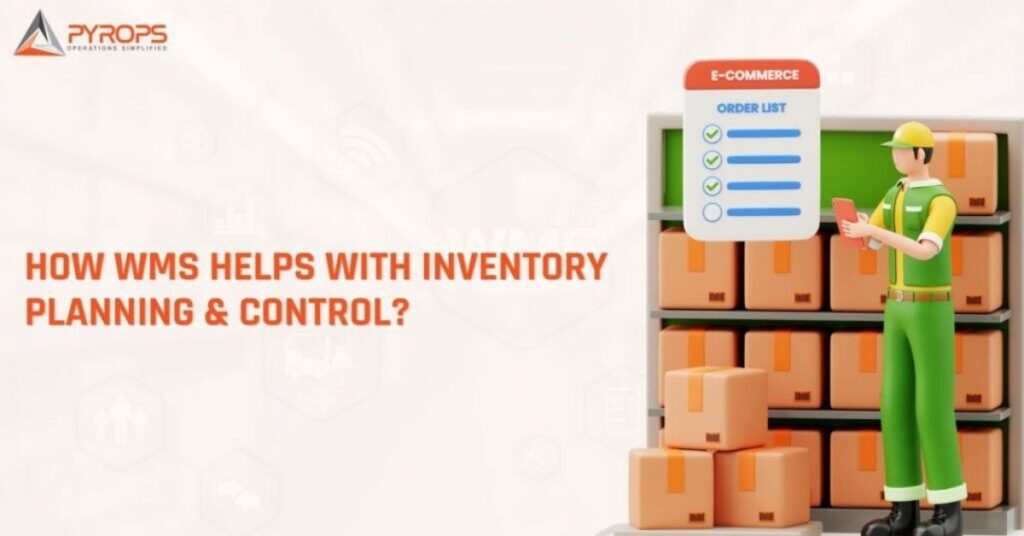
What Is Inventory Planning and Control? Inventory planning refers to the forecasting and decision-making process to determine what products to stock, in what quantity, when to replenish them and at which location. Inventory control, on the other hand, involves the day-to-day management of stock: knowing where items are, in what quantity, and in what condition—ensuring accuracy and minimizing shrinkage. A WMS sits at the center of both, turning physical operations into data-driven, rules-based workflows Key Ways WMS Aids Inventory Planning 1. Real-Time Visibility Across All Inventory States A WMS provides granular, real-time visibility into inventory: This visibility enables planners to make decisions based on actual availability rather than guesswork. 2. Historical Data for Demand Forecasting By capturing rich historical data—order volumes, SKU movement rates, pick frequencies—a WMS feeds inventory planning tools with accurate inputs. This data helps in: Planners can refine forecasts and adjust reorder points, improving service levels while reducing excess stock. 3. Location-Based Inventory Optimization Modern WMS platforms allow zoning, bin classification, and slotting—ensuring that: This optimization reduces handling time and errors, impacting how quickly stock turns around. 4. Support for Multiple Inventory Types A WMS handles complex inventory types such as: By tracking each unit’s attributes, the system ensures that aging stock is consumed first and that expiry/damage risks are minimized—feeding into better replenishment planning. How WMS Improves Inventory Control 1. Accurate Stock Counts with Cycle Counting WMS allows configurable cycle counting, often replacing physical inventory audits: This ongoing accuracy reduces stockouts, improves customer service, and enhances trust in data. 2. Real-Time Reconciliation of Goods Movements Whether it’s inbound, outbound, or internal movement, a WMS: This digital trail helps identify process gaps and enforces accountability—especially critical in large warehouses or multi-location networks. 3. Shrinkage and Discrepancy Detection A WMS can track reasons for stock discrepancies, such as: It flags abnormal patterns for review, enabling timely action and reducing untraceable shrinkage. 4. Integration with ERP, TMS, and Planning Systems The WMS acts as the execution engine, syncing with planning and financial systems to close the loop: This integration ensures aligned inventory plans and coordinated decisions across departments. The Business Benefits When WMS is used effectively for inventory planning and control, businesses experience: Benefit Impact ✔ Reduced stockouts Better order fulfillment and customer loyalty ✔ Lower carrying costs Less working capital tied in inventory ✔ Improved stock accuracy Fewer write-offs and returns ✔ Higher warehouse productivity Faster picking, packing, and restocking ✔ Leaner operations More agility with seasonal or demand shifts Final Thoughts To summarize, inventory is no longer something to simply “store”—it’s something to strategically manage. A well-implemented Warehouse Management System helps transform warehouses from cost centers into competitive advantages. By bringing discipline to control and insight to planning, a WMS empowers businesses to make smarter decisions, reduce waste, and serve customers better. Read More Read SCM News
Why are Handheld terminals so expensive if they are just another mobile device?
Handheld terminals (HHTs) are an integral component of warehousing, quietly powering the movement of goods across the globe. What started as clunky barcode scanners has evolved into intelligent Android-powered devices—reshaping how inventory is handled, orders are picked, and supply chains are run. This article explores the evolution of HHTs, how Android changed the game, why these devices are costly, and which companies are leading innovation in this space. A Brief History: From Laser Guns to Mini Computers In the early 1990s and 2000s, HHTs were primarily: These devices were rugged but rigid—hard to integrate, expensive to update, and tied to legacy software stacks. The Android Revolution: A Game-Changer for Warehousing The introduction of Android as the default OS for modern HHTs in the mid-2010s was transformative: Benefits of Android-Powered HHTs: In short, Android helped bridge the gap between warehouse workflows and modern IT systems. What’s Inside a Modern Handheld Terminal? Today’s HHTs are more than barcode scanners—they are rugged smartphones with specialized capabilities. Here’s what makes them tick: Component Purpose ???? Barcode/QR Scanner Captures product or bin information ???? Rugged Battery Lasts a full shift or more ???? Touchscreen Display User-friendly interface for WMS apps ???? WiFi/4G/5G Module Real-time sync with backend systems ???? GPS/Bluetooth/NFC Location tracking, pairing, and validation ????️ Rugged Build Shockproof, waterproof (IP65–IP67 rated) ???? OS + MDM Software Android OS + Mobile Device Management tools Why Are These Devices So Expensive? Many businesses wonder: if these are “just Android phones,” why do HHTs often cost ₹30,000–₹1.2 lakhs each? Key Reasons: Who Are the Big Players? Several global and Indian companies are innovating in the HHT space: Global Leaders: Final Thoughts The HHT has evolved from a basic barcode scanner into a smart logistics companion. Android played a pivotal role in this transformation—opening the door to real-time data, mobile-first apps, and cloud-driven warehouse operations.While they may seem pricey, HHTs offer long-term ROI by improving productivity, reducing errors, and enabling leaner operations. As warehouses become more digitized, these devices will continue to be the frontline enablers of smart supply chains.
The Most Innovative Companies in Consumer Goods Packaging
What Makes a Company Innovative in Consumer Goods Packaging? The most innovative companies in consumer goods packaging aren’t just creating boxes—they’re crafting experiences. Whether it’s about sustainability, functionality, or visual appeal, these brands understand that packaging is the first interaction a consumer has with their product. From global tech giants to India’s boldest startups, these brands are redefining the standards. But which companies are leading the charge? Keep reading—some of these may surprise you. Why Does Packaging Innovation Even Matter? Packaging is no longer just a protective shell—it’s part of the brand experience. Here’s why smart brands invest in packaging innovation: Who Are the Most Innovative Companies in Consumer Goods Packaging Globally? Here are the global frontrunners who are rewriting the packaging playbook: Company Packaging Innovation Impact Why It Works Apple Minimalist, precision-fit boxes with recyclable materials Reinforces the premium feel of the product The iPhone box is almost as iconic as the phone itself Glossier Instagram-friendly pink bubble pouches, reusable, includes personal notes Turns every delivery into a shareable moment Appeals to millennials and Gen Z via aesthetics Amazon Machine learning to optimize box size, frustration-free packaging, eco mailers Reduces waste, improves delivery efficiency Streamlines operations while promoting sustainability IKEA Flat-pack modular packaging, minimal air space, visual instructions Easy transport, storage, and minimal waste Smart logistics for global scalability Lush Cosmetics “Naked” packaging (e.g., shampoo bars), recycled pots, return-reuse policy Reinforces eco-conscious branding Customers engage with and support sustainability efforts Uniqlo Tote-style paper bags, reusable packaging, uniform branding Enhances shelf appeal, consistent brand feel Functional yet aligned with eco-friendly values Ritual Transparent bottles, magnetic closures, refillable subscription boxes Adds elegance, encourages reuse Looks good on the shelf and saves waste Harry’s Drawer-style boxes, ergonomic designs, easy-open seals Delivers a premium unboxing experience Practical meets beautiful for daily-use products Which Indian Brands Are Revolutionizing Consumer Goods Packaging? India is no less innovative when it comes to packaging. Here’s how homegrown brands are setting trends: Company Packaging Innovation Impact Why It Works Paper Boat Doy packs with nostalgic storytelling and unique shapes Emotional connection, high shelf recall Blends tradition with convenience Forest Essentials Gold-embossed boxes, glass jars, biodegradable outer packaging Luxury feel and gift-friendly Appeals to premium Ayurveda consumers BoAt Bold, edgy packaging with reusable boxes Builds brand identity, resonates with youth Tech-first design that’s fun to unbox The Whole Truth Foods Clean, honest labeling with minimalistic design Instills instant trust in health-conscious buyers Transparency as a unique selling point SuperBottoms Zero plastic; cloth-based, paper-wrapped packaging Appeals to eco-conscious parents Every element of packaging is thoughtfully sustainable RAW Pressery Sleek PET bottles with clear, healthy branding Strong shelf presence Visual branding aligned with lifestyle goals Bombay Shaving Company Gifting-ready kits with organized compartments Makes self-care gifting easier and elegant Packaging reflects luxury and functionality Epigamia Funky yogurt cups with flavor-specific colors Stands out on shelves, appeals to younger consumers Vibrant colors draw attention in cold-storage aisles Minimalist Clinical, no-nonsense packaging inspired by pharma Science-first appeal in beauty-heavy category Simplicity builds authority and consumer trust Open Secret Resealable snack packs with warm, family-friendly colors Useful for gifting and daily snacking Packaging encourages repeated use and purchase What Can We Learn from These Packaging Pioneers? These brands prove that packaging isn’t an afterthought—it’s strategy. Whether you’re in tech, skincare, food, or apparel, there’s a consistent pattern: Final Thoughts: Is Your Brand’s Packaging Future-Ready? The most innovative companies in consumer goods packaging understand that the box, pouch, or bottle isn’t just a container—it’s communication. It’s the first “hello” to the customer. As consumer expectations evolve, so must packaging—towards more personalization, more sustainability, and more impact. Whether you’re a startup or a legacy brand, now’s the time to think outside the box—literally. Read More Read SCM News
Network Breakages in Warehouses: Unseen Disruptions and Operational Risks
Introduction:Warehouses today rely heavily on connected systems to ensure seamless coordination across inventory management, automation, real-time analytics, and fulfillment. While much attention is paid to mechanical failures or software glitches, network breakages—often treated as transient IT issues—can have disproportionately large impacts on warehouse performance. For professionals managing large-scale, integrated operations, understanding the systemic risks of network instability is essential for building true resilience. 1. Decoupling of WMS, WES, and Control Systems A network outage doesn’t merely disrupt connectivity—it leads to functional desynchronization between Warehouse Management Systems (WMS), Warehouse Execution Systems (WES), and PLC-level machine controllers. What’s often overlooked: The reinitialization process post-breakage can introduce silent failures—where certain workflows resume from incorrect states without triggering alarms, affecting operational accuracy long after the network is restored. 2. Disruption of Real-Time Automation and Control Warehouse automation depends on real-time data exchange to synchronize the actions of AMRs, conveyor systems, automated storage and retrieval systems (ASRS), and picking stations. Deep impact: In many industrial environments, these effects are not immediately visible. It’s only during post-shift audits or KPI reviews that the degraded performance becomes apparent. 3. Inaccuracy in Digital Twin Environments Advanced warehouses increasingly rely on real-time digital twins for simulation, planning, and dynamic routing. Strategic risk: If these decisions feed into upstream ERP or SCM platforms, they can cause cascading errors across procurement, labor scheduling, and dispatch. 4. Impact on Integrated Security Systems Modern warehouses integrate networked systems for surveillance, biometric access, and asset tracking. Critical insight: In facilities with compliance obligations (e.g., pharma, cold chain logistics), such failures can lead to audit failures and regulatory penalties—even if physical security wasn’t breached. 5. Breakdown of Cloud-Linked SCM Synchronization Cloud-native platforms for inventory planning, order routing, and transportation management rely on continuous data flow. Hidden costs: These gaps often lead to preventable order cancellations, expedited shipping costs, or missed SLA commitments, which are typically attributed to “demand volatility” instead of system failures. 6. Limitations of Edge Computing Without Proper Failover Logic While edge computing offers resilience, many deployments are not truly autonomous: Expert tip: Redundancy in edge infrastructure is only useful if backed by robust fallback logic, smart queueing, and built-in synchronization protocols. Mitigation Strategies for Professionals Conclusion about Network Breakages in Warehouses: Network breakages in warehouses are not just IT incidents—they are operational blind spots with the potential to disrupt synchronization, reduce throughput, and compromise security. For industry professionals tasked with scaling performance and reliability, network resilience should be engineered with the same rigor as mechanical redundancy or software validation. The goal is not just recovery—but operational continuity without degradation. Read More
Capacity Planning for Warehouses: A Comprehensive Guide
Capacity planning is a crucial aspect of warehouse management, ensuring that storage, handling, and throughput capabilities align with business needs. Without proper planning, warehouses may face inefficiencies, delays, and increased costs. This guide explores the importance, methods, and best practices for effective capacity planning. Why Capacity Planning Matters Key Factors in Warehouse Capacity Planning 1. Storage Capacity 2. Throughput Capacity 3. Labor & Equipment Capacity 4. Seasonal Demand & Forecasting 5. Technology & Automation Methods for Effective Warehouse Capacity Planning 1. Space Utilization Analysis 2. ABC Analysis for Inventory Management 3. Demand Forecasting & Buffer Stock Planning 4. Lean Warehousing Approach 5. Continuous Monitoring & Adjustment Conclusion Capacity planning is an essential strategy for maintaining an efficient, cost-effective, and scalable warehouse operation. By leveraging data-driven decision-making, optimizing storage, and integrating modern technology, businesses can enhance warehouse efficiency, improve order fulfillment, and stay ahead in competitive markets. Read More
A Tale of Two Order Processing Methods in Warehousing
Order processing is a crucial part of how companies fulfill customer demands. However, the way companies process orders can vary significantly depending on whether they handle business-to-business (B2B) orders or business-to-consumer (B2C) orders. Two common methods of order processing are batch processing and order streaming. While batch processing is more common in B2B warehousing, order streaming has become essential in B2C environments where consumers expect quick delivery. Let’s dive into the differences, advantages, and challenges of these two approaches in a way that’s easy to understand. Batch processing is like waiting for a group to form before taking action. In a warehouse, this means orders are collected into batches, and then all the orders in a batch are processed together. For example, in a B2B warehouse, a company might group all orders received over a certain period, like a few hours or a day, and then fulfill them in one go. This approach works well when customers (usually businesses) don’t expect instant delivery, and it can often lower operational costs since tasks are completed in bulk. Pros of Batch Processing: Cons of Batch Processing: What is Order Streaming? Order streaming is like dealing with each task as it comes. This method is used more in B2C environments where orders are processed individually as soon as they’re received, instead of waiting to be grouped with others. Today’s consumers, used to fast and sometimes even same-day deliveries, have driven the shift to this faster approach. In order streaming, each order flows through the system immediately, getting picked, packed, and shipped without delay. Pros of Order Streaming: Cons of Order Streaming: Choosing the Right Approach: When to Use Each Choosing between batch processing and order streaming depends on the type of warehouse operations, the nature of the orders, and customer expectations: Summary Both batch processing and order streaming have their place in warehousing, and understanding the unique needs of the business and its customers will help determine which method to adopt. B2B operations benefit from the efficiency of batch processing, while B2C operations thrive with the speed of order streaming. As businesses grow and evolve, the trend is toward increased automation to handle the challenges of each method. Modern warehouses can use systems that allow them to switch between batch processing and order streaming based on demand. In the end, the right mix of processing methods can help a warehouse meet customer demands, control costs, and adapt quickly to a fast-changing marketplace. Read More Read More Supply Chain News
10 Common Warehousing Mistakes
Managing warehouses has become increasingly intricate due to supply chain bottlenecks and a surge in online sales, compounded by heightened expectations for rapid shipping. The evolving landscape places significant pressure on warehouses to deliver optimal performance. Regardless of size or experience, many companies encounter challenges in the warehouse management system. Efficient warehousing is pivotal in logistics, encompassing inventory storage, packaging, and product distribution. Leveraging comprehensive warehousing solutions is imperative for seamless operations, ensuring customer satisfaction and the smooth flow of business processes. Here are the top ten warehousing mistakes made by organizations and steps to be taken to avoid them: – Inaccurate Inventory Management The most important responsibility in warehouse management is inventory accuracy. Inaccurate inventory numbers lead to several issues like operational confusion, unfulfilled orders, need for inventory audits, failed customer SLAs, increased time for finding products in the warehouse and many more. Today’s warehouses should have a robust warehouse management system (WMS) that integrates things like inventory management and tracking, order fulfilment, shipping, receiving, reverse logistics, and more. These systems can even integrate with other technology solutions, like mobile carts, wireless headsets, and automated shelving or conveyors. Wrong KPIs Measuring KPIs such as average time for order picking or the number of time products spends on the shelves is great, but if the whole picture is missing – from receiving through shipping – it will be difficult to notice the inefficiencies and expenses that could be avoided. Understanding the critical metrics for business operations is the initial step in gathering actionable data within a warehouse. To ensure effective tracking of these metrics, implementing top warehouse management systems is crucial. Once these systems are in place, collecting and analyzing data becomes a straightforward process. If unsure about the specific information to collect for warehouse operations, consider engaging a warehouse optimization specialist or logistics consultant well-versed in top warehouse management systems. Investing in their expertise can streamline the process of determining what should be tracked, leading to the establishment of efficient processes and KPIs for continuous monitoring. Poor layout It is imperative to design the facility layout carefully to prevent non-essential movement. Involving a warehousing layout expert to design a facility with a smoother flow helps in accurately positioning & setting up different areas. When warehouse space is at a premium, it can seem a luxury to designate separate areas for shipping out orders and receiving goods. However, not separating these areas at least in some way can lead to inefficiencies and mistakes that cost money. During peak activity, mistakes like placing just-received products directly onto outbound trucks or returning a packed order to shelves can cause significant delays and inefficiencies. These errors severely impact customer satisfaction and lead to wastage. Implementing the best warehouse system and employing effective warehouse management solutions is crucial to prevent such occurrences and maintain seamless operations. Consider placing shipping and receiving in completely different bays of the warehouse so there is little chance for confusion. Proper planning of different types of storage areas and operating areas with physical and visual demarcation tremendously helps in enabling a seamless operational flow Failure to optimize Picking path Another common mistake organizations make is poor optimization of order picking paths in the warehouse. Picking costs are a significant contributor to warehousing costs. Inefficient pick planning directly impacts unit economics and profitability. Besides, optimizing picking effort helps boost employee productivity and morale. To make the best use of their time and energy, one should carefully study the location of the items about one’s pick speed. Often picking products must place in close vicinity to each other as much as possible. Achieving this type of analysis is much more complicated, but with the right software packages, one can resolve this challenge. Sticking to paper-based processes There’s no justification for warehouses to rely on paper-based workflows when numerous options in the digital realm can optimize documentation processes. Employing paper for every task raises the risk of errors and lost paperwork, demanding additional person-hours for management and causing unnecessary cost escalations. Embracing top WMS (Warehouse Management Systems) ensures streamlined and efficient documentation processes, reducing the likelihood of mistakes and enhancing overall operational efficiency. Embracing the technology that is available by installing effective software to manage data and inventory will help gain better visibility, so it can be known exactly where the products are at all times, how many are in stock, the stock levels and when is there a need to restock or filter out an obsolete item. Switching even portions of operations over to digital processes can increase efficiency and accuracy, leading to an overall decrease in costs over time. Holding excess Inventory Having too much inventory on hand can be costly in many ways. Firstly, it takes up storage space that could be used for other products. In addition to this, excess inventory can delay other processes such as picking, restocking, etc. Items that sit at the back of the warehouse can become obsolete and forgotten, preventing organizations from making profits off those items. Reducing the levels of inventory as much as possible can lead to a leaner supply chain without losses. Utilizing software packages and receiving large orders in smaller batches are both ways to accomplish this. This helps to maintain optimum inventory levels. Lack of Safety Policies Even an organized warehouse isn’t always safe. If employees are constantly injured, they will need to spend more time off work or will work slowly to prevent their injuries from getting worse. Lack of safety policies can have serious consequences. It can lead to injuries, which will invite workforce-related issues. Apart from injuries, working in an unsafe manner can slow down your process and increase labour costs. It is important to maintain strict safety policies. This ensures employees are not cutting corners and following ergonomic practices. Rules & directives have to be made to ensure strict adherence to such policies Lack of proper training & workforce development Another big challenge in warehousing is employee turnover. When a worker leaves
Do we really need 10-minute warehouse delivery?

Market dynamics are forcing e-commerce companies to constantly evolve and undercut each other. Companies are competing not only on pricing and quality but also on how fast they reach your doorstep i.e 10-minute delivery. The pandemic played a pivotal role in catapulting premier online grocery shopping services into the mainstream, transforming a significant portion of the $2 trillion global grocery market. As a result of widespread preference for grocery delivery services during the pandemic, industry leaders and emerging players are now delving into a burgeoning sector known as quick commerce or q-commerce. The integration of warehouse management systems (WMS) solutions has become a key enabler in this evolution. The market penetration of quick-commerce, with the aid of WMS solutions, reached an estimated $0.3 billion in 2021, and projections indicate substantial growth to $5 billion by 2025 in India. Quick commerce startups, commonly referred to as 10-minute delivery apps, empower customers to conveniently order groceries and essential items through their mobile phones. These products are housed in dark stores, compact warehouses strategically positioned across urban areas. Utilizing warehouse management system software, these startups efficiently manage inventory and logistics. However, towards the end of 2022, these quick commerce ventures encountered significant challenges, including substantial financial losses, insufficient funding, and heightened competition. Consequently, they had to streamline operations, downsize their workforce, and shutter dark stores. Numerous startups, ranging from major players to smaller entities, are swiftly entering the realm of q-commerce. A significant shake-up has occurred in the grocery delivery sector with the emergence of Zepto, a new entrant that employs a 10-minute grocery home delivery service. Blinkit, formerly known as Grofers, has initiated 10-minute grocery delivery in multiple cities. Swiggy has introduced Instamart, committing to a delivery timeframe of 20-30 minutes. Dunzo has rolled out Dunzo Daily, and Ola is in the early stages of testing rapid grocery delivery in Bengaluru, showcasing the industry’s dynamic landscape driven by warehouse management software. Who needs 10-minute delivery? Shifting to digital platforms to promote cashless transactions, the world has gone through extreme ramifications that now appear to be promoting a permanent behavioral shift. India’s retail market is huge: $800 billion. And it’s dominated by the 11 million Kirana shops!! One can get all things from nearby Kirana shops. So why should one order online? More importantly – who needs 10-minute delivery and is there a real business use case here? To answer this, let’s understand how we are wired as humans. Humans optimize for time naturally, regardless of whether there is an urgency or not. In general, we tend to optimize for time if there is a way to accomplish something in less time. To this extent – whether consumers ‘need’ delivery services near– is a moot question. If two companies are offering the same products at the same prices, we will naturally choose the one which services in less time. Having said that – quick commerce is more relevant for unplanned buys, impulse or emergency purchases but whether 10-minute delivery is feasible as a business model is a completely different discussion that requires delving into the economics of best grocery online. Is 10-minute delivery the next big thing in the warehouse management system? Speed delivery with warehouse management system According to Supply Chain Dive, as the industry approaches its peak season, supply chain leaders will confront fresh challenges attributable to expansion. Although this season is poised to establish new benchmarks, growth rates are not anticipated to surpass those observed in 2018. Nonetheless, escalating and distinctive customer demands persist, and any oversight in preparing for heightened demand, particularly within systems of record, will not be excused. It is imperative for supply chain leaders to comprehend the potential repercussions of failures in the warehouse management system (WMS) on customer experiences and operational efficiency. Additionally, adopting a set of best practices is crucial to enhance the speed of fulfillment and delivery during the peak season and beyond. How to Use a WMS to Increase Delivery Speed Using a Warehouse Management System (WMS) can really speed up deliveries and make things run more smoothly. WMS lets you see what’s in stock in real-time, making it easier to manage orders. It automates tasks like picking, packing, and shipping, which reduces mistakes and makes the whole order process faster. Keeping track of inventory efficiently ensures that products are ready to ship, cutting down on delays. WMS also gives you data and reports to find any issues in your supply chain and improve them. If you add technologies like barcode scanning and RFID tracking, it makes handling goods even quicker. So, by making the most out of a WMS, businesses can handle busy times better and meet customer expectations with faster and more accurate deliveries. Many startups are considering using dark stores in their supply chain delivery. How does 10-minute delivery work? Let’s first understand how 10-minute delivery works as a concept. Mini Warehouses or Dark Stores To deliver items in 10 minutes, warehouses need to be closer to people’s homes. That’s why these quick delivery apps create lots of mini-warehouses or dark stores in every city. Dark stores or micro-warehouses are located close to the point of delivery. Each dark store manages a focused set of 2,000-2500 stock-keeping units (SKUs) or distinct product items. Startups are using Technologies inside these dark stores to reduce the processing time for orders. Dark stores, also known as micro-fulfillment centers (MFCs), are small, hyper-localized warehouses that store products for online orders. They are typically located in densely populated areas, and customers cannot visit them in person. Instead, customers order products through a mobile app, and dark store employees pick and pack the orders for delivery. Dark stores are much smaller than traditional e-commerce warehouses, typically occupying only 2,000 to 5,000 square feet. Dark stores need automation, good locations, smart design, and efficient order pickers to be successful. Their layouts are different from retail stores and warehouses because they are only used to fulfill orders quickly with quick delivery apps. For example, Blinkit (formerly