Bigger Isn’t Always Better: The Warehouse Space Dilemma
As humans, we’re natural space conquerors. Give us a new house, and within weeks, the spare room is a “gym/office/storage/guest bedroom.” Move to a bigger house? Suddenly, you “need” that second sofa and a life-size beanbag chair shaped like a panda. It’s the same story with warehousing, but the consequences go beyond just awkward home décor. Let’s talk about the common warehousing blunder: poor space planning. The Tale of the Expanding Warehouse Picture this: Company XYZ starts with a small warehouse. It’s cramped, sure, but processes are tight. Picking routes are short, everyone knows where to find inventory, and the warehouse has personality. But success strikes (yay!) and operations outgrow the space. Panic ensues, followed by an excited move to a shiny, bigger warehouse. It’s a logistical glow-up, complete with extra aisles and new forklifts. Then comes the first hiccup. The space planning meeting. Someone grabs a marker and enthusiastically sketches a layout where 100% of the space is utilized because, well, why waste it? What follows is chaos: Why Does This Happen? Blame it on human nature. Give us space, and we will fill it. It’s territorial instinct. Companies forget that the goal isn’t to stretch operations across every square foot but to use space efficiently. Think of it like a kid with a new backpack. No matter how much room there is, they’ll cram in unnecessary items: three juice boxes, a rock collection, and an emergency pack of stickers. Warehouses, it seems, aren’t much different. Real Talk: Planning for Efficiency Here’s a fun fact: Most warehouse operations can function with 60-70% of the space they occupy—if designed smartly. Yet, many companies spread everything out just because they can. The result? Higher operational costs, slower workflows, and a space utilization report that’s more depressing than your last dental visit. Imagine moving into a 5-bedroom house, only to place your bed in the middle of the kitchen and your TV in the garage. Looks ridiculous, right? Yet this is what poor warehouse planning feels like. How to Break the Cycle The Moral of the Warehouse Remember, just because you have more space doesn’t mean you should use all of it. Efficiency is key, and your team will thank you when they’re not hiking through Warehouse Everest to find a single SKU. So, next time your company considers moving to a bigger warehouse, think beyond square footage. Ask yourself: are we building a space that works for us, or are we just giving ourselves more room to get lost? Spoiler alert: It’s not about how big your warehouse is. It’s about how you use it. Because, let’s face it, even the panda-shaped beanbag deserves better. Read More
What is Driving the Sudden Interest in Warehouse Automation and Digitization in India?
India’s warehousing landscape is undergoing a remarkable transformation, with over 80% of warehouses projected to embrace digital enablement or automation by 2030, according to a report by Alvarez & Marsal. This shift is intriguing, especially considering that labor costs in India have not risen significantly. Yet, the adoption of warehouse automation and digitization is surging across sectors. What are the factors behind this change? Let’s explore the key drivers that are reshaping Indian warehousing. Operational Circumstances Favoring Warehouse Automation 1. High Throughput Requirements E-commerce fulfillment centers and other high-volume warehouses are turning to automation to efficiently scale operations and meet increasing demand. 2. Complex SKU Management Facilities handling diverse product ranges, especially high-mix, low-volume SKUs, benefit from advanced technologies like automated picking systems and shuttle solutions, ensuring precision and speed. 3. Space Constraints Urban warehouses, constrained by limited space yet catering to high throughput needs, rely on vertical storage systems and automation to optimize utilization. The growing demand for quick-commerce deliveries has amplified this trend. 4. Stringent Turnaround Times In industries such as FMCG, pharmaceuticals, and perishables, fast delivery is crucial. Automated systems like sorters, conveyors, and Automated Storage and Retrieval Systems (AS/RS) help meet these tight timelines. 5. Labor-intensive Processes Repetitive tasks like order picking, palletizing, and packing are being automated to enhance productivity while reducing manual labor fatigue. 6. Seasonal Demand Fluctuations Industries with cyclical demand peaks, such as festive sales, are leveraging automation to handle spikes effectively without over-dependence on temporary labor. 7. Cold Chain Warehousing Temperature-controlled environments, particularly for pharmaceuticals and food, are increasingly adopting automation for consistent operations and minimized manual handling. 8. Need for Data-driven Operations The integration of automation with Warehouse Management Systems (WMS) and Enterprise Resource Planning (ERP) enables real-time inventory tracking, demand forecasting, and enhanced operational analytics. 9. Safety and Compliance Requirements Industries with stringent safety and hygiene regulations, such as food and chemicals, prefer automated systems to minimize human intervention and risks. 10. Global Supply Chain Expectations With businesses integrating into global supply chains, automation helps Indian warehouses meet international logistics and operational standards. Conclusion The rapid shift toward warehouse automation and digitization in India is driven by a confluence of operational needs, global expectations, and technological advancements. From enhancing throughput and managing space constraints to ensuring compliance and meeting seasonal demands, automation is addressing critical challenges while enabling efficiency and scalability. As India moves closer to 2030, the warehousing sector is poised to become a cornerstone of the country’s modern supply chain ecosystem, powered by innovation and digital transformation Read More.
A Tale of Two Order Processing Methods in Warehousing
Order processing is a crucial part of how companies fulfill customer demands. However, the way companies process orders can vary significantly depending on whether they handle business-to-business (B2B) orders or business-to-consumer (B2C) orders. Two common methods of order processing are batch processing and order streaming. While batch processing is more common in B2B warehousing, order streaming has become essential in B2C environments where consumers expect quick delivery. Let’s dive into the differences, advantages, and challenges of these two approaches in a way that’s easy to understand. Batch processing is like waiting for a group to form before taking action. In a warehouse, this means orders are collected into batches, and then all the orders in a batch are processed together. For example, in a B2B warehouse, a company might group all orders received over a certain period, like a few hours or a day, and then fulfill them in one go. This approach works well when customers (usually businesses) don’t expect instant delivery, and it can often lower operational costs since tasks are completed in bulk. Pros of Batch Processing: Cons of Batch Processing: What is Order Streaming? Order streaming is like dealing with each task as it comes. This method is used more in B2C environments where orders are processed individually as soon as they’re received, instead of waiting to be grouped with others. Today’s consumers, used to fast and sometimes even same-day deliveries, have driven the shift to this faster approach. In order streaming, each order flows through the system immediately, getting picked, packed, and shipped without delay. Pros of Order Streaming: Cons of Order Streaming: Choosing the Right Approach: When to Use Each Choosing between batch processing and order streaming depends on the type of warehouse operations, the nature of the orders, and customer expectations: Summary Both batch processing and order streaming have their place in warehousing, and understanding the unique needs of the business and its customers will help determine which method to adopt. B2B operations benefit from the efficiency of batch processing, while B2C operations thrive with the speed of order streaming. As businesses grow and evolve, the trend is toward increased automation to handle the challenges of each method. Modern warehouses can use systems that allow them to switch between batch processing and order streaming based on demand. In the end, the right mix of processing methods can help a warehouse meet customer demands, control costs, and adapt quickly to a fast-changing marketplace. Read More Read More Supply Chain News
Best practices to determine safety stock, reorder point and reorder quantity
Determining safety stock, reorder point (ROP), and reorder quantity (often referred to as economic order quantity or EOQ) is crucial for effective inventory management across industries. However, the best practices for calculating these metrics can vary significantly depending on the industry, demand patterns, lead times, and other operational factors. 1. Safety Stock Safety stock is the extra inventory kept on hand to protect against uncertainties in demand or supply. It ensures that operations can continue smoothly even if there are fluctuations in demand or delays in supply. Best Practices for Determining Safety Stock: Demand Variability: Calculate safety stock based on the variability of demand. If demand is unpredictable, higher safety stock levels are necessary. Common approaches include: Lead Time Variability: If lead times are uncertain or vary significantly, safety stock should account for this variability. The formula can be adjusted to consider both demand and lead time variability. Desired Service Level: The service level is the probability that you will not run out of stock before the next replenishment arrives. Industries with high service level requirements (e.g., pharmaceuticals) will maintain higher safety stocks than those with lower requirements (e.g., non-perishable consumer goods). Supply Chain Disruptions: Consider potential supply chain disruptions. In industries with high supply risk (e.g., electronics, where components may have long lead times), higher safety stock is often maintained. Method/Approach Example Calculation Demand Variability Standard Deviation Method: Safety Stock = Z-score × Std. Dev. of Demand during Lead Time High variability: Higher safety stock Lead Time Variability Adjust Safety Stock to account for lead time fluctuations Longer lead time: Increased safety stock Service Level Set based on desired service level (e.g., 95%) High service level: Increased safety stock Supply Chain Risk Consider disruptions (e.g., natural disasters) High-risk regions: Higher safety stock Industry Variations: Industry Low Demand Variability High Demand Variability Retail & E-commerce Low High Manufacturing Moderate High Pharmaceuticals High Very High 2. Reorder Point (ROP) The Reorder Point (ROP) is the inventory level at which a new order should be placed to replenish stock before it runs out. Best Practices for Determining ROP: Industry Variations: Industry Demand Consistency Lead Time Accuracy ROP Adjustment Needed? Retail High High Minimal Manufacturing Variable Low Frequent Adjustments Food & Beverage Perishable Products Critical Adjust for Freshness & Shelf Life 3. Reorder Quantity (EOQ or Lot Size) The Reorder Quantity (EOQ) is the quantity of stock that should be ordered each time to minimize total inventory costs, including ordering and holding costs. Best Practices for Determining Reorder Quantity: Industry Variations: Industry Batch Size Constraints Storage Capacity Recommended Strategy Retail & E-commerce Minimal Moderate Use EOQ with right-sizing adjustments Manufacturing High (JIT, Batch Sizes) Large Align EOQ with production batch size Pharmaceuticals Regulatory Constraints Limited Focus on safety over cost Key Takeaways: By following these best practices and considering industry-specific factors, companies can improve inventory management, reduce costs, and maintain high service levels across their supply chains.
3PL Warehouse: Streamlined WMS Implementation for Multi-Warehouse Operations
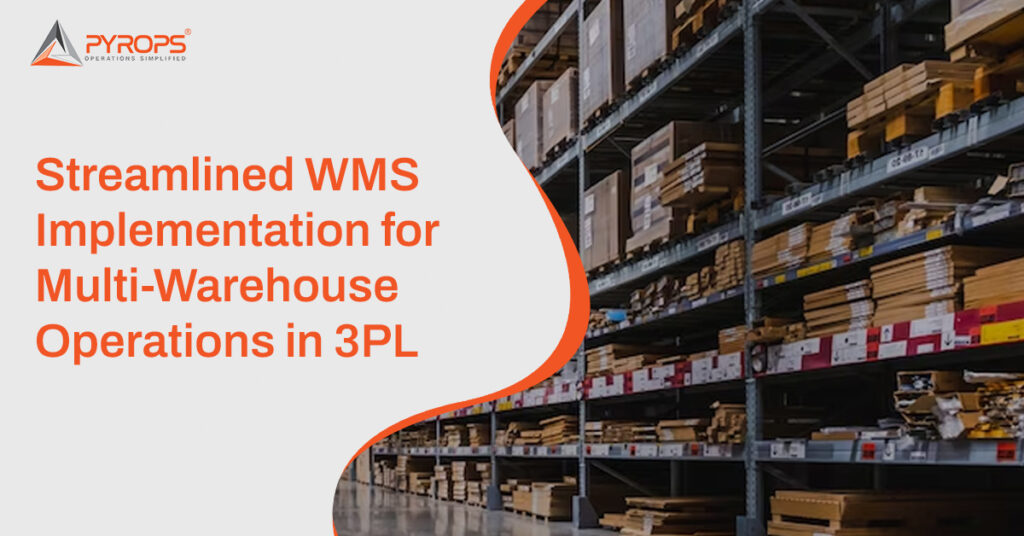
Effective warehouse management is vital for the success of 3PL and e-commerce businesses. To meet growing customer demands and navigate the complexities of managing multiple warehouses, implementing a robust Warehouse Management System (WMS) is crucial. A centralized WMS across various warehouse locations can optimize operations, enhance inventory accuracy, streamline order fulfillment, and deliver overall efficiency gains. However, implementing a WMS in a multi-warehouse environment requires careful planning and execution. In this blog, we explore challenges faced by warehouse managers, highlight the benefits of a powerful WMS, discuss key features for selection, and provide insights and strategies for successful implementation. Whether you’re a 3PL provider or a business with a vast network of warehouses, this blog offers the knowledge needed to streamline operations and achieve remarkable efficiency through WMS implementation. Need of WMS System in 3PL Warehouse Management Running a 3PL operation without a reliable Warehouse Management System (WMS) is akin to sailing an ocean without a compass—an extremely challenging endeavor. WMS is indispensable for 3PL operations, providing order to the complexity of handling diverse inventory for multiple clients. It improves inventory accuracy, minimizes order fulfillment errors, and accelerates delivery times—critical factors for sustaining client satisfaction and staying competitive in the logistics industry. What is a 3PL Warehouse Management system? A 3PL Warehouse Management System (WMS) is a software solution designed to efficiently manage and optimize the operations of third-party logistics providers (3PLs) responsible for handling and storing inventory on behalf of multiple clients. 3PL WMS system streamlines various warehouse processes, including inventory tracking, order fulfillment, and shipment management. By providing real-time visibility into inventory levels, improving accuracy, and enhancing overall operational efficiency, a 3PL WMS software contributes to effective logistics management and client satisfaction. Challenges faced in Multi warehouses Juggling multiple warehouse operations presents a slew of challenges that businesses must face head-on. These challenges cover a wide range of critical areas, each of which necessitates careful attention and strategic solutions. Let’s look at the main challenges that come with running multiple warehouses: Inventory Visibility: Lack of real-time visibility into inventory levels across all warehouses can lead to stockouts, overselling, and poor customer satisfaction. Order Fulfillment Efficiency: Coordinating order fulfillment across multiple warehouses can be complicated, resulting in delays, errors, and increased costs. Scalability: As the number of warehouses and inventory volumes grows, managing operations manually becomes increasingly challenging, leading to inefficiencies and operational bottlenecks. Data Integration: Consolidating data from multiple warehouses and ensuring accurate and up-to-date information can be time-consuming and prone to errors. Resource Utilization: Optimizing resource utilization across multiple warehouses is complex, across labor, equipment, and space. Inefficient resource allocation can lead to underutilization or overutilization, impacting operational costs and productivity. Vendor and Client Collaboration: Coordinating with vendors and clients across multiple warehouses requires effective communication and collaboration. Ensuring timely and accurate information exchange, managing vendor relationships, and meeting client-specific requirements can be challenging without streamlined processes and tools. How 3PL WMS software Helps solve these challenges Unlocking the potential of an efficient Warehouse Management System (WMS) can be a game changer for businesses with multiple warehouses. This powerful software solution is designed specifically to streamline and optimize various aspects of warehouse operations. Organizations can effectively address the aforementioned challenges and achieve significant improvements in: Centralizing Inventory: An Enterprise WMS provides real-time centralized visibility into inventory levels across all warehouses, enabling businesses to make data-driven decisions, avoid stockouts, and optimize stock allocation. Order Consolidation and Routing: A WMS streamlines order fulfillment by consolidating orders from various warehouses and determining the most efficient routing, minimizing shipping costs and delivery times. Scalability and Flexibility: WMS systems are scalable and can accommodate the growth of a multi-warehouse network. They can handle increased inventory volumes and adapt to changing business requirements. Data Integration and Accuracy: A WMS integrates with various systems, such as Enterprise Resource Planning (ERP) and Transportation Management Systems (TMS), ensuring accurate and synchronized data across all warehouses. Key Features of WMS for 3PL warehouse system A robust 3PL Warehouse management software should include essential features to ensure seamless operations and efficient inventory management. These features have been meticulously designed to provide businesses with the tools they require to thrive in the ever-changing world of warehousing. The following are key features of a high-quality WMS software: Multiple Units of Measure: The software should be able to handle products measured in different units, such as weight, volume, or quantity. It should be able to seamlessly convert between other units, allowing for accurate inventory tracking and order fulfillment. Vendor Management: In a multi-vendor warehouse, effective vendor management capabilities are critical. The software should allow for streamlined vendor onboarding, as well as easy communication, performance tracking, and collaboration. This feature improves vendor relations and ensures smooth coordination. Inventory Tracking and Management: In a multi-vendor warehouse environment, accurate and real-time inventory tracking is critical. The software should include comprehensive inventory management features that allow for accurate tracking, monitoring, and control of stock levels in various units of measurement. It should support automated replenishment and provide real-time inventory movement updates across vendors. Order Fulfillment: The software should have strong order fulfillment capabilities tailored to multi-vendor operations. It should make order management, picking, packing, and shipping processes easier by considering multiple measurement units. This feature allows for the efficient consolidation of orders, the optimization of picking routes, and the generation of accurate shipping labels and documentation. Integration Capabilities: Seamless integration with other systems is crucial in a multi-client warehouse. The software should have the ability to integrate with e-commerce platforms, ERP systems, transportation management systems, and other relevant software. This integration ensures the smooth flow of data and eliminates manual data entry or reconciliation efforts, especially when dealing with different units of measure. Reporting and Analytics: Comprehensive reporting and analytics features are vital for monitoring enterprise resource planning and making data-driven decisions. The software should provide customizable reports, dashboards, and analytics tools that offer insights into key metrics related to inventory turnover, order accuracy, vendor performance, and fulfillment cycle times, considering the multiple units
Dark Stores: The Future of Retail Warehouse Management System
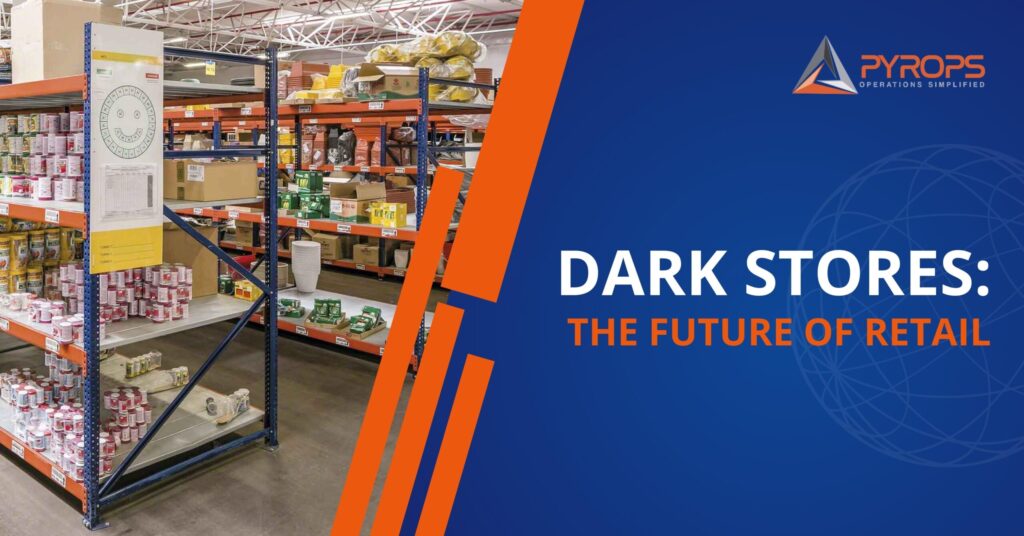
Customers today seek immediate satisfaction when shopping, which is why a significant number prefer the in-person retail experience. The ability to locate desired items, complete a purchase, and leave with the product in hand is a major draw. However, the challenges posed by the pandemic have hindered the seamless provision of this type of shopping encounter. Consequently, numerous physical retailers, both small and large, have embraced a strategy known as “dark stores.” These establishments utilize their retail spaces to serve as warehouse management systems where a substantial inventory is stored and orders are fulfilled. To enhance customer options, they leverage ecommerce warehouse management systems and warehousing management software, enabling features such as swift delivery and same-day pickup. Dark stores play a pivotal role in streamlining the handling of online orders within physical distribution centers, whether or not these centers are accessible to customers. Nonetheless, they notably elevate different facets of the retail experience, offering optimal convenience through efficient delivery and pickup options, along with an extensive product selection, all facilitated by the best software for warehouse management systems. What are Dark Stores? Traditional retail stores that have been transformed into local fulfillment centers are known as dark store models. Grocery stores, clothing labels, and home goods retailers are among them. Their layouts are designed and optimized for retail fulfillment of online orders. Picking and packing of all the ordered items take place in the dark warehouse. The customer either ship or pick up the orders. This approach provides retailers with versatile options catering to both local and external customers, facilitated by an efficient retail warehouse management system. The COVID-19 outbreak has had a major influence on the retail industry. To allow customers to purchase from a brick-and-mortar retail store without visiting a store, businesses are turning to dark stores as a future of stores.They provide the space in the dark warehouse needed to fulfill orders for shipping or prepare them for pickup without requiring customers to enter a crowded store. Why Are Dark Stores Becoming More Popular in the FMCG Industry? The FMCG industry faces a lot of unique concerns such as perishability and the need for a large number of SKUs. Managing SKUs and tracking perishability in a traditional store can be a time-consuming task. Dark stores meaning, on the other hand, focus primarily on click-and-collect functionality. They prioritize ecommerce warehouse management and employ FMCG warehouse management systems, enabling more efficient control over SKUs and addressing the unique concerns of perishable goods. Dark stores are extremely efficient because they do not require a specific location or design for the shopping experience. They don’t need any space to display in-store advertisements. Furthermore, the dark store model can serve multiple online retailers at the same time. Dark grocery stores keep a large volume of goods in a smaller space. It facilitates easy picking and packing. Fulfillment of orders occurs in dark warehouses. It allows merchants to make the most of available space for easy picking. Instead of the customers, store pickers now walk the aisles to find the products required in the customer order. Benefits of using Dark Stores The benefits of utilizing dark stores extend beyond a mere trend, emphasizing the advantages of employing warehouse management systems. These include the ability to serve local customers. And also to expand the customer reach at a lower cost. Here are a few reasons why the benefits of warehouse management systems make dark warehouses a lasting and impactful strategy. Stocking Space Customers are not permitted inside functional dark stores. So, their layout can be designed to improve storage and picking capabilities. Improving storage capacity ensures a wider product assortment. Faster picking ensures that orders are filled more quickly without sacrificing order accuracy. Stock Levels Dark store models are significantly smaller than typical warehouses. So, it is much easier to keep track of inventory levels. Many dark stores also have Warehouse Management Software. It allows them to keep track of stock levels in real-time. This software also assists retailers in determining if they have too much inventory (known as “deadstock”) or not enough. This can result in stockouts. You can ensure that you always have an ideal level of inventory by streamlining the inventory control process. Order efficiency Dark stores can handle a big volume of orders because they are customer-free zones. So, pickers can also easily walk aisles without having to dodge shoppers and their trolleys. The activity is significantly faster than an end customer doing the same because the pickers are working on confirmed orders. And, they are more familiar with the layout. Dark store warehouse efficiency can be increased by automating fulfilment activities with the right technology, such as Warehouse Management Software (WMS). Order consumption Consumers are more likely to become long-term, loyal customers after they become familiarised with your brand’s speedy, trustworthy, and accurate delivery of items. Dark stores can easily provide customers with more delivery options. This results in increased sales and customer lifetime value. Dark Store Order Fulfillment Models For all types of retailers, dark store fulfilment is a strategic and productive alternative. However, to be fully sustainable, it should offer a variety of delivery and pickup options. Below are the three most typical delivery options for dark businesses. 1. Home delivery Home delivery has become more common, particularly among local shops. Customers will benefit from fast, convenient, and frictionless delivery, especially when it comes to essentials. However, home deliveries can also be made by starting an online store and shipping orders to clients who are located further away. 2. In-store pickup Many classic dark businesses have a designated pick-up space located near the front entrance. Customers won’t have to walk through the dark store to get their product this way. This provides flexibility and reduces delivery costs. 3. Curbside pickup Customers can quickly pick up orders with curbside pickup. It typically consists of designated parking areas where a retailer staff will bring out the order. So the customer does not have to get out of their
The Rise of D2C Brands

Retail in India is booming. The Indian retail business is expected to grow to $1 trillion by 2025, up from $750 billion in 2020. As the pandemic has accelerated the use of digital channels for shopping by Indian customers, direct-to-consumer (D2C) brands have grown tremendously. In direct-to-consumer marketing, corporates can create their products and sell them directly to consumers by eliminating other intermediaries. They can be e-commerce platforms, retail stores, or social media businesses. The purpose is to remove resellers and retail stores from the process before the final consumer. Why the D2C bandwagon? Profitability: By removing intermediaries, brands can lower distribution costs and have more control over profit margins. Also, it offers a better value proposition to consumers. Personalization: The brand retains control of the customer relationship, allowing it to manage the entire experience chain, from the website to the product delivery. Data Control: A high-quality customer connection necessitates real-time access to all data. To understand their customers’ preferences, patterns, trends, and demands must be identified. Fulfilment Technologies D2C brands have to invest significantly in the fulfilment experience to deliver an acceptable offering for the consumer, especially when the consumer is used to an Amazon / Flipkart kind of fulfilment experience. Their fulfilment is complex and predictability of the supply chain can be tricky unless the D2C brands invest in the right systems and processes. Thanks to technological advancements so these issues can be easily resolved. Order Management Systems When selling direct-to-consumer (D2C) products, a brand must invest in order management solutions. It offers benefits such as Maintain a centralised database of inventory spread across all locations Provide complete visibility of stock movement Allow for faster order processing by integrating all sales channels into a single platform. Implementation of Warehouse Management System (WMS) For smooth supply chain operations, a direct-to-consumer(D2C) business needs warehouse management software so that assists in Error-free barcode label driven and scan-based operations Optimize order picking & shipping for faster dispatches Provide real-time information on the inventory Return Management Solutions Returns are an integral part of e-commerce. Customers are more likely to shop with a retailer that offers a simple returns process. To increase productivity, D2C brands should invest in a return management solution that offers the following benefits: Create a return manifest to track shipments Quick return processing and capturing codes for further analysis Ensure quick re-listing for sales Warehouse management in D2C businesses A D2C business requires warehouse management software because it assists in acquiring goods and placing them on the appropriate shelf. They require WMS to enhance order picking & shipping and provide real-time inventory information as well. It can also be integrated with your existing ERP system. Here are a few tips for effectively managing your warehouse: Keep your warehouse organized An organized warehouse ensures smooth warehouse operations for your business. So, adhere to the following points to manage your warehouse: Place frequently selling items at an accessible spot Track products using barcodes and labels. Use a shelf system to make the most of your warehouse’s vertical space. Use the FIFO and FEFO methods. Stock level Maintaining product stock levels to ensure that you never run out of products. And, it should have the appropriate stock positions across multiple warehouses aligned with geographical demand and forecasting. You can also analyse sales of products based on seasons, months, and other parameters by marking out the minimum and maximum stock for each product in your warehouses. Forecasting & cycle analysis You should improve the forecasting and cycle analysis. The best benefit of improving product forecasting and performance cycle track is that there will never be a shortage or overflow of items. You’ll know when to restock and how much to reorder with smart data management. So, you can maintain optimal availability and inventory levels. Invest in warehouse technologies that automate and improve inventory management. It further improves the forecasting of product flow. Because of an effective warehouse management system, you can prepare for holiday seasons well ahead of time. Storage space By monitoring the process and looking for inefficiencies, you can improve the efficiency of your warehouse storage space. Meanwhile, ensure the maximum utilization of space. Warehouse optimization enhances accuracy, on-time delivery and the healthier bottom line. Pyrops WMS processes orders from all platforms in real-time. It allows inventory to be handled effectively and assures error-free & timely product deliveries. As a result, it provides a better customer experience and builds a solid relationship with customers.
Warehouse Management Best Practices For FMCG
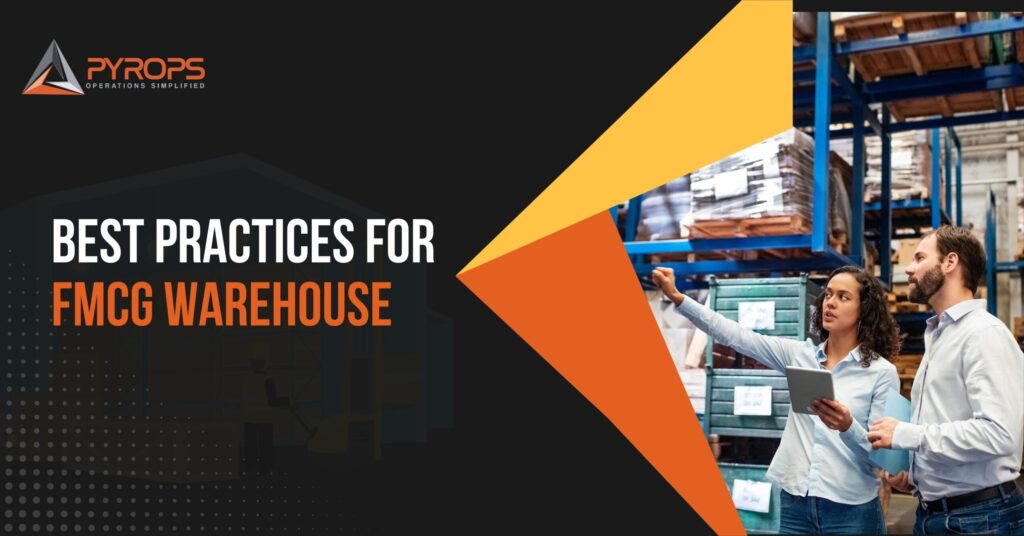
What is a warehousing management system? A Warehouse Management System (WMS) solution plays a pivotal role in efficiently overseeing the reception, storage, and movement of materials within a warehouse, as well as facilitating their timely shipment to customers or other destinations. WMS software is instrumental in managing inventory control, optimizing order fulfillment processes, and streamlining material handling operations. Within the broader scope of the supply chain, a WMS System solution serves as a central hub for coordinating the inbound and outbound flow of goods. This encompasses the seamless coordination of goods from the manufacturing facility to the warehouse and ultimately to end customers. The WMS software also ensures the meticulous tracking and management of stored goods, emphasizing the safe and secure handling of materials within the warehouse environment. Best Practices For Warehouse Management Good warehouse practices require maintaining high quality and safety standards for goods in storage. This includes everything from receiving and storing raw materials to distributing finished products. In the FMCG industry, the competition is fierce. As a result of consumers’ high expectations, the focus remains on delivering products efficiently to the market. The availability of products at relevant channels and the best warehousing practices have become important competitive differentiators. Also, the FMCG industry has a minimal margin for error due to the reduction in product life cycles. Hence, it determines how to plan and execute supply chain management effectively. FMCG WAREHOUSE Improved warehousing and logistics solutions are major productivity drivers in the FMCG industry. Warehouse management can play an essential role in the integrated logistics strategy. They (warehouses) develop and maintain positive relationships with the supply chain partners. Simultaneously, warehouse management system software directly impacts customer service, brand sales, and marketing initiatives. A warehouse firmly manages the fluctuations in market supply and demand. A warehouse management software focuses on storing products whenever supply exceeds demand. Warehouses can speed up product delivery by offering additional price tagging, product packaging, or final assembly. As a result, the warehouse’s good practices serve as a link between the producer and the customer. Warehouses are specially designed spaces for storing and handling materials. FMCG warehousing operations increased ROI and reduced costs by improving their processes, picking stock more efficiently, and managing their locations better. They also need to keep their partners and customers happy to stay competitive. WMS software should be able to handle tasks like cross-docking, loading and unloading bays, using handheld devices, packing in bulk, and scheduling tasks. FMCG warehouse management teams need powerful and flexible WMS software to make their operations more efficient. The goal is to consistently improve service levels, both for internal and partner operations, while reducing operational costs and increasing revenue. FMCG warehousing operations increased ROI and reduced costs by improving their processes, picking stock more efficiently, and managing their locations better. They also need to keep their partners and customers happy to stay competitive. WMS software should be able to handle tasks like cross-docking, loading and unloading bays, using handheld devices, packing in bulk, and scheduling tasks. FMCG warehouse management teams need powerful and flexible WMS software to make their operations more efficient. The goal is to consistently improve service levels, both for internal and partner operations, while reducing operational costs and increasing revenue. CHALLENGES IN FMCG WAREHOUSE Optimizing FMCG warehouse design A company must optimize the warehouse storage spaces inside warehouses. In simple terms, a firm must use FMCG warehouse design for various purposes, such as inventory. Also, goods in areas must equip themselves with well-designed pick pathways for smooth operations. Stock Tracking & Accuracy If a company uses a WMS Software or an ERP system, then purchase order data availability becomes feasible. One must not compromise upon accuracy. Poor customer service results in less accuracy in the FMCG warehouse. Seamless Compatibility All of the systems in a Retail Distribution Warehouse must operate smoothly to achieve maximum efficiency. It is essential to integrate the warehouse management system and ERP systems perfectly. Multiple Locations The demand for inventory tracking grows 10X when warehouses operate at multiple locations. Warehouse managers need real-time monitoring and reliable data to locate the position of inventory. For example, the manager can call and process it faster if the stock is yet to leave the warehouse. BEST PRACTICES FOR YOUR FMCG WAREHOUSING Here are the five best warehousing practices for FMCG that can help in the FMCG’s warehouse growth. 1. FEFO One must consider various factors while establishing a First-Expiry-First-Out (FEFO) strategy in the warehouse. Improving the operations by using a FEFO put-away and pick process helps a company in the long run. Many FMCG customers choose to store their products in many locations with a variety of SKUs or inflow racks. Choose a WMS software that takes FEFO into account at the receiving and pick-up process. 2. Cross-docking It involves unloading a product from one truck and loading it directly into another. A company doesn’t require storing the product in the warehouse again as it directly gets loaded into another. A company saves valuable time and money by delivering the products on time and saving the cost for extra storage. As much as feasible, follow this approach to keep your operations smooth. 3. Wave replenishment Space on your level and equipment such as lifts have a lot more to do with wave replenishment than anything else. Your warehouse replenishment team may need to coordinate their efforts if there aren’t enough lifts available, especially for a given set of activities. This factor will help to prevent unnecessary traffic on the floor. 4. Visibility The consumer products industry must have complete insight into the supply chain. It helps the industry to benefit from thorough product traceability. A warehouse supplier allows you to locate your products right from inbound shipments to storage. It also gives the facility of warehouse picking, packing, and shipping. So that the needs of end customers are met. It becomes easier to plan more effectively and cut the cost once the needs are met. 5. Co-packing, labelling, kitting If