
Warehouse Operations Simplified

September 2021

Warehousing

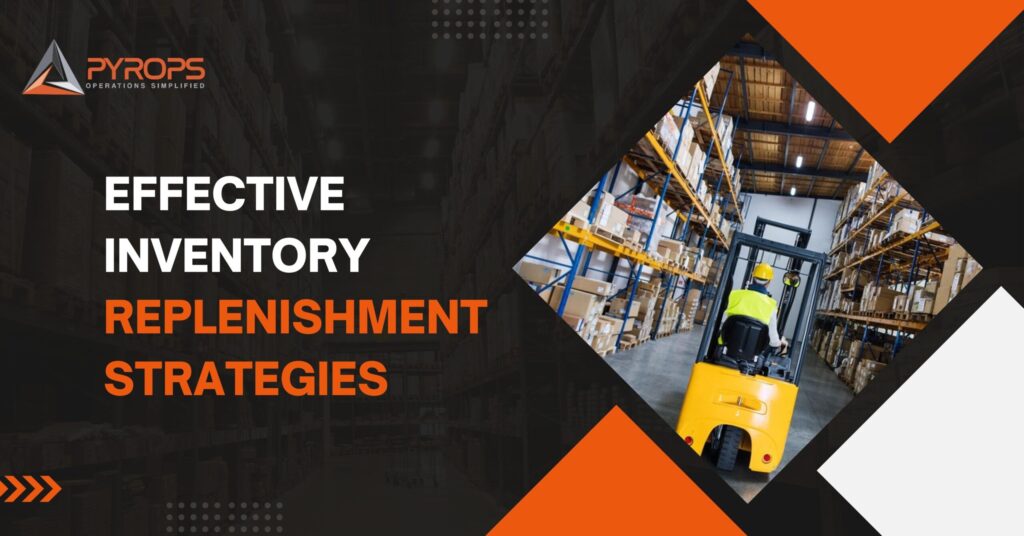
Effective Inventory Replenishment Strategies

Inventory management is an integral part of the supply chain that influences customer loyalty and brand experience. Timely inventory availability and efficient inventory management are mission-critical in today’s fast fulfilment environment where the customer is spoilt for choice. An effective inventory replenishment strategies assists organizations in determining when a product requires restocking (before it runs out). It’s also used to figure out how much stock to add to your inventory by reordering and how much back stock to move to active inventory. WHAT IS INVENTORY REPLENISHMENT? The process of sourcing inventory from suppliers or moving inventory from reserve storage to picking locations is known as inventory replenishment. It is also known as stock replenishment. Inventory replenishment solutions can also be used to move inventory from reserve storage to primary locations within a warehouse. Customized inventory replenishment solutions can make it easier to transfer products from one warehouse to another to replenish stock levels. The goal of replenishment stock is to keep inventory moving through the supply chain at an optimal rate by maintaining efficient order and line-item fill rates. This procedure helps to avoid inventory overstocking. IMPORTANCE OF INVENTORY REPLENISHMENT A strong inventory replenishment strategy is essential for businesses to avoid costly supply chain problems like stockouts and overstocks. As mentioned earlier, stockouts don’t only mean lost sales, but can also damage customer loyalty and trust in a brand. An efficient inventory replenishment process helps companies quickly fulfill every order, meet customer demand, and increase profitability while lowering costs. Here are three reasons why retailers need to replenish their inventory. Avoid Stockouts If a merchant doesn’t replenish inventory on time, they risk having a stockout, which means that items will be out of stock when customers want to buy them. Backorders and stockouts can cause frustration to your customers. The easiest method to minimize common stockout difficulties is to keep safety stock, backup inventory, or emergency inventory on hand at all times. It is also a good idea in case a supply chain issue arises unexpectedly. Prevent overstocking A smart inventory replenishment process can also help prevent overstocking on inventory. Replenishing stock too early or without considering changes in customer demand or seasonality can lead to dead stock, which increases carrying costs by having unsellable inventory sit on shelves for too long. With the Economic Order Quantity (EOQ) Formula, you can minimize overstocking and expensive warehouse logistics costs by finding the optimal amount of inventory to have on hand to fulfil order demand. By calculating EOQ, a greater understanding of inventory, including safety stock, is gained. It helps you to keep inventory and warehousing costs down to a minimum. Reduce shipping costs Sending items from a single order in multiple shipments can increase shipping costs, create more packaging waste, and confuse customers. A best practice is to split your replenishment stock across fulfillment centers to keep inventory close to your customers. This can help you save money on shipping and improve your last-mile delivery.  INVENTORY REPLENISHMENT METHODS The right inventory replenishment method ensures that your warehouse never runs out of stock, while also avoiding excess inventory. It can also help to maximize warehouse space and reduce product misplacement, leading to reduced operational costs. Stockouts can cause huge problems in terms of retention rates and customer satisfaction. Therefore, it is crucial to choose the right inventory replenishment model for your business’s needs. Your choice of inventory replenishment method will depend on a number of factors, including your purchasing process, business model, product lines, suppliers, order fulfillment methods, and more. According to Harvard Business Review, 72% of stock-outs happen due to faulty in-store ordering and replenishing practices—retailers ordering too little or too late, generating inaccurate demand forecasts, or otherwise mismanaging inventory. An efficient inventory replenishment necessitates careful planning that includes demand forecasting, inventory analysis and other supply chain metrics like in-stock status and product velocity (the rate at which an SKU sells). There are three main inventory replenishment strategies that organizations can use: Reorder Point Strategy: Inventory reorder points ensure that you always have enough stock on hand to meet customer demand. Reorder points also allow for greater financial flexibility by keeping a minimum amount of inventory on hand at all times. Based on historical order data, the reorder point formula assists you in calculating the appropriate stock levels to meet customer demand. Inventory replenishment points are a key part of any replenishment supply chain or warehouse replenishment strategy. Top off Method: When your inventory includes a lot of fast-moving SKUs, the top-off method tends to be the most suitable inventory replenishment strategy. Using this strategy, inventory levels for a particular product are “topped off” in their respective storage locations during downtime. So that you can maintain a high inventory turnover rate without encountering stockouts for pickers. Periodic Inventory Replenishment Method: Inventory is restocked at regular intervals using the periodic inventory replenishment method. Inventory levels are only evaluated at specific times or dates, regardless of how low stock levels may fall before that point. This method is most commonly used in warehouses with large storage capacities. BEST PRACTICES OF INVENTORY REPLENISHMENT It takes time and effort to build a successful inventory replenishment strategy. The following three best practices should always be considered when planning and implementing effective inventory replenishment strategies. Implement The Right Technology Implementing the right technology is a simple way to gain real-time visibility into inventory levels. It allows you to make better inventory decisions across all the locations. You can easily keep track of inventory control, inventory trends. It also avoids common stock issues by using inventory automation tools for inventory optimization. Use inventory replenishment data Knowing which items are slow-moving and which are fast-moving allows you to make better decisions about replenishment of inventory. With this data, you can improve demand forecasts, calculate safety stock numbers. It also identifies inventory turnover rates for your products. It addresses the other issues that may have a financial impact on your business. Better Inventory Management Strategies Regular inventory audits, standard

Best Practices For FMCG Warehouse
Warehouse Management

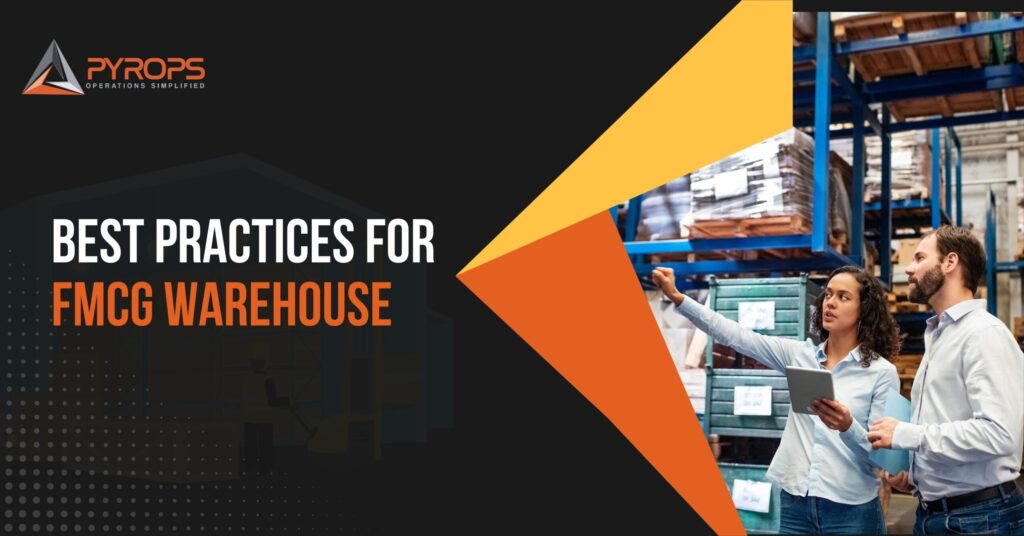
Warehouse Management Best Practices For FMCG

What is a warehousing management system? A Warehouse Management System (WMS) solution plays a pivotal role in efficiently overseeing the reception, storage, and movement of materials within a warehouse, as well as facilitating their timely shipment to customers or other destinations. WMS software is instrumental in managing inventory control, optimizing order fulfillment processes, and streamlining material handling operations. Within the broader scope of the supply chain, a WMS System solution serves as a central hub for coordinating the inbound and outbound flow of goods. This encompasses the seamless coordination of goods from the manufacturing facility to the warehouse and ultimately to end customers. The WMS software also ensures the meticulous tracking and management of stored goods, emphasizing the safe and secure handling of materials within the warehouse environment. Best Practices For Warehouse Management Good warehouse practices require maintaining high quality and safety standards for goods in storage. This includes everything from receiving and storing raw materials to distributing finished products. In the FMCG industry, the competition is fierce. As a result of consumers’ high expectations, the focus remains on delivering products efficiently to the market. The availability of products at relevant channels and the best warehousing practices have become important competitive differentiators. Also, the FMCG industry has a minimal margin for error due to the reduction in product life cycles. Hence, it determines how to plan and execute supply chain management effectively. FMCG WAREHOUSE Improved warehousing and logistics solutions are major productivity drivers in the FMCG industry. Warehouse management can play an essential role in the integrated logistics strategy. They (warehouses) develop and maintain positive relationships with the supply chain partners. Simultaneously, warehouse management system software directly impacts customer service, brand sales, and marketing initiatives. A warehouse firmly manages the fluctuations in market supply and demand. A warehouse management software focuses on storing products whenever supply exceeds demand. Warehouses can speed up product delivery by offering additional price tagging, product packaging, or final assembly. As a result, the warehouse’s good practices serve as a link between the producer and the customer. Warehouses are specially designed spaces for storing and handling materials. FMCG warehousing operations increased ROI and reduced costs by improving their processes, picking stock more efficiently, and managing their locations better. They also need to keep their partners and customers happy to stay competitive. WMS software should be able to handle tasks like cross-docking, loading and unloading bays, using handheld devices, packing in bulk, and scheduling tasks. FMCG warehouse management teams need powerful and flexible WMS software to make their operations more efficient. The goal is to consistently improve service levels, both for internal and partner operations, while reducing operational costs and increasing revenue. FMCG warehousing operations increased ROI and reduced costs by improving their processes, picking stock more efficiently, and managing their locations better. They also need to keep their partners and customers happy to stay competitive. WMS software should be able to handle tasks like cross-docking, loading and unloading bays, using handheld devices, packing in bulk, and scheduling tasks. FMCG warehouse management teams need powerful and flexible WMS software to make their operations more efficient. The goal is to consistently improve service levels, both for internal and partner operations, while reducing operational costs and increasing revenue. CHALLENGES IN FMCG WAREHOUSE Optimizing FMCG warehouse design A company must optimize the warehouse storage spaces inside warehouses. In simple terms, a firm must use FMCG warehouse design for various purposes, such as inventory. Also, goods in areas must equip themselves with well-designed pick pathways for smooth operations. Stock Tracking & Accuracy If a company uses a WMS Software or an ERP system, then purchase order data availability becomes feasible. One must not compromise upon accuracy. Poor customer service results in less accuracy in the FMCG warehouse. Seamless Compatibility  All of the systems in a Retail Distribution Warehouse must operate smoothly to achieve maximum efficiency. It is essential to integrate the warehouse management system and ERP systems perfectly. Multiple Locations The demand for inventory tracking grows 10X when warehouses operate at multiple locations. Warehouse managers need real-time monitoring and reliable data to locate the position of inventory. For example, the manager can call and process it faster if the stock is yet to leave the warehouse. BEST PRACTICES FOR YOUR FMCG WAREHOUSING Here are the five best warehousing practices for FMCG  that can help in the FMCG’s warehouse growth. 1. FEFO One must consider various factors while establishing a First-Expiry-First-Out (FEFO) strategy in the warehouse. Improving the operations by using a FEFO put-away and pick process helps a company in the long run. Many FMCG customers choose to store their products in many locations with a variety of SKUs or inflow racks. Choose a WMS software that takes FEFO into account at the receiving and pick-up process. 2. Cross-docking It involves unloading a product from one truck and loading it directly into another. A company doesn’t require storing the product in the warehouse again as it directly gets loaded into another. A company saves valuable time and money by delivering the products on time and saving the cost for extra storage. As much as feasible, follow this approach to keep your operations smooth. 3. Wave replenishment Space on your level and equipment such as lifts have a lot more to do with wave replenishment than anything else. Your warehouse replenishment team may need to coordinate their efforts if there aren’t enough lifts available, especially for a given set of activities. This factor will help to prevent unnecessary traffic on the floor. 4. Visibility The consumer products industry must have complete insight into the supply chain. It helps the industry to benefit from thorough product traceability. A warehouse supplier allows you to locate your products right from inbound shipments to storage. It also gives the facility of warehouse picking, packing, and shipping. So that the needs of end customers are met. It becomes easier to plan more effectively and cut the cost once the needs are met. 5. Co-packing, labelling, kitting If

Warehousing

The Future Of Omni-Channel Marketing

With the evolution of new strategies in today’s marketing world, customers expect consistent service across all the touchpoints. Unfortunately, reaching customers through all channels is easier said than done. According to Gartner, over 90% of marketers struggle to connect seamlessly with more than three channels on the buyer journey.  There’s a solution to overcome this struggle, and that is Omni-channel Marketing. This article discusses the strategies and trends required for the future of omnichannel marketing. WHAT IS OMNI-CHANNEL MARKETING? Omnichannel marketing integrates various organization channels to interact with consumers and to create a consistent brand experience. Regardless of how customers interact with your brand, it provides flexibility and a seamless user experience. In this way, customers can interact with brands on their terms, which leads to an overall improved consumer experience. This enables you to connect with your customers through a personalized experience. BENEFITS OF OMNICHANNEL MARKETING Most brands agree that an omnichannel approach is the most effective way to reach their target audience. One can reap the following benefits by implementing omnichannel marketing: 1. User Experience Customers are encouraged to interact with a brand across multiple touchpoints and channels while using an omnichannel strategy. 2. Brand Identity Creating a consistent brand experience across all the platforms helps you strengthen your brand and quickly build a positive image. 3. Increase in revenue A successful omnichannel marketing strategy relies on accurate segmentation and personalization—increased customer engagement results in more conversions and a higher ROI. HOW TO CREATE AN EFFECTIVE OMNI-CHANNEL STRATEGY There are four steps to create an effective Omni-Channel strategy that satisfies your customers at all touchpoints. Understand Your Customers Understanding your customers is the first step in developing an effective omnichannel strategy. You need to understand the demographic details of your customers, such as their location, age group, interests, etc., and most importantly, the mode of channels they use to access your content. Analyze The Strength Of All The Channels When you understand your customers and their goals, it becomes easier to identify the sales channels. For an omnichannel experience, you must understand each channel’s requirements and the processes required to interact with each channel and then combine them. The Netsertive report shows that the channels are crucial for the success of an omnichannel marketing User-Friendly Website You should optimize your website for all platforms, including mobile phones. E-commerce statistics show that 79% of smartphone users completed an online purchase in the last six months. Web pages, particularly post-click landing pages, should contain a responsive design. This makes visitors provide their personal information. Implement The Right Technology When you implement the right technology, it allows you to develop personalised content and increase sales. With its ability to connect to several channels, it improves your brand’s operations and strategies. TRENDS IN OMNI-CHANNEL MARKETING According to Harvard Business Review, 73% of shoppers use more than one shopping channel, and these customers have a 30% higher lifetime value than those who only use one channel. To successfully implement an omnichannel strategy, the following are the trends you should consider in your business. These trends will not only help you to experience 10X growth but become a roadmap to the future of omnichannel marketing. Automation As new technologies emerge and user behaviour changes, outdated software will not help. Improving automation processes and sources are the best technique for omnichannel campaigns. Companies can use automated warehouses to manage online, app-based, and brick-and-mortar orders. They can also list data, track order fulfilment, sync inventories, and manage warehouses across multiple channels. Integration with WMS The gradual shift of a traditional warehouse to an omnichannel warehouse necessitates a thorough analysis of current processes. It also provides a detailed roadmap of the transformation. Simultaneously, one can improve the company’s visibility in terms of operations and reconfigure them to meet the needs of an omnichannel warehouse. It also offers one-touch integration across multiple sales channels and stakeholders, including delivery service providers, distributors, and suppliers. Following are some of the reasons why WMS integration is considered an omnichannel success. Updates on order status Major online marketplaces are integrated with WMS Visibility of incoming orders, orders in transit, product returns, and material procurement Improvements in Supply chain To keep up with the growth in e-commerce sales, organisations will need to strengthen their supply chain management, inventory management, and delivery methods. These improvements are crucial as customers of omnichannel look for shorter delivery times. Various technologies, such as end-to-end visibility platforms, inventory management tools, and delivery management software, are used to meet these requirements. Creating a smooth shopping experience for your customers at all channels such as a brick-and-mortar store, online, a smartphone, or other channels is imperative. The future of Omnichannel marketing requires warehouse fulfilment to process the varying nature of orders received from different channels. Pyrops WMS provides excellent tracking capabilities to ensure that orders are processed as efficiently as possible. With Pyrops’ multi-channel fulfilment capabilities, you can seamlessly serve both B2B and B2C store demand.    

Pyrops® WMS is a warehouse management software designed, developed, and implemented by Precision Pyramid Private Limited.

For more info visit: www.precisionpyramid.com

India Head Office

A-1, Forest Lane, Near Ghitorni Metro Station, MG Road, Sultanpur, New Delhi – 110030

Nepal Corporate Office

Precision Pyramid Nepal Private Limited 6th Floor, Radha Bhawan, Tripureshwar, Kathmandu, Nepal

Contacts

Follow us

Scroll to Top