
Warehouse Operations Simplified

Warehouse Productivity

Warehouse Management, Warehouse Management System, Warehouse Productivity

Invisible Inventory Loss: The Hidden Gaps in Your Warehouse Operations

Invisible Inventory Loss Introduction When inventory doesn’t match system records, the first assumption is often theft. But most audits don’t uncover stolen stock. They uncover something far more common: process gaps that quietly disrupt inventory accuracy over time. These gaps don’t show up as a single failure. Instead, they build gradually through everyday operations—small inconsistencies that go unnoticed until they become a significant financial discrepancy. What Actually Causes Inventory Discrepancies Inventory loss in warehouses is rarely dramatic. It is usually the result of multiple small breakdowns across processes. Temporary Storage Locations One common issue is temporary storage locations. Overflow areas or staging zones are often used for operational convenience but not consistently updated in the system. Over time, inventory exists physically but not digitally, creating gaps in visibility. Manual Adjustments Another frequent cause is manual adjustments. When mismatches are identified, teams often correct them directly in the system. While this resolves the immediate issue, it removes context. Without understanding why the discrepancy occurred, the same errors continue to repeat. Returns Processing Returned items are often held for inspection or reprocessing before being logged back into inventory. During this delay, they remain unaccounted for, creating inconsistencies between physical and system stock. Over-Reliance on System Data There is also a tendency to trust system data over physical reality. Once inventory is recorded, it becomes the assumed truth, even when actual stock levels may differ. This reliance allows discrepancies to grow without being questioned. Lack of Transaction-Level Traceability Without a clear record of every movement—from inbound to storage to dispatch—it becomes difficult to track where discrepancies originate. Why Loss Happens Gradually Warehouses rarely lose stock in a single day. Instead, losses accumulate through: unrecorded movements delayed updates small picking or receiving errors Each issue may seem insignificant on its own. But over time, these small differences compound into larger mismatches that are only discovered during audits. By then, the root cause is often difficult to trace. Visibility Is Not the Same as Control Many operations believe they have inventory control because they can see stock levels in their systems. But visibility alone is not enough. True control requires traceability; the ability to track every unit’s movement across the warehouse. Without it, inventory data becomes an assumption rather than a reliable source of truth. How a Warehouse Management System (WMS) Helps A Warehouse Management System (WMS) does not eliminate human error. Instead, it ensures that errors are not overlooked. It enforces structured workflows where every movement is recorded, reducing reliance on informal processes. It also creates a complete audit trail, allowing teams to trace inventory across its lifecycle. More importantly, a WMS identifies discrepancies early. Instead of discovering issues during audits, teams can address them in real time, when the context is still clear. By aligning system data with physical inventory, a WMS helps organizations move from reactive corrections to proactive control. Conclusion A single event rarely causes inventory discrepancies. They are the result of process gaps, limited traceability, and inconsistent data capture. Audits don’t create these problems; they reveal them.

Warehouse Management, Warehouse Management System, Warehouse Productivity

What Makes E-commerce Warehouses Different?

High Velocity. High Variability. Zero Margin for Delay. What Makes E-commerce Warehouses Different High Velocity. High Variability. Zero Margin for Delay. What Makes E-commerce Warehouses Different High Velocity. High Variability. Zero Margin for Delay. What Makes E-commerce Warehouses Different High Velocity. High Variability. Zero Margin for Delay. The Rise of the Click Economy Global e-commerce sales have crossed $6 trillion and are projected to keep growing steadily year after year. At the same time, over 60% of consumers expect delivery within 2–3 days, and a growing segment prefers same-day or next-day fulfilment. That expectation has changed what a warehouse needs to do. Traditional warehouses were designed to store goods efficiently and ship them in bulk. E-commerce warehouses are designed to process thousands of small, individual orders quickly and accurately. It’s no longer about storage. It’s about fulfilment speed and customer experience. Thousands of Small Orders, Not Bulk Shipments In a traditional B2B setup, a warehouse may dispatch pallets or cartons to a distributor. In e-commerce, the same facility could process 10,000+ single-item orders per day Key differences: Higher SKU variety Lower order quantities (often 1–3 items per order) Unpredictable order patterns Flash sales and sudden spikes This creates operational complexity. Picking, packing, and sorting become more granular and time-sensitive. Even a small inefficiency multiplies quickly at scale. Speed is the Baseline, Not the Advantage In e-commerce, speed is not a competitive edge — it’s the minimum expectation. To meet tight delivery timelines, warehouses rely on: Batch and wave picking Real-time inventory updates Defined cut-off times Fast-moving picking zones A delay of even 30 minutes can impact hundreds of orders. Operations are tightly orchestrated, often running in multiple shifts to meet demand. Returns Are Built Into the System E-commerce return rates range from 20–30% on average, and in categories like fashion, they can go even higher. Unlike traditional warehouses, where returns are occasional, e-commerce warehouses treat reverse logistics as a core process. This means: Dedicated return processing zones Quick quality inspection Fast reintegration into inventory Clear tracking and documentation If returns are not processed quickly, inventory accuracy suffers — and so does customer trust. Technology Is Non-Negotiable Manual processes cannot sustain e-commerce scale. Most e-commerce warehouses depend heavily on: Warehouse Management Systems (WMS) Order Management Systems (OMS) Barcode or RFID scanning Automation and conveyor systems Real-time dashboards Inventory visibility must be accurate down to the last unit. A single stock mismatch can lead to cancelled orders, refunds, and negative reviews. Technology is not a support function here — it is the backbone. Conclusion: It’s a Fulfilment Engine, Not Just a Warehouse An e-commerce warehouse operates less like a storage facility and more like a high-speed processing centre. It is designed around: Customer expectations Order velocity Accuracy standards Operational agility In today’s market, the warehouse is not just a backend function. It directly influences delivery speed, customer satisfaction, and brand reputation. In e-commerce, the warehouse is where the brand promise is either delivered — or broken. Book a demo now! Read More Read SCM New.

Warehouse Management, Warehouse Management System, Warehouse Productivity

Warehouse Myth Busting: What’s Actually Slowing You Down?

Warehousing has evolved rapidly over the last decade, yet outdated assumptions still drive many operational decisions. The result? Inefficiencies that feel “normal” but quietly drain time, money, and credibility. Let’s break down five common warehouse myths and what really happens on the floor. Myth 1: ERP Inventory = Warehouse Inventory An ERP system records ownership and transactions, what was purchased, sold, transferred, or billed.A Warehouse Management System tracks physical reality; what is actually present on the shelf, in which bin, and in what condition. When the two fall out of sync, disputes begin: Finance sees stock available. Sales promise delivery. The warehouse cannot locate the item. The mismatch between digital records and physical inventory is often the root cause of operational friction. Reality: ERP and warehouse systems must work together, but they serve different purposes. Myth 2: Barcode Scanning Slows Operations While we know that scanning only adds seconds, searching and correcting errors add hours.  Mis-picks, shipment errors, and reconciliation gaps cost far more time than the few seconds it takes to scan. Reality: Accuracy is an imperative factor, and speed alone cannot work. Structured tracking prevents invisible operational losses. Myth 3: Automation Reduces Manpower In simple words, automation’s main purpose is to eliminate chaos, it does not eliminate or replace the need for efficient manpower. When workflows are clear: Teams spend less time firefighting. Dependency on specific individuals reduces. Supervision becomes structured. Productivity per employee increases. Reality: Automation removes inefficiency in processes and structures, not employees. Myth 4: Automation Requires a Complete Operational Overhaul Many businesses hesitate to adopt automation because they assume it will disrupt existing operations or require rebuilding processes from scratch. In reality, warehouse automation can be introduced gradually, starting with simple improvements like barcode-based inward and outward tracking, followed by bin-level visibility and more controlled picking workflows. ERP integration can then align physical stock with system records. Each step strengthens operational control without halting day-to-day activities. Reality: Automation can be integrated steadily into current workflows, without a complete overhaul. Myth 5: Automation Is Only for Large Warehouses Automation is often seen as something only large warehouses need. However, operational complexity rarely comes from physical size alone — it comes from growth. As SKUs increase, order volumes rise, returns become frequent, and businesses expand to multiple locations, manual systems begin to struggle. What works in a stable, smaller setup can quickly become inefficient when scale increases. Structured systems are designed to handle that growth without creating operational strain. Reality: The right WMS scales with your operations, whether you’re mid-sized or enterprise-level. Conclusion Most operational beliefs come from habit, not data. Warehouses don’t collapse overnight.They slowly adapt to inefficiency until scale exposes the cracks. Re-examining assumptions is often the first step toward operational clarity. Book a demo now! Read More Read SCM New.

Warehouse Management, Warehouse Management System, Warehouse Productivity

Goods-to-Person Picking – When Walking Is Costing You Crores

In a traditional warehouse, productivity is limited by how fast a person can walk. Pickers often cover 8–12 km per shift, spending more time moving than actually picking. As order volumes grow, this “walking cost” quietly turns into lost throughput, labour inefficiency, and delayed dispatches. Goods-to-Person (GTP) picking flips this model on its head. Instead of people going to inventory, inventory comes to people — faster, smarter, and with far less human fatigue. What is Goods-to-Person Picking? Goods-to-Person is a warehouse picking strategy where automated systems deliver the required inventory directly to a fixed picking station. The picker stays in one place. The system handles movement, sequencing, and prioritisation. Some of the many common technologies used in GTP systems include: 1. Conveyors Used to transport totes, cartons, or trays from storage zones to picking or packing stations. Conveyors are ideal for high-volume, repetitive flows where speed and consistency matter. Best suited for: FMCG and retail warehouses Distribution centres with standard carton sizes 2. Autonomous Mobile Robots (AMRs) Robots retrieve shelves, bins, or totes and bring them to pick stations. Once picked, the robot returns the inventory to storage or moves to the next task. Best suited for: Dynamic warehouses with changing SKUs E-commerce and quick commerce operations Facilities needing scalability without major infrastructure changes 3. Carousels (Horizontal & Vertical) Carousels rotate inventory to present the right SKU at the right time. They significantly reduce search and travel time. Best suited for: Small to medium-sized items Spare parts, electronics, pharma, and apparel 4. Vertical Lift Modules (VLMs) VLMs store trays vertically and automatically retrieve them when required. They maximise vertical space while keeping high picking accuracy. Best suited for: Dense SKU environments Space-constrained warehouses High-value or sensitive inventory When Does a Warehouse Need Goods-to-Person? GTP is not a “nice-to-have” automation; it becomes essential when operational pressure crosses a certain point. 1. High Order Volumes As daily order lines increase, walking-based picking simply doesn’t scale. GTP systems allow warehouses to process significantly more orders per hour without proportionally increasing headcount. 2. Labour Shortages & Rising Costs Finding, training, and retaining skilled warehouse labour is increasingly difficult. GTP reduces dependence on highly skilled pickers and makes onboarding faster. Demand is volatile For products with fluctuating or unpredictable demand, order-based kitting prevents overproduction and aligns inventory directly with real orders. High SKU combinations When products can be bundled in many possible configurations, pre-kitting every combination becomes impractical. Order-based kitting offers greater flexibility. Customisation is required Customer-specific requirements, such as region-specific components or optional add-ons, are easier to manage when kits are assembled on demand. Advantages: Zero dead stock Since kits are not assembled until needed, there is no risk of unsold or outdated kit inventory. Better flexibility Warehouses can quickly adapt to changes in demand, product structure, or customer requirements, making this approach ideal for dynamic kitting solutions. Challenges: Without a robust WMS, order-based kitting can increase fulfillment time due to additional picking and assembly steps. This makes system support critical for maintaining service levels.   The Role of WMS in Kitting Operations A Warehouse Management System (WMS) is essential for executing both pre-kitting and order-based kitting efficiently within modern order fulfillment services. A WMS: Defines kit Bills of Materials (BOMs) Validates real-time component availability Guides order picking and assembly workflows Ensures inventory accuracy across both kits and components By integrating kitting logic into daily warehouse operations, WMS-powered order fulfillment solutions help reduce errors, improve speed, and deliver predictable outcomes—no matter which kitting strategy is used. Book a demo now! Read More Read SCM New.

Warehouse Management, Warehouse Management System, Warehouse Productivity

Pre-Kitting vs Order-Based Kitting – Choosing the Right Strategy

Kitting is the process of combining multiple SKUs into a single saleable or deployable unit. In warehouse logistics, kitting plays a crucial role in the efficiency of order fulfilment services. The choice between pre-kitting and order-based kitting has a direct impact on inventory holding, order picking speed, and customer satisfaction. Choosing the right kitting approach depends on demand patterns, product complexity, and how mature your order fulfillment solutions are. Pre-Kitting Pre-kitting involves assembling kits in advance, before customer orders are received. These kits are stored as finished units and picked like a single SKU during fulfillment. It is used for a myriad of reasons, including when: Demand is predictable Pre-kitting works best when historical data shows stable, repeatable demand. In such cases, warehouses can confidently prepare kits in advance without the risk of frequent rework. Kits have a long shelf life Products that do not expire quickly or become outdated are ideal for pre-kitting. This reduces the risk of obsolescence while allowing inventory to be staged closer to dispatch. Assembly is time-consuming When assembling a kit requires multiple steps or quality checks, doing it ahead of time reduces pressure during peak order fulfillment windows. Advantages: Faster order processing Since kits are already assembled, fulfillment teams can skip the assembly step entirely. This significantly improves turnaround time for order fulfillment services, especially during high-volume periods. Lower order picking time Pre-kitted items reduce the number of individual SKUs that need to be picked. This simplifies order picking, minimises errors, and improves warehouse productivity. Challenges: Excess inventory If demand forecasts are inaccurate, pre-kitted stock can pile up, tying up working capital and warehouse space. Obsolescence if demand changes Changes in customer preferences, regulations, or product configurations can render pre-kitted inventory unusable, leading to write-offs. Order-Based Kitting Order-based kitting involves assembling kits only after a customer order is confirmed. Components are picked individually and assembled specifically for that order. It’s used in various situations and conditions, including: Demand is volatile For products with fluctuating or unpredictable demand, order-based kitting prevents overproduction and aligns inventory directly with real orders. High SKU combinations When products can be bundled in many possible configurations, pre-kitting every combination becomes impractical. Order-based kitting offers greater flexibility. Customisation is required Customer-specific requirements, such as region-specific components or optional add-ons, are easier to manage when kits are assembled on demand. Advantages: Zero dead stock Since kits are not assembled until needed, there is no risk of unsold or outdated kit inventory. Better flexibility Warehouses can quickly adapt to changes in demand, product structure, or customer requirements, making this approach ideal for dynamic kitting solutions. Challenges: Without a robust WMS, order-based kitting can increase fulfillment time due to additional picking and assembly steps. This makes system support critical for maintaining service levels. The Role of WMS in Kitting Operations A Warehouse Management System (WMS) is essential for executing both pre-kitting and order-based kitting efficiently within modern order fulfillment services. A WMS: Defines kit Bills of Materials (BOMs) Validates real-time component availability Guides order picking and assembly workflows Ensures inventory accuracy across both kits and components By integrating kitting logic into daily warehouse operations, WMS-powered order fulfillment solutions help reduce errors, improve speed, and deliver predictable outcomes—no matter which kitting strategy is used. Book a demo now! Read More Read SCM New.

Warehouse Management, Warehouse Management System, Warehouse Productivity

ABC Analysis – Stop Treating All Inventory the Same

Not all inventory deserves the same attention — yet most warehouses still manage every SKU as if it carries the same risk and value. This is one of the biggest hidden causes of working-capital loss, slow picking, and excess stock. ABC inventory analysis addresses this by clearly indicating where time, space, and money should be allocated. Rather than spreading effort evenly, ABC inventory management concentrates resources on the SKUs that actually drive revenue, service levels, and cash flow. What is ABC Inventory Analysis? ABC analysis of inventory is a method of ranking SKUs based on their business impact — usually a combination of sales value, usage frequency, and revenue contribution. It groups items into three classes: Class % of Items % of Inventory Value Nature A 10–20% 70–80% High value / fast moving B 20–30% 15–25% Medium importance C 50–60% 5–10% Low value/ slow moving This form of ABC classification in inventory management reveals a critical truth: a small number of SKUs control most of the warehouse’s financial and operational impact. A-items need precision, visibility, and tight control. C-items need cost-efficient storage and simple handling. B-items sit between the two Why ABC Analysis in Inventory Matters in Warehousing Without ABC inventory management, warehouses fall into inefficient patterns: High-value items get stored next to dead stock Fast movers are buried behind slow-moving SKUs Pickers walk longer distances for critical orders Stock counts take too long and miss the riskiest items When everything is treated equally, the warehouse becomes slow, expensive, and error-prone. With ABC classification in inventory management: A-items are placed close to dispatch and high-speed pick zones B-items get moderate control and accessible storage C-items move to high-density or bulk locations This reduces travel time, protects revenue-critical inventory, and prevents over-control of low-value stock. How WMS Enables ABC A modern WMS makes ABC inventory analysis automatic and continuous. Instead of manually assigning classes, the system: Analyzes order frequency, velocity, and sales value Applies ABC analysis of inventory at SKU and location level Reclassifies products as demand shifts Aligns storage layout, pick paths, and cycle-count rules accordingly For example: A fast-selling SKU that becomes a top revenue driver is promoted to A-class A slow-moving item drops to C-class and is moved to cheaper storage This allows ABC inventory management to stay aligned with real demand, turning the warehouse from a reactive operation into a data-driven system. Conclusion ABC inventory analysis brings structure to what is otherwise chaotic inventory management. By using ABC analysis of inventory, warehouses gain clear visibility into which SKUs deserve the most attention, space, and control. Instead of spreading effort evenly across thousands of items, ABC inventory management ensures that time, money, and resources are focused where they generate the highest return. With Pyrops WMS, this becomes a living, automated system. Pyrops WMS continuously applies ABC inventory analysis using real-time movement and sales data, dynamically reclassifying SKUs as demand changes. If you want to reduce picking time, gain tighter control over your inventory, and overall have smooth functioning operations, reach out to us now! Book a demo now! Read More Read SCM New.

Warehouse Productivity

Environmental Impact of E-commerce

Global e-commerce has grown by leaps and bounds since COVID-19 hit us. A lot more users have become comfortable with digital shopping in the last 3 years. Easy and convenient e-commerce offers are addictive, especially when bundled with the feeling of getting a deal or a discount. Many times, customers are induced into buying stuff that was unplanned/unnecessary due to specially promoted events like Big Billion day etc. This is largely due to the FOMO effect. While all this is creating a wow, this causes a severe environmental impact of online shopping. E-commerce warehouses are essential for efficient e-commerce fulfillment. They also play a key role in reducing the environmental impact of online shopping. Sustainable practices in e-commerce warehousing, such as smart inventory management and green packaging, can help to lower the carbon footprint of online shopping.As the e-commerce industry continues to grow, it is increasingly important to prioritize ecommerce and fulfillment strategies to address the environmental challenges posed by this booming industry. Let us look at some facts to assess the situation. Packaging The packaging of products contributes significantly to CO2 emissions from plastics production, pollutes ecosystems, and adds a vast amount of waste to our landfills. Sustainable packaging solutions can help to reduce these negative impacts on the environment. Forest conservation group Canopy estimates 241 million tons of shipping cartons are produced every year from 3 billion trees. In China, statistics from the State Post Bureau showed that the country’s courier handled more than 74 billion parcels in 2021 alone. Riding on the e-commerce and food delivery trends, last year, China’s growth rate of plastic and packaging increased from 2.3% in 2020 to 4.4% in 2021. Furthermore, plastic for packaging reached over 40% of the entire world’s plastic waste. The amount of waste recycled is only 8.7%. Organizations want their products to deliver in perfect condition. This can result in excessive padding techniques using Styrofoam or additional paper. This does not include other materials like plastic, bubble wrap, and tape, all of which create landfill waste and often are not, or cannot be, recycled, which further causes the environmental impact. A recent report by Oceana, an advocacy organization dedicated to ocean conservation, estimated that Amazon generated 600 million pounds of plastic. packaging waste in 2021 and up to 23.5 million pounds of plastic for packaging entered the world’s marine ecosystems. The carbon footprint from electronic devices and Internet use reached almost 4% of total carbon emissions and is expected to become 8% by 2025. Shipping Shipping emissions are another environmental impact of online shopping. The transport of e-commerce goods across the world is responsible for a huge portion of CO2 emissions. Emission figures for India are estimated to be 285g CO2 per parcel and 51% share of total delivery emissions, compared to an estimated 194g CO2 and 53% respectively for Europe. One of the major problems is consumers’ desire for convenience. It is estimated that by 2030, the number of delivery vehicles will increase by 36%, reaching approximately 7.2 million vehicles. This will not only increase to about 6 million tons of CO2 emissions, but it will also increase commutes by 21%, as vehicles will take longer to travel due to higher traffic congestion. Faster delivery requirements tend to create an environmental impact situation in which trucks are moving half-empty and leading to high fuel consumption. The transportation and logistics industry is the biggest contributor to CO2 emissions in the U.S., accounting for 29% of greenhouse gases. Modelled research was conducted on the movement of goods from the factory through to the end consumer, termed “last mile delivery” analyzed the carbon footprint of the “last mile delivery” for the three most prevalent types of shopping channels in the United Kingdom -physical stores, “brick & clicks” (when people order online and a physical store delivers the items to them), and “pure players” (strictly online sellers). Three models examined greenhouse gas emissions from the number of products bought, transportation, warehouse storage, delivery, and packaging. The analysis showed that total greenhouse gas footprints per item purchased were higher from physical stores than those from bricks & clicks purchases in 63% of the shopping events but lower than those of pure players in 81% of shopping events in the United Kingdom. In the United States, greenhouse gas emissions from shopping at physical stores were also estimated to be higher than from the brick & click channel, and lower than the pure play channel, on average. Returns Ecommerce and  fulfillment Companies like Amazon have offered free shipping and returns to juice growth and help customers overcome their hesitations about ordering online from the initial days. Giving consumers, the security of being able to return easily the unwanted products has always been indeed a driver for the conversion, and retention of clients. Every year the United States generates 15 million tons of carbon emissions due to product returns. As more and more online retailers, big and small, offer the option to send back goods easily and often free, return rates, especially of fashion items, have skyrocketed, exceeding 30% of all purchased goods. A study on consumers’ behaviour showed that 79% of consumers want free return shipping. In addition, 92% of them are likely to buy again if the items they purchase are easy to return. Also if an item needs to be returned, it takes double the amount of transportation used to get the item to the consumer. Exchanged items result in a tripling of travel time for one item – essentially a tripling of transportation emissions. Who are the stakeholders? What are their behavioural characteristics? E-commerce companies All e-commerce product fulfillment companies want to deliver securely and quickly to win and keep the customer’s loyalty. Most major companies receive VC funding at a loss, so growth numbers trump unit economics largely. When compared with winning customers/improving customer service, shipping/packing material/returns/reverse logistics generally take a secondary position. Very few companies present customers with options to consolidate/have the capability to consolidate/urge customers to consolidate.

Warehouse Productivity

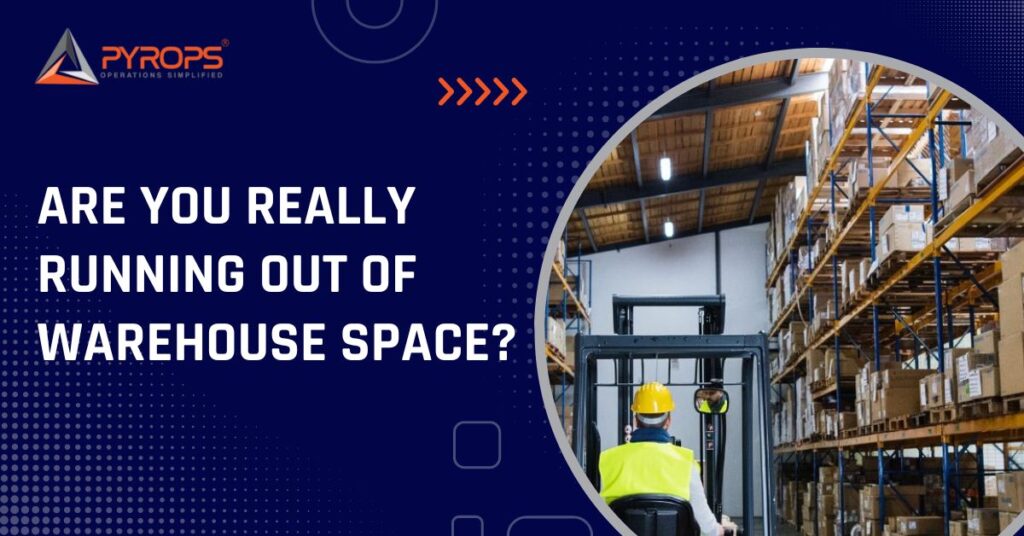
Are you really running out of warehouse space?

It’s very common for companies to run out of warehouse space and it gets frustrating, the racks and the bins get blocked. Also, you can’t figure out where to put things and this scenario really hampers productivity. You can’t let this continue and contemplate the following options:- 1. Go vertical Increasing the roof or adding extra levels of pallet racks will increase the storage space to a great extent. But you would have to consider the engineering limitations and construction regulations and laws along with the possible exorbitant cost. 2. Upgrade Storage Medium You can also upgrade the storage medium to high-density equipment. For example, you can upgrade to double-deep racks if you are currently using single deep racks but that requires forklifts and other equipment to load pallets. 3. Rent extra storage Because the most flexible option to scale up the operations quickly is renting extra space but it is exorbitantly costly in the long run. 4. Shift to a bigger warehouse Shifting to a bigger warehouse might solve the problem for a time being. Although a bigger space will not act as a substitute for inefficient storage arrangements. But do you need to opt for these options or you can store more material in the same limited space? But do you need to opt for these options or you can store more material in the same limited space as the warehouse? To accomplish this, you must ensure optimal warehouse space utilization. You can accomplish this by utilizing a Warehouse Management System (WMS) that can track all locations and items stored with their quantities. Also, WMS will know the weight of each item, the size of each item, the case, and the physical restrictions of each item and ensure that storage is organized in a way that requires the least amount of space. You can accomplish this through some quintessential in-built operational features. Capacity utilization Improving the space utilization score through automated analysis of spread out stock, size of products, department space, vertical space, aisle widths, depth of storage which involves- ABC analysis This is by far the most effective approach to reduce unwanted inventory through a prioritization mechanism allotted to different SKUs. You can categorize the SKUs as A, B, C according to the value they add to the business. Such as A being the most valuable and C being the least. The idea is to channelize the resources towards the most important units. You can define upper and lower stocking thresholds based on risk appetite. Multiple units of measures Support multiple units of measures and increase operational efficiency in making different stocking, storing, and shipping UOMs. Many products consume little time and effort for being stored in a limited space like the typical ones that are received in a box, stored in a box, and shipped in a box, unlike some other products which require different. Example- We brought wires of a certain length and then cut them into pieces for selling. Transfers – bin to bin, location to location Get an instantaneous view of the material position and keep inventory balances accurate by figuring out the most suitable bins and locations for transfers. Ensure lean inventory Enable inventory optimization through refined real-time data which facilitates tracking the entire supply chain that helps you with transferring stock between low-demand and high-demand warehouses, figure out the best possible storage methods, and efficient layouts.

Warehouse Productivity

Choose the right picking strategy for your warehouse operations​.

What is Warehouse Picking? Warehouse picking is a critical operation within the broader logistics and supply chain process. It refers to the process of selecting items from a warehouse inventory to fulfill customer orders or transfer them to another location within the warehouse. Warehouse picking is a key component of order fulfillment and plays a significant role in ensuring timely and accurate deliveries to customers. Warehouse picking can be a manual process where workers physically move through the warehouse to pick items from shelves, or it can be automated using technologies such as conveyor systems, automated guided vehicles (AGVs), and robotic systems. The choice of picking method depends on factors such as the volume of orders, the size and layout of the warehouse, and the types of products being handled. Efficient warehouse picking is crucial for minimizing errors, reducing order processing times, and improving overall customer satisfaction. Why picking in warehouse management is important? Warehouse picking is a crucial aspect of warehouse management, and its importance is underscored by several key factors that impact overall supply chain efficiency and customer satisfaction. warehouse picking is important because it directly impacts customer satisfaction, operational efficiency, and the overall cost-effectiveness of warehouse operations. Implementing effective picking strategies and utilizing technology to streamline the process contribute to a more responsive and competitive supply chain. Warehouse Picking Strategies Warehouse picking systems play a pivotal role in overall warehouse operations, and their efficiency directly impacts both customer satisfaction and operational costs. Specifically, picking constitutes a substantial portion of warehouse operational expenses, and its association with customer satisfaction makes it a critical focus area. In typical warehousing operations, pickers spend a significant amount of time, approximately 60%, walking between locations. Adopting the right warehouse picking strategy becomes paramount in driving down picking costs by enhancing both picker productivity and accuracy. Across various facets of operations management, there is often a trade-off between competing objectives, such as productivity, accuracy, and the time required for an activity. Warehouse picking systems aim to strike a balance in these objectives to optimize overall performance. Order picking methods vary, and selecting the most suitable one for a particular operation depends on various factors. The level of difficulty in choosing the best method is influenced by the characteristics of the product being handled, the total number of orders, picks per order, picks per SKU (Stock Keeping Unit), and the total number of SKUs in the inventory. Often, a combination of picking methods is necessary to effectively handle the diverse characteristics of products and orders within a warehouse. Ultimately, implementing and optimizing warehouse picking systems is crucial for achieving cost savings, increasing efficiency, and meeting customer expectations in the dynamic landscape of modern supply chain management. Productivity The pick rate measures productivity in order picking. Piece pick operations usually measure the pick rate in line items picked per hour. Cycle Time Cycle time is the amount of time it takes to get an order from order entry to the shipping dock. Accuracy Regardless of the type of operation you are running, accuracy will be a key aim. Virtually every decision you make in setting up a warehouse will have some impact on accuracy. For example, from the product numbering scheme to the design of product labels. Warehouse managers know that one size fits all approach would not qualify to attain these objectives. Hence making them choose from the various picking strategies tailored for different order quantities and placement. Basic Order Picking Picker picks one order at a time. The picking sequence should ensure an optimal route. And try to end the pick route near the original starting point. Suited for operations with a small total number of orders and a high number of picks per order. If used with many orders or low picks per order, it may cause congestion in the warehouse, thus slowing down operations Batch picking / Multi-order picking In batch picking You can group multiple orders into small batches. Picker will pick all orders within the batch in one pass using a merged pick list. You can use multi-tiered picking carts to keep orders separate. An intelligent WMS helps create the most optimum batches by ensuring the right orders come together in the batch. Also, it ensures maximum savings. A good WMS also helps prevent the mixing of orders using checks and validations. Reduces travel time in operations with low picks per order. Batch picking requires the accumulation of orders to create batches. Thus, introducing a delay in order cycle time. Wave picking Combination of zone and batch picking. All zones are picked at the same time by respective pickers mapped to the zone. All the picked items reach a processing area where they are sorted into individual orders/shipments. Sorting can be tricky, only a few warehouse management systems offer this functionality. Also, you can use some automation for high-volume operations. Suitable for operations with a high total number of SKUs and moderate to high picks per order. Zone picking You can assign pickers a specific area/zone. Pickers will operate only within their zones. Pick and pass – orders are moved from one zone to the next as the picking from the previous zone is completed. Zone workload balancing is critical while setting up Zone picking. Suitable for large operations with high total numbers of SKUs, high total numbers of orders, and low-to-moderate picks per order. You can assign pickers a specific area/zone. Pickers will operate only within their zones. An efficient WMS lets you implement the suitable picking strategy more efficiently. Also, it enables you to derive the most productivity out of the operational improvements. Therefore, Pyrops WMS is a solution that will help you to pace up your picking, packing, and shipping activities.

Pyrops® WMS is a warehouse management software designed, developed, and implemented by Precision Pyramid Private Limited.

For more info visit: www.precisionpyramid.com

India Head Office

A-1, Forest Lane, Near Ghitorni Metro Station, MG Road, Sultanpur, New Delhi – 110030

Nepal Corporate Office

Precision Pyramid Nepal Private Limited 6th Floor, Radha Bhawan, Tripureshwar, Kathmandu, Nepal

Contacts

Follow us

Scroll to Top