Warehouse Operations Simplified

May 2023

Our QSR Case Study Featured in Food Infotech Magazine
News

Our QSR Case Study Featured in Food Infotech Magazine

Quick service Restaurants (QSR) or the fast-food chain is estimated to be the highest-growing segment in the entire food service industry, at a CAGR of 23 per cent as per the recent reports. While there is the biggest business opportunity in this segment, the food service supply chain has its own challenges, as the food is consumed by millions of people every day. The compliances related to food safety in the entire supply chain – from the stocking of ingredients, preparation of food to delivery to the restaurant, environmental factors like temperature, humidity involved in food storage, all play a very critical role. We are delighted to share the exciting news that our comprehensive case study on deciphering the intricate nuances of QSR (Quick Service Restaurant) warehousing has received prominent recognition in the esteemed pages of FOOD INFOTECH magazine. Read more: QSR Case Study Featured in Food Infotech Magazine

Warehouse Management

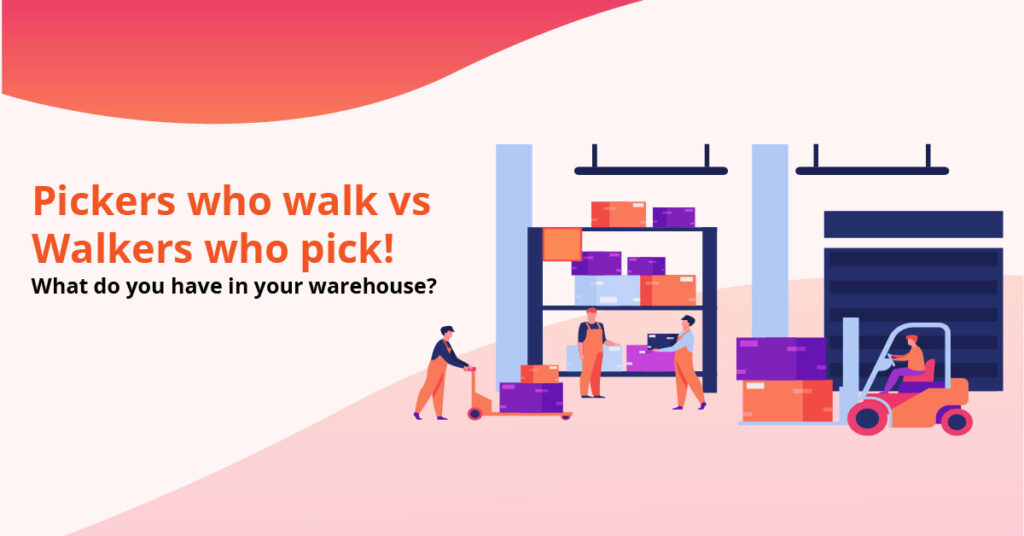
Pickers who walk vs Walkers who pick! What do you have in your warehouse?

In today’s fast-paced business environment, warehouse efficiency is crucial for maintaining a competitive edge. One of the biggest challenges faced by warehouse managers is managing labor costs, which can account for a significant portion of overall warehouse expenses. Within labor costs, picking labor is the most significant contributor, making it a prime target for optimization. Warehouse pick packers are responsible for both picking and packing orders, and they can also spend a lot of time walking between the two areas. If your warehouse picking workforce is spending a significant amount of time walking up and down the aisles, it’s time to look for opportunities to optimize travel costs. Here are some ways to optimize travel costs involved in warehouse picking operations: Warehouse labor costs are dominated by picking, which accounts for an estimated 70% of warehouse activities. Warehouse pickers & packers spend nearly half of their time looking for items and the other half walking around the warehouse. Reducing travel time can save warehouses up to 5% of their operating costs. Improving your storage practices (reduce the need to walk) Zoning: Organize your inventory into fast/medium/slow moving zones. By placing the fast-moving zones closer and with easier accessibility, warehouse pickers can reduce the effort required for picking, resulting in faster and more efficient operations. Slotting: Periodic slotting in warehouses helps reorganize inventory placements in a way that aligns with demand patterns and forecasts, ultimately reducing pick times. This practice can help warehouse managers maximize space utilization and improve order fulfillment. Route Optimization: A good warehouse management system can significantly improve pick path efficiency. Such systems can help optimize the sequence of picking tasks, taking into account variables like proximity, demand, and inventory movement. By reducing travel times and streamlining workflows, warehouse managers can save time, improve order accuracy, and increase productivity. Split picking tasks from material handling tasks An effective method to optimize warehouse operations is to separate the responsibilities of warehouse pickers from those of material handlers. Warehouse pickers require higher-order skills, while material movement from one location to another can often be handled by personnel available at a lower cost. By enabling warehouse pickers to remain within their designated zones and digitally assigning tasks to them, we can minimize unnecessary travel and physical strain. Necessary infrastructure for the picking process, such as empty bins, pallets, and boxes, can be provided to the warehouse picker within their designated zone, eliminating the need to venture outside their assigned area. Once the warehouse picking task is completed, material handlers can take over the task of transferring goods from the pick zone to the operational area. This approach reduces travel time, enhances overall productivity, and also lowers the risk of errors in warehouse operations. An effective way to optimize warehouse operations is to split picking tasks from material handling tasks. While picking requires higher-order skills, material movement from one location to another can often be performed by personnel who are available at a lower cost. By allowing pickers to stay in their respective zones and directing tasks to them digitally, the need for unnecessary travel and physical exertion is minimized. Infrastructure required to perform the picking tasks, such as empty bins, pallets, and boxes, can be made available to the picker in their zone without having to move outside the zone. After the picking task is complete, material handlers can perform the movement of goods from the pick zone to the operating area. This strategy reduces travel time and improves overall productivity while also reducing the risk of errors. Automation Warehouse automation stands as a pivotal means to reduce labor costs and enhance the efficiency of automated warehouse systems. Within this range, there exists a spectrum of technologies, including conveyors, automated robots, and other advanced solutions, collectively contributing to improved automated warehousing. Nevertheless, when it comes to opting for the ideal warehouse automation solution for your needs, a correct examination of multiple factors is in order. These factors encompass the complexity of your automated warehouse systems, financial considerations, and your company’s prospective plans. Warehouse automation companies should focus their attention on the unique nature of their automated warehousing operations and the specific requirements of their inventory when contemplating an automation solution. Additionally, they should weigh the financial investment required and the lasting impact it will have on their operations. By conducting a comprehensive assessment, warehouse automation companies can single out the warehouse automation solution that best aligns with their distinctive demands, ultimately resulting in an augmentation of their automated warehouse performance. Benefits of Optimizing Warehousing Travel By optimizing travel by 25%, you have the potential to achieve substantial cost savings in your warehousing operations. This can be calculated as 25% of the cost of picking labor, which accounts for 50% of total warehousing labor costs, and 40% of overall warehousing costs. This equates to a potential 5% reduction in your overall warehousing costs, which is significant. Additionally, reducing travel time for warehouse pickers pickers can have a range of benefits, including reducing fatigue, minimizing errors, and boosting employee morale. To realize these benefits, the first step is to engage with a supply chain solution provider. They can analyze your current situation and provide recommendations for optimizing your operations. By deploying the necessary technology, you can achieve the cost savings and efficiency gains that come from reducing travel time for your warehouse pickers & packers. Conclusion To improve travel cost efficiency in warehouse picking and packing operations, warehouse managers can implement strategies such as zoning, slotting, route optimization, and material handling automation. These strategies can help reduce labor expenses and improve productivity for warehouse pickers and packers. Reducing travel time for warehouse pickers also has other benefits, such as reduced fatigue, fewer errors, and improved morale. Warehouse managers can work with a supply chain solution provider to assess their operations and get personalized recommendations for improving travel cost efficiency. In summary, optimizing travel costs in warehouse picking and packing is essential for maintaining a competitive edge in today’s fast-paced business environment.

WMS Integration

Integration Protocols for Warehouse Supply Chain Systems

Supply chain operations are inundated with information, straining logistics centers and warehousing businesses. To address this challenge and achieve cost savings and increased customer loyalty, companies are turning to Warehouse Management Systems (WMS) software. This thesis explores the resource-based approach to WMS implementation and usage, offering a research agenda for WMS and Logistics Information Systems (LIS). Effective warehouse organization relies on resource management, adhering to established protocols for item processing and storage. Businesses must integrate their organizational components for efficient management, especially with the pressure to enhance warehousing procedures in response to market dynamics. This involves modifying value propositions and continually seeking ways to improve warehouse operations, emphasizing advanced warehouse management systems and inventory practice. Integrating disparate supply chain systems is a complex and challenging task, but it is necessary to achieve a centralized control tower, especially in the context of WMS integration and warehouse management. To overcome the challenges of integration, there are several technical methods and protocols that companies can use. In this article, we will explore some of these methods and protocols. What is the warehouse management system in SCM? Integral to logistics and supply chain operations, warehouse management system (WMS) software plays a crucial role in planning, organizing, and controlling various aspects of goods’ storage and movement within a warehouse. The primary objective is to facilitate the smooth flow of products from origin to consumption, aiming to minimize costs and maximize efficiency. Methods for achieving a centralized control tower in supply chain integration Application Programming Interfaces (APIs) APIs are a set of protocols and tools that allow different software systems to communicate with each other. APIs enable companies to connect their supply chain systems using standardized protocols, making it easier to integrate systems that were previously incompatible. Enterprise Service Bus (ESB) An ESB is a software architecture that facilitates communication between different software systems. It acts as a middleware layer between the different systems, enabling data to be exchanged in real-time. ESBs use standardized protocols, making it easier to integrate systems that were previously incompatible. Service-Oriented Architecture (SOA) SOA is a software architecture that uses services as its fundamental building blocks. These services can be accessed and combined by different applications, enabling systems to be integrated in a modular and flexible way. SOA enables companies to create a centralized control tower by connecting different  ETL is a process of extracting data from different sources, transforming it into a common format, and loading it into a target system. ETL is commonly used to integrate data from different databases, but it can also be used to integrate data from different supply chain systems. ETL enables companies to achieve a centralized control tower by consolidating data from different systems into a single data warehouse. Business Process Management (BPM) BPM is a methodology for managing and optimizing business processes. BPM enables companies to create a centralized control tower by modeling, analyzing, and optimizing their supply chain processes. BPM also provides a framework for integrating different supply chain systems into a single, streamlined process. Benefits of integrating warehouse management system in supply chain strategy Enhancing Supply Chain Efficiency: Recognizing the crucial role of warehouse management in supply chain integration is pivotal for overall supply chain efficiency. Warehouse operations are central to the movement and storage of goods, with effective management streamlining processes, reducing lead times, and enhancing responsiveness to customer demands. Cost Optimization: Insights into how warehouse management practices impact costs across the supply chain are vital. Identifying efficient strategies enables businesses to optimize costs related to inventory holding, order fulfillment, and transportation, leading to enhanced profitability. Improving Customer Satisfaction: Directly influencing order fulfillment processes, warehouse management significantly impacts customer satisfaction. A well-integrated warehouse ensures timely and accurate deliveries, minimizing errors and delays, thereby contributing to repeat business and positive brand reputation. Informing Strategic Decision-Making: As a strategic initiative, supply chain integration’s significance is communicated to decision-makers. This knowledge is essential for formulating effective supply chain strategies aligned with organizational goals and market dynamics. Technology Adoption and Innovation: Highlighting the role of technology in warehouse management and its impact on supply chain integration, the study provides valuable insights for businesses adopting innovative technologies like Warehouse Management Systems (WMS) and automation to improve efficiency and competitiveness. In conclusion, integrating disparate supply chain systems is a complex task, but there are several technical methods and protocols that companies can use to achieve a centralized control tower. These methods include APIs, ESB, SOA, ETL, and BPM. Companies must evaluate their specific needs and requirements to determine the best method for their supply chain integration efforts. With the right approach, companies can achieve real-time visibility, analytics, and decision-making capabilities for their supply chain operations Read More: Challenges of Integrating Disparate Supply Chain Systems

WMS Integration

Challenges of Integrating Disparate Supply Chain Systems

In recent years, many companies have turned to centralized control towers to optimize their supply chain operations. A control tower provides a single view of the entire supply chain, enabling real-time monitoring, analysis, and decision-making. This can help companies reduce costs, increase efficiency, and improve customer satisfaction. However, achieving a centralized control tower is not without its challenges. Here are the four major challenges companies face when integrating disparate supply chain systems: Challenge 1: Incompatible Systems One of the biggest challenges in integrating disparate supply chain systems is compatibility. Not all systems are designed to work together, and some systems may use different data formats, protocols, or languages. This incompatibility can lead to errors, delays, and data loss, making it difficult to achieve a centralized control tower. Challenge 2: Data Quality Another challenge in integrating disparate supply chain systems is ensuring data quality. The different systems may use different data formats, have different levels of data granularity, or use different data definitions. This can lead to inconsistencies, inaccuracies, and incomplete data, which can compromise the quality of the centralized control tower. Challenge 3: System Complexity Integrating disparate supply chain systems can be a complex process. The different systems may have different configurations, versions, and customization, which can make it difficult to connect them. Moreover, the integration process may require changes to existing systems, which can be time-consuming and disruptive. Challenge 4: Security and Compliance Integrating disparate supply chain systems can also pose security and compliance risks. The different systems may have different security protocols, access controls, and compliance requirements. Integrating these systems can create vulnerabilities, expose sensitive data, and compromise regulatory compliance. Overcoming The Challenges of Integrating Disparate Supply Chain Systems To overcome the challenges of integrating disparate supply chain systems, companies must invest in integration technologies, data governance, change management, and security controls. Integration technologies can help bridge the gap between incompatible systems, while data governance can ensure data quality and consistency. Change management can help minimize disruptions and ensure that employees are trained and prepared for the new system, while security controls can help mitigate security and compliance risks. The Benefits of a Centralized Control Tower Despite the challenges of integration, a centralized control tower can provide many benefits to companies. By providing real-time visibility, analytics, and decision-making capabilities, companies can optimize their supply chain operations and achieve greater efficiency and customer satisfaction. A centralized control tower can also help companies respond quickly to disruptions and make data-driven decisions that can improve their bottom line. In conclusion, integrating disparate supply chain systems is a complex and challenging task, but it is necessary to achieve a centralized control tower. The challenges of integration include incompatible systems, data quality, system complexity, and security and compliance. To overcome these challenges, companies must invest in integration technologies, data governance, change management, and security controls. By addressing these challenges, companies can create a centralized control tower that provides real-time visibility, analytics, and decision-making capabilities for their supply chain operations. Read More: Supply Chain 4.0

Pyrops® WMS is a warehouse management software designed, developed, and implemented by Precision Pyramid Private Limited.

For more info visit: www.precisionpyramid.com

India Head Office

A-1, Forest Lane, Near Ghitorni Metro Station, MG Road, Sultanpur, New Delhi – 110030

Nepal Corporate Office

Precision Pyramid Nepal Private Limited 6th Floor, Radha Bhawan, Tripureshwar, Kathmandu, Nepal

Contacts

Follow us

Scroll to Top