Warehouse Operations Simplified

Knowledge Series

Inventory Cycle Count
Knowledge Series

Inventory Cycle Count

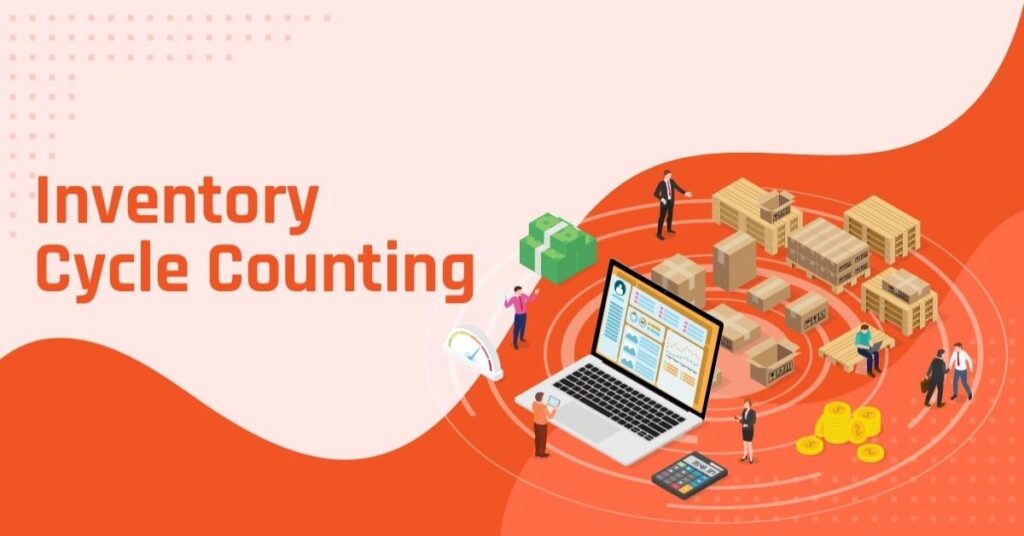
Warehouses run like well-oiled machines when audits are conducted. Reconciling on-hand products with records is foundational to accurate data at all stages of the logistics pipeline. The most efficient inventory management plans lead to minimal transaction error rates and extremely high stock record accuracy without taking away from staff’s essential tasks. Regardless of whether a company uses periodic or perpetual inventory practices to track their inventory, regular cycle counting is a necessary auditing process to manage inventory counts. Inventory counting system offsets the burden of traditional audits by rotating product counting in a cyclical schedule. Inventory cycle counting is ideal for large warehouses with lots of products or many different types of products. Inventory Cycle Counting Cycle counting is a method of checks and balances by which companies confirm physical inventory counts match their inventory records. It is a more efficient way to keep track of inventory accuracy and helps to identify discrepancies sooner. The process involves dividing inventory into smaller, manageable portions and counting each portion at set intervals, such as daily, weekly, or monthly. This allows for continuous monitoring and adjustment of inventory levels, leading to improved accuracy and cost savings in the long run. Methods of conducting cycle counts ABC Counting Usage-based Counting Hybrid Count Geographic Counting Opportunity Based Counting Advantages of cycle counting  Inventory cycle counts do not interrupt warehouse operations 2. Inventory cycle counts are more flexible than traditional audits 3. Inventory cycle counts are more accurate than physical audits 4. Inventory cycle counts uncover problems that traditional audits miss Best practices for Inventory cycle counting Ensure your inventory data is up-to-date 2. Randomly alternate between counting staff 3. Leverage technology to mitigate errors and count efficiently

Knowledge Series

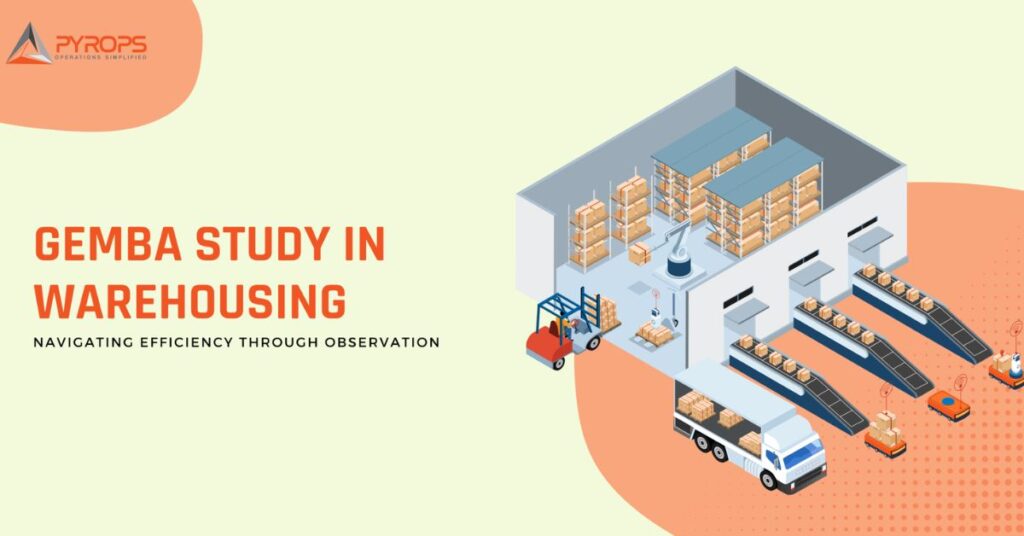
Gemba in Warehousing

Continuous improvement is not just a goal in warehousing; it’s a journey. One highly effective approach to understanding, optimizing, and enhancing operational processes is through the Gemba study. Gemba, a Japanese term meaning “the actual place,” encourages professionals to go to the source of the action, the shop floor or warehouse floor in this case, to observe and learn. In this article, we explore what Gemba is, the key points to observe during a Gemba study in warehousing, the right approach, best practices, and potential pitfalls. Understanding Gemba What is Gemba? Points to Observe in a Warehousing Gemba Study Workflow and Material Flow: Observe how materials move through the warehouse from receiving to storage, picking, and shipping. Inventory Management: Examine how inventory is managed, including storage practices, picking accuracy, and cycle counting procedures. Equipment Utilization: Assess the usage of equipment such as forklifts, pallet jacks, and conveyor systems to identify potential bottlenecks or underutilized assets. Order Fulfillment Process: Study the process from order receipt to order picking, packing, and shipping to understand the efficiency of the fulfillment process. Communication and Collaboration: Observe how information flows between teams, examining communication channels and collaboration practices. Employee Engagement: Evaluate the engagement levels of warehouse staff, including their understanding of processes, job satisfaction, and potential improvement ideas. The Approach to Gemba Study in Warehousing Prepare and Set Objectives: Clearly define the goals and objectives of the Gemba study, ensuring alignment with broader improvement initiatives. Select Key Areas for Observation: Identify specific processes or areas within the warehouse that are critical to overall efficiency and effectiveness. Engage with Frontline Workers: Collaborate with frontline employees who are directly involved in day-to-day operations, seeking their insights and feedback. Observe without Prejudice: Approach Gemba with an open mind, avoiding assumptions or preconceived notions about how things should be done. Ask Questions and Seek Clarifications: Encourage dialogue by asking questions and seeking clarifications about observed practices and challenges. Maximizing Profitability Through Efficient Inventory Control Find out how effective inventory control changes companies by maximizing income through cost savings, improving customer satisfaction, and simplifying supply chains. Read the blog today! Learn More Best Practices for Gemba Study in Warehousing Regular and Systematic Observations: Conduct Gemba studies regularly and systematically, allowing for continuous improvement cycles. Document Findings and Insights: Maintain detailed notes and documentation of observations, ensuring that insights are recorded for future reference. Empower Frontline Workers: Empower employees to suggest improvements and be actively involved in the decision-making process. Implement Incremental Changes: Gradually implement changes based on Gemba insights, avoiding sudden and disruptive alterations to established workflows. Potential Pitfalls to Avoid Assuming Solutions Without Observation: Avoid jumping to conclusions or proposing solutions without thorough observation and understanding. Ignoring Employee Input: Neglecting the valuable insights of frontline workers can lead to oversight and missed improvement opportunities. Focusing Solely on Problems: Balance the focus on identifying problems with an equal emphasis on recognizing and reinforcing successful practices. Lack of Follow-Up: Ensure that observations and insights from Gemba studies lead to concrete actions, and follow up on the implementation of improvements. Conclusion Gemba study in warehousing is a powerful tool for fostering continuous improvement. By immersing oneself in the actual place where work is done, professionals can gain profound insights, identify areas for enhancement, and foster a culture of continuous improvement. Approaching Gemba with the right mindset, engaging with frontline workers, and implementing best practices can lead to tangible improvements in operational efficiency and overall warehouse performance. Regular Gemba studies can be a cornerstone of a warehousing strategy that adapts and evolves to meet the demands of a dynamic business environment.

Bin Consolidation & Slotting
Knowledge Series

Warehouse Consolidation & Slotting

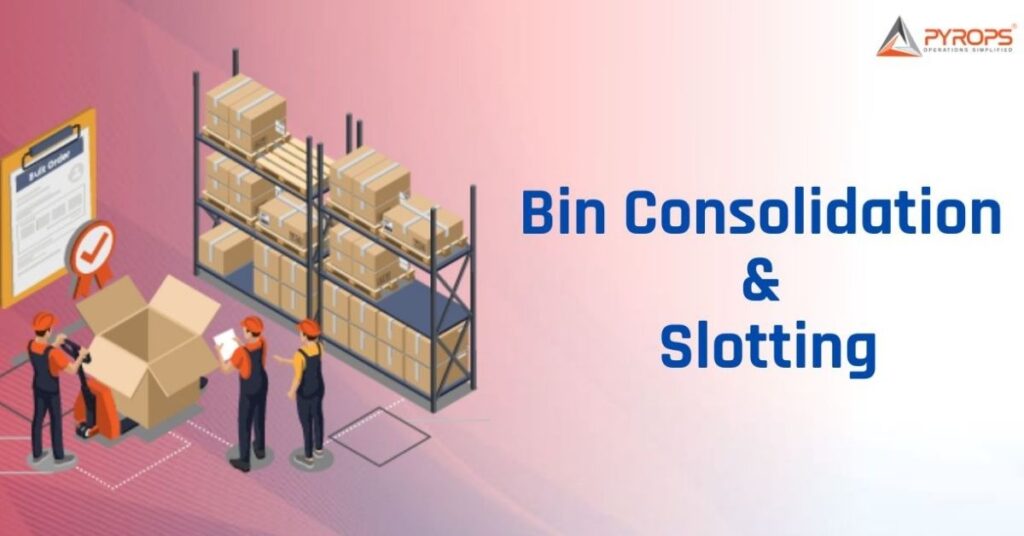
Warehouse slotting is the process of organizing the inventory in a Warehouse Management System to maximize space and efficiency. It is a form of inventory management. A warehouse’s purpose is to act as a buffer between production and customer demand, thanks to Warehouse Management System (WMS) Software. This allows businesses to manufacture products and store them in a way that’s decoupled from immediate needs.  With a need for a WMS System, businesses can fulfill customer orders faster and more efficiently, ultimately reducing costs. WMS software uses a process called slotting to determine the optimal location for each item in the warehouse. Slotting takes into account various factors like item velocity (how often it’s picked), dimensions (cube size), weight, and product groupings. By strategically placing items, businesses can minimize picking times and optimize warehouse space utilization. In essence, WMS software empowers businesses to leverage their warehouses as strategic assets, not just storage facilities. It’s all about bridging the gap between supply and demand smoothly and cost-effectively. Warehouse Slotting Strategy Warehouse slotting optimization strategies can help businesses reduce costs and improve efficiency in a number of ways, including: Let’s see how warehouse management software (WMS) with slotting capabilities can truly supercharge your warehouse operations: Boost order accuracy: Forget the mix-ups! WMS-powered slotting ensures the right items are always in the right places, minimizing picking errors and ensuring customers get exactly what they ordered. Minimize product damage: Say goodbye to bumps and bruises! Slotting considers product dimensions and fragility, placing delicate items in secure, easily accessible locations, reducing the risk of damage during storage and retrieval. Prioritize worker safety: Safety first! By strategically placing heavy or bulky items within easy reach, WMS (Warehouse Management System) slotting optimizes picking routes and minimizes awkward lifting, keeping your team safe and sound. By incorporating these improvements, WMS systems empower businesses to not only store goods efficiently but also cultivate a warehouse that hums with accuracy, protection, and safety. It’s a win-win for business efficiency and employee well-being. What Does Slotting Means in Warehouse Management? Warehouse slotting is a complex process that requires careful planning and consideration. It is important to consider all of the factors that can impact slotting decisions, including: Importance of Warehouse Slotting Different Methods of Slotting Random Slotting Fixed Slotting Macro Slotting Micro Slotting Benefits of Slotting Reorganizing zones, or even an entire warehouse management system, can seem like a daunting and time-consuming project because we need to determine how to store inventory in an optimal way and move large amounts of inventory to different locations correctly, so it does not cause any issues during the picking process. While the slotting process can be a major project that takes time and continuous improvement, it ultimately can benefit your business and positively affect the bottom line. Here are a few ways that slotting helps:- Proper slotting can improve picking accuracy by eliminating any possible confusion for the picker. Storing products that make the most sense for the picker such as by type, size, weight, etc., allows for faster picking. Workers can always know the location of items and how to get there without ever hunting through shelves. Slotting processes can help identify opportunities to increase storage capacity. Taking the time to optimize the warehouse means one can delay expanding and/or spend extra costs on an additional warehouse. By optimizing warehouse space and improving processes, one can keep one’s overall carrying costs down rather than hiring more help or renting out more warehouse space. Besides avoiding damage during transit or packing, a warehouse slotting strategy can also help avoid damage to stored items during handling and processing. Good slotting helps improve employee productivity by allowing them to locate items immediately. This process helps managers and employees immediately understand when an item is not in the right place, which reduces the possibility of errors. What is a Consolidation Warehouse? A consolidation warehouse is a third-party storage facility where several small shipments are gathered together and sorted into groups based on destination, so that  each group can be sent out as one larger, consolidated shipment.Consolidation warehouses are a valuable tool for businesses of all sizes, but they are especially beneficial for businesses that ship a large number of small orders or that need to ship to multiple destinations. Consolidation in warehousing that is operated by a third-party logistics (3PL) company that is responsible for merging small loads into large-size shipments. Inventory Consolidation

Putaway Rules
Knowledge Series

Put Away Rules

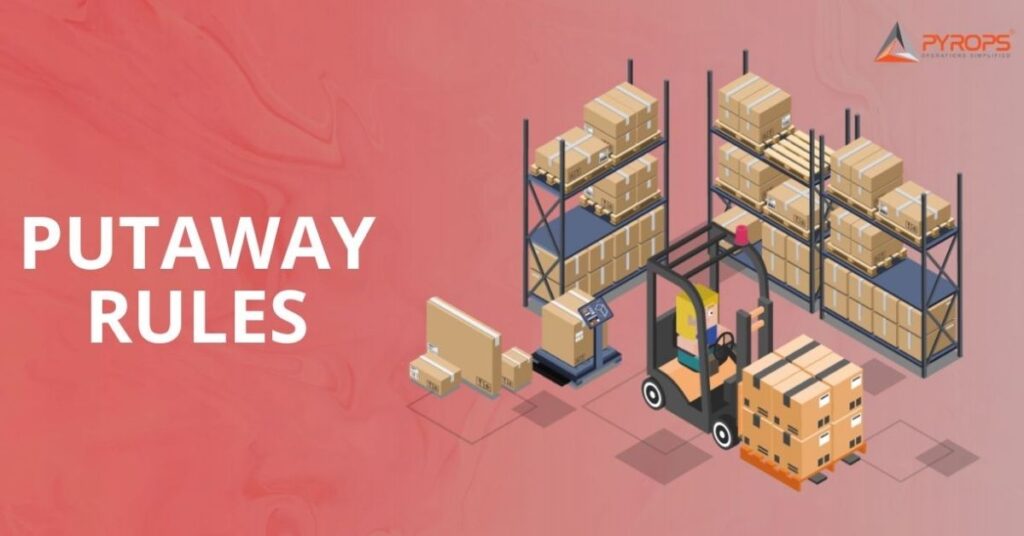
Put away in warehouse is a crucial aspect of warehouse management, which involves several processes starting with warehouse receiving and ending with ensuring that inventory is stored in the right warehouse locations such as racks, shelves etc.  Put away is a rule-based system of moving items from a received shipment to the right places in warehouses. The initial placement of goods has a direct impact on all subsequent warehouse processes, especially the picking process. With a strategic warehouse put away system in place, it becomes so much more efficient and straightforward to store inventory without misplacing any SKUs. This process also improves warehouse tidiness and makes it easier for pickers to find the right SKU quickly. Putaway process in warehouse that determines how efficiently your inventory is stocked and accessible. When done correctly, putaway in warehouse management can minimize the time and effort needed to find and retrieve products. However, when done poorly, it can lead to confusion, lost time, and even safety hazards for warehouse managers and staff. Here, we will provide information on what is putaway meaning, the different putaway methods, and how you can optimize your own Warehouse Putaway process using WMS software. Objectives of Put Away The prime objective of the put-away process is to move goods from the dock to the most optimal warehouse storage location. Other objectives include Types of Put away The putaway process is a critical part of warehouse management. Putaway in WMS involves storing incoming products in the most efficient and accurate way possible. A well-implemented put away warehouse can help businesses to reduce stockouts, improve order fulfillment times, and reduce inventory costs.Many steps are followed to implement warehouse putaway using different methods. Depending on the criteria such as type of materials, physical weights of materials, quantity, size of warehouses and other unique features of the business, there are four different types of warehouse put away as shown- Put away based on space availability Depending on available storage space, i.e., whether items had to be put away to final locations immediately or later, there are two categorizations. Direct Put away Indirect Put away Using indirect put away gives more control and precision when sending items to their correct locations in warehouses. For the large drums to be placed over floor markings, indirect put-away is used. When the large drums arrive at the docking station, they are brought down with forklifts and stored at a temporary area. After finding ideal spots for these drums, workers move the drums to marked locations and not racks or bins since each drum is huge. Indirect out away is used in more locations with huge warehouses meaning it is hard to locate where to put away. Put away based on location rules Fixed Location Put away Dynamic Location Put away Put away process in warehouse: Optimization Is Key Every warehouse has its own putaway process, but without proper optimization, it is difficult to achieve the best results. A warehouse management system (WMS) can help businesses to optimize their putaway process and get the most out of it. Advantages of Put away Reduces the chance of lost or misplaced items Improve the picking process Effective use of storage space Pyrops WMS: The key to efficient & accurate putaway Pyrops WMS software is a powerful and easy-to-use warehouse management system that can help businesses of all sizes to optimize their putaway process. With Pyrops WMS, businesses can improve efficiency, accuracy, and visibility, while also reducing costs and improving customer satisfaction.

Knowledge Series

Inventory Allocation Demystified

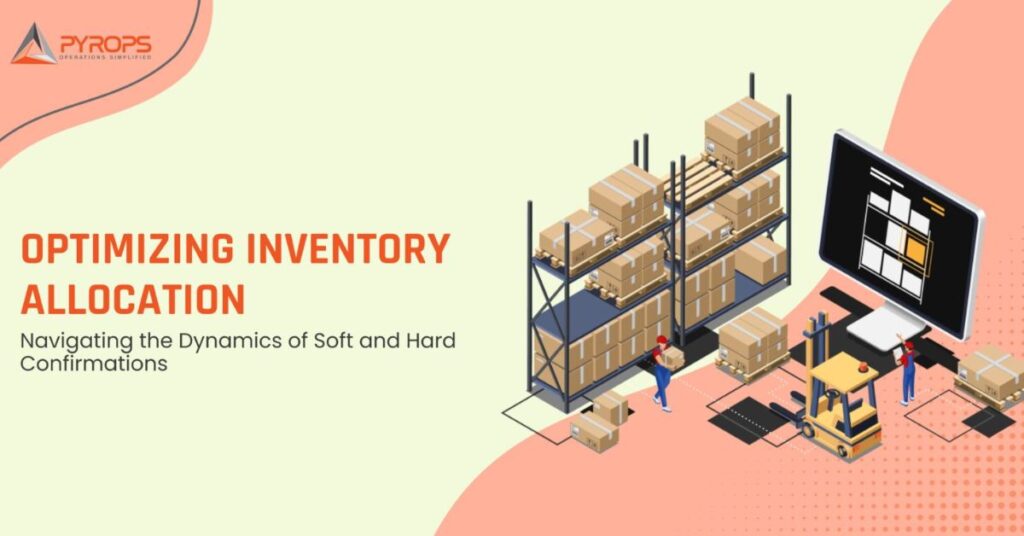
Accurate and timely Inventory allocation plays a pivotal role in ensuring operational efficiency, customer satisfaction, and overall success. This knowledge series delves into the complexities of inventory allocation, with a specific focus on the delicate balance between soft and hard confirmations. Moreover, we explore the additional layer of managing expected inventory from open purchase orders, highlighting its significance in enhancing clarity and customer satisfaction Decoding Inventory Allocation Understanding Inventory Allocation Inventory allocation involves the strategic assignment of available stock to fulfill customer orders, preventing overselling and ensuring timely order fulfillment. Soft Allocation vs Hard Confirmation Challenges Introduced by Soft Confirmed Orders Certain scenarios involve orders receiving soft confirmations before obtaining hard confirmations. This phase may result from pending payment verification, product availability checks, or the need for manual review. During this soft confirmation stage, it is crucial to reserve inventory effectively, especially when considering expected inventory from open purchase orders. The Significance of Soft Allocation in Anticipation of Open Purchase Orders Preventing Overcommitment: Soft allocation safeguards against overselling, ensuring that inventory isn’t promised to multiple customers simultaneously. Enhancing Customer Experience: The timely reservation of inventory through soft allocation contributes to a positive customer experience, offering transparency and accurate expectations. Optimizing Expected Inventory: Anticipating open purchase orders as expected inventory, soft allocation optimizes the utilization of stock that has not yet reached the warehouse. Maximizing Profitability Through Efficient Inventory Control Find out how effective inventory control changes companies by maximizing income through cost savings, improving customer satisfaction, and simplifying supply chains. Read the blog today! Learn More Strategies for Seamless Soft Allocation and Expected Inventory Management Dynamic Allocation Rules: Implement automated rules governing soft allocation based on various criteria, such as order priority, payment verification, and product availability. Real-Time Visibility: Utilize advanced inventory management systems to provide real-time visibility into soft allocations and expected inventory, facilitating accurate decision-making. Proactive Communication: Establish clear communication channels between relevant teams to provide timely updates on soft allocations, expected inventory status, and order progression. Continuous Monitoring: Regularly reassess soft allocations and expected inventory based on changes in order status, payment verification, or other relevant factors. Pitfalls and Challenges in Managing Soft Allocation and Expected Inventory Risk of Overcommitment: Without careful monitoring, there’s a risk of overcommitting inventory through soft allocations, potentially leading to fulfillment challenges. Manual Errors: Manual processes for soft allocation may introduce errors, emphasizing the need for automated solutions and technology. Coordination with Suppliers: Collaborate closely with suppliers to align expected inventory from open purchase orders with soft allocations, ensuring synchronization in the supply chain. Conclusion Balancing soft allocation, hard confirmation, and the management of expected inventory from open purchase orders requires a harmonious integration of technology, automated processes, and proactive communication. Leveraging advanced inventory management systems, implementing dynamic allocation rules, and fostering collaboration between stakeholders create an environment conducive to operational excellence. Soft allocation, when extended to include expected inventory, becomes a strategic asset, optimizing order fulfillment, enhancing customer satisfaction, and fortifying supply chain resilience in the dynamic landscape of modern commerce.

Barcode Scanning - An Overview
Knowledge Series

Barcode Scanning – An Overview

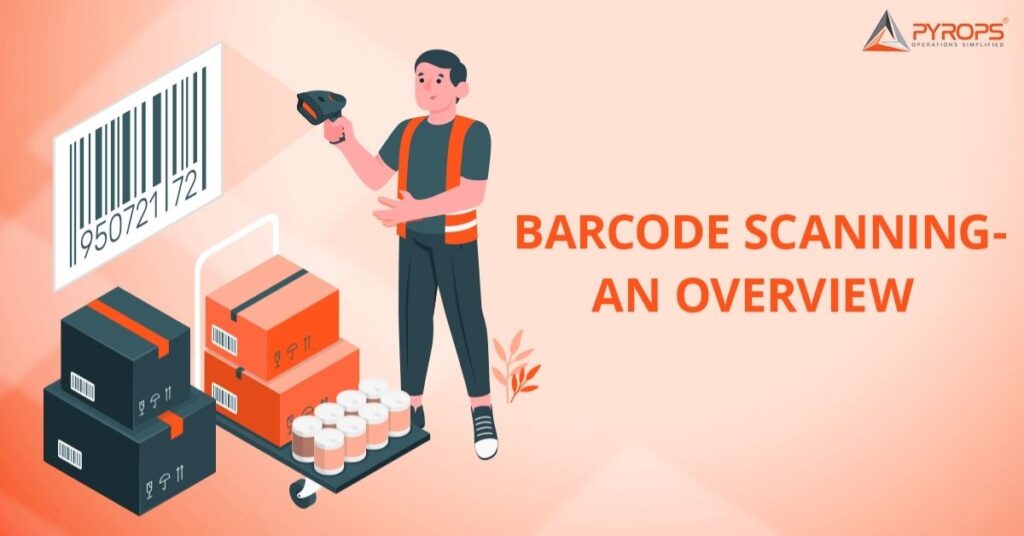
An efficient warehouse needs a well-organized inventory management system that uses barcode scanning systems. Customers expect warehouse operations to be more efficient and effective to provide competitive pricing and reduce errors, that can be enabled using warehouse barcode systems. Manual inventory management cannot meet these customer needs. It is impossible to survive in a fast-paced environment without a system where data flows with accuracy and speed by using a barcode scanner in warehouse. Warehouse barcode system allows us to allocate resources efficiently, get the most out of our resources, and boost worker productivity all at once. It also gives everyone the ability to adapt to external events that are outside our control. History The concept of the barcode scanning system  — an alphabet made up of thick and thin bars — came into being in 1951 but wasn’t commercially successful until the 70s. It took another quarter of a century for one to be printed on product Packaging Material In A Warehouse and scanned. The right barcode scanning warehouse can help in streamlining the supply chain and use data to improve operational efficiency because connected supply chains with physical and digital elements working together prove to be much more efficient in adapting to changing conditions and needs. Since it came into widespread use, the warehouse barcode scanner has become a standard tool in warehouse and retail management, helping businesses keep track of inventory, determine when to restock and intelligently manage overall operations. Today there are hundreds of different types of barcodes, each with unique strengths and limitations. Once used for simple code reading, barcodes scanning warehouses have now become a way to marry the storage and movement of goods with the global information infrastructure. A barcode scanning warehouse consists of both hardware and software. The software, which is part of the warehouse management system (WMS), can help you control inventory, pick and pack orders, and ship products. When you scan a product’s barcode, the warehouse barcode software updates your inventory and ensures that your employees are picking the correct product for the order. What are Barcodes? How do they work? What information can a barcode include? There are generally four different types of character sets: Types of Barcodes 1D Barcodes 2D Barcodes 1D vs 2D Barcodes – Pros & Cons 1D Barcode Pros 2D Barcode Pros Cons Cons Merits of Barcode Scanning Manufacturers and distributors can expedite the fulfilment process using barcode scanning. A single barcode provides instant access to a large amount of data, including how a box should be packed or where on the warehouse floor it should be routed. The same barcode connects workers and truck drivers to manage paperwork, track when and where, and manage inventory more efficiently. Redundant information and error corrections can be made in real time even if a package suffers damage or a label is destroyed. With granular visibility into the supply chain, there is more transparency to meet regulatory requirements. Tracing products becomes more efficient and possible using barcode scanning technology. Through inventory location, one can see what products were stored at which place. Barcode scanning tracks the employee number/date/time stamp for every transaction, including sales, returns, adjustments, and transfers. The two technologies lock down accuracy to 99.9% or higher. Warehouses, which do not use barcodes for scanning and data capture, are very manual and require office personnel or warehouse employees to key all warehouse activity documents, such as receipts, inventory transfers between locations, cycle and physical counts, and returns. Wireless scanners connected to the WMS allow data capture where the inventory is — on receiving docks, on pallet racks, in receiving, and in shipping.

Storage Systems & Types
Knowledge Series

Storage Systems & Types

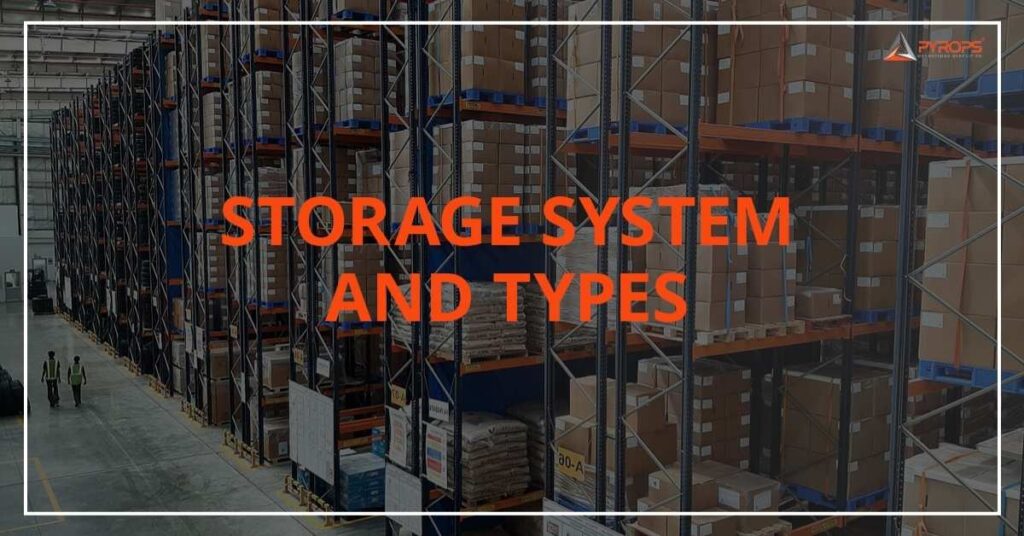
The term “Storage” refers to the physical act of storing the materials or stock in a warehouse, on pallets, shelves, racks, boxes, bins etc. with the objective of retrieving them later for issue or dispatch to the customer or internally. Warehouses have secured spaces where inventory is stored before shipping it out to the end customers. A warehouse gives better control over the inventory and ensures that customers receive on-time delivery of products, ultimately leading to higher profits. Warehouses may employ either one or a combination of different types of warehouse storage systems. Depending on the system’s efficiency, warehouses can greatly improve the order fulfillment and picking processes. An organized storage system is also the key to promoting a safer workplace environment. It helps in avoiding any potential hazards that may endanger warehouse employees as they handle heavy machinery and move about the warehouse. What is a warehouse storage system? A warehouse storage system is a set of physical structures used to store goods in an organized and efficient manner. It helps businesses optimize their space, improve inventory management, and streamline order fulfillment. Warehouse storage systems come in a variety of types, each with its own advantages and disadvantages. Warehouse storage solutions play a crucial role in the success of any business that handles physical goods. They provide a structured and organized approach to storing inventory, ensuring that products are easily accessible, protected from damage, and efficiently managed. Objectives of Storage The main objectives of storage are: Warehouse Storage Methods Warehouse storage methods are the strategies and techniques used to organize, store, and manage inventory within a warehouse facility. Effective warehouse storage methods are crucial for optimizing space utilization, enhancing inventory management, and streamlining order fulfillment processes. Loose Storage can be in silos, in piles, on the floor or in the yard. Binned Storage A bin is a receptacle in which materials are kept. Block Stacking The materials, usually in containers are stacked on top of one another till a maximum safe height. Shelving Materials are stored on shelves. Racking This is often used to store palletized goods. One pallet is stored on the stacking side of the rack. If forklifts are used racks can go up to 30 feet and if overhead stacker cranes are used, racks can even go up to 60 feet. Types of warehouse Storage Equipments Warehouse storage equipment is an essential component of any warehouse operation, enabling efficient storage, organization, and retrieval of inventory. The type of equipment used depends on the specific needs of the warehouse, such as the type of products being stored, the volume of inventory, and the desired level of automation. Some of the types of warehouse storage equipment generally used are – Concrete Pigeonholes These are used for bulk storage of heavy items, particularly in the receiving section. This method is used for storing paper items, bulky packages etc. The pigeonhole sizes may vary from 2’x2’x2’ to 4’x4’x4’. Wooden Shelves These can be built to various sizes. They are normally cheap and light in weight. However, they are not durable. Steel Shelves (Closed or Open) These are widely used, can be built to any required dimension and are durable. There is complete flexibility, interchangeability and adaptability. Steel Cupboards These are used for keeping expensive or attractive materials. Steel Bins A bin is a compartment or pigeonhole that is fitted with a bin front. Different sizes are available and are used for storing hardware items, ball bearings, metal parts etc. Bins give protection to materials from dust and dirt. Slotted Angle Shelves Some racks have slotted angles. The angles have holes all along their length, and the shelves can be fixed at any point desired, truly providing flexibility to the gap between two shelves. The cross members can be changed to a different position. Flexibility and durability are the characteristics of these types of shelves. Boltless Shelves This is a slight variation of slotted angle shelves. Here, instead of holes that enable two bars to be bolted together, there are pockets into which a short bolt can slide into the upper bar. Such shelves are used generally for heavy parts and can be erected to a tall height. Light duty cantilever shelving Shelving is supported on steel cantilever arms, which pass through central steel uprights. Shelf levels are adjustable. Long span adjustable shelving These are designed to meet span requirements exceeding 900mm and load up to 500kg per shelf. Mobile storage bins The racks or bins themselves are made to move. Usually, the bins move upon fixed rails. In some cases, bins are capable of free movement. One end of the rack is mounted on wheels and the opposite end is on stands. The end with the stands is hooked to a forklift truck. Tote Pans These are unit containers. They not only provide an improved storage factor, but also facilitate counting, dispensing, handling, checking and issue. Warehouse Racking Warehouse racking is a type of storage system used to organize and store goods within a warehouse facility. It is a crucial component of warehouse operations, as it enables efficient storage, organization, and retrieval of inventory. Warehouse racking systems come in various types and configurations to suit different product types, storage capacity requirements, and warehouse layouts design. Warehouse storage racks are essential components in optimizing warehouse space and facilitating efficient inventory management. Racking Racks are of two types – racks for string raw materials such as sheets, bars, sections, or rolls of materials; and racks for storing unit storage equipment, including pallets, tore pans etc. Roll-through Racking Racks are filled with rollers on which the goods rest. The goods enter through one face of the rack and then exit from the opposite side, which is inclined with respect to the stacking face. Drive-through Racking Goods are stored in depth in high racks up to 30 feet and the forklift can go through the racks and pick up pallets from where they are stored at heights. Mobile Racking Racks are mounted on rollers and are moved to make

Quality Control In Warehouse
Knowledge Series

Quality Control In Warehouse

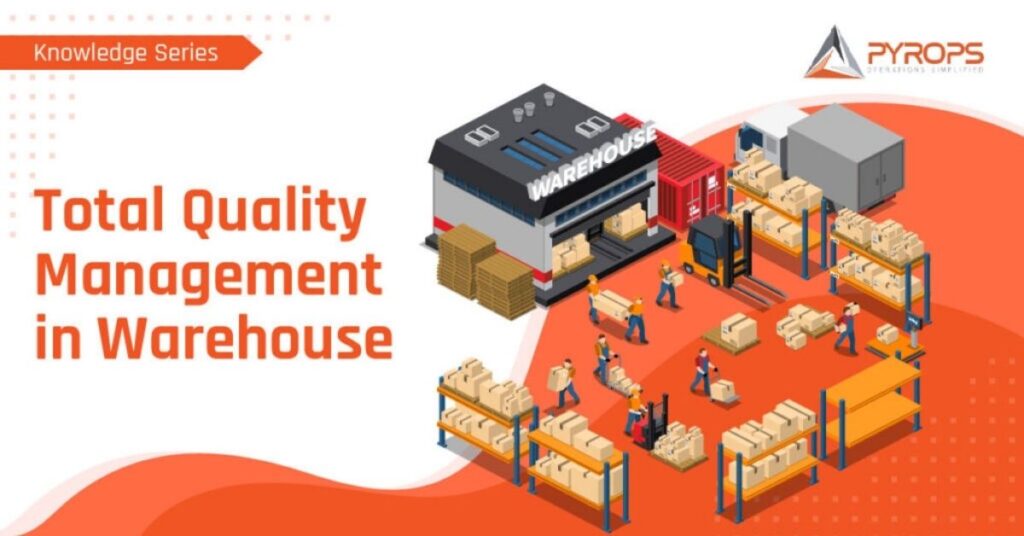
Quality control in warehouses is important to the success of an organization and its business. Focusing on the quality of each order, monitoring and adjusting protocols and processes based on key metrics for the proper packing and shipping of each order can improve the efficiency of operations. Keeping tabs on metrics such as how long it takes to pick, safely package, and correctly fill an order, to then load it properly before it ships out are all fundamental to improving product quality. What Is Quality Control In A Warehouse? In the dynamic world of warehouse operations, a warehouse quality checker plays a pivotal role in maintaining efficiency, minimizing errors, and safeguarding customer satisfaction. Warehouse quality control encompasses a comprehensive set of practices aimed at monitoring and evaluating the quality of warehouse operations and ensuring that all work adheres to established standards. Effective QC in warehouses extends beyond the confines of the warehouse walls, encompassing the entire process of receiving and dispatching goods. This includes meticulously inspecting incoming shipments to ensure that products meet the specified quality standards before they are stored or distributed. This level of vigilance helps protect your reputation and ensures that your customers, or your customers’ consumers if you are a third-party logistics (3PL) warehouse, receive only the highest quality goods. Quality control in warehouse management extends far beyond mere product inspection; it encompasses a holistic approach to optimizing warehouse operations and minimizing inefficiencies. By implementing rigorous quality control measures, businesses can identify and address potential bottlenecks, streamline processes, and reduce the likelihood of errors. This, in turn, leads to improved efficiency, reduced costs, and enhanced customer satisfaction. Importance of Quality Control In warehouse Quality in the warehouse operations is of paramount importance for ensuring that products are stored, handled, and shipped in a manner that maintains their quality and integrity. It plays a crucial role in safeguarding customer satisfaction, minimizing errors and losses, and optimizing warehouse operations. Enhancing Customer Satisfaction Effective quality control in warehouse management measures directly contributes to customer satisfaction by ensuring that products reach customers in a timely, undamaged, and defect-free condition. This, in turn, fosters customer loyalty, reduces the likelihood of returns and complaints, and enhances the overall perception of the brand. Minimizing Errors and Losses QC in the warehouse helps prevent costly errors and losses that can arise from damaged goods, incorrect shipments, or mishandling of products. By implementing rigorous quality control procedures, businesses can identify and address potential issues early on, reducing the risk of financial losses and reputational damage. Optimizing Warehouse Operations Warehouse quality management promotes efficiency and consistency within warehouse operations. By establishing clear quality standards and implementing effective control measures, businesses can streamline processes, reduce rework, and minimize downtime. This, in turn, leads to cost savings, improved productivity, and enhanced overall warehouse performance. Keeping tabs on metrics such as how long it takes to pick, safely package, and correctly fill an order, to then load it properly before it ships out are all fundamental to improving product quality. Total Quality Management (TQM) Total Quality Management (TQM) is a manufacturing philosophy, which focuses on improving quality across the operations, and producing higher quality products with few defects. Total quality management is a structured approach to overall organizational management. The focus of the process is to improve the quality of an organization’s outputs, including goods and services, through the continual improvement of internal practices.  Total warehouse quality assurance extends beyond mere product inspection; it permeates every stage of the warehouse process. It involves establishing clear quality standards, implementing rigorous quality control measures, and empowering employees to take ownership of quality improvement initiatives. This comprehensive approach ensures that quality remains at the forefront of warehouse operations, minimizing errors, reducing costs, and ultimately enhancing customer satisfaction. The standards set as part of the TQM approach can reflect both internal priorities and any industry standards currently in place. Industry standards are defined at multiple levels and may include adherence to various laws and regulations governing the operation of a particular business. Industry standards can also include the production of items to an understood norm, even if the norm is not backed by official regulations. Principles of TQM Customer Focus Leadership Employee involvement Process-centric approach Strategic and systematic approach Continous improvement Data centric approach Mutually beneficial supplier relations How to improve Quality in a Warehouse? Supply chains are networks that require fast and clear communication about accurate information on supply and demand. Implementing effective quality control (QC) in warehouse management can save the facility money by identifying and reducing wasted orders, time, energy, and materials. Here are ways to improve quality in warehouse operations which will make operations more competitive and favorable to stakeholders involved. Inspect individual orders Invest in streamlining technology Track daily progress Make quality control a high priority Tighten up quality controls Tools to control Quality check process in warehouse Warehouse quality checker benefits a warehouse in that it should successfully catch issues early on and limit any future mistakes. This can help tighten up inefficient processes or aid in diagnosing a specific problem and improve warehouse efficiency. Seven warehouse quality checker tools that help organizations troubleshoot errors are illustrated below Cause & Effect Daigram Check Sheet Flow Chart Histogram Pareto Chart Scatter Diagram 5S in warehouse The 5S is a lean strategy that helps to achieve warehouse objective i.e. to solve the problems. Getting a warehouse that is clean, organized, and much more than looking fantastic. It is all about making warehousing operations most effective; excel in training and communications, and eventually saving money and time. A facility that has introduced 5S can rapidly detect or surface problems or address the causes and fix the brief-term challenges to avoid recurrence. Let us look the 5S steps for implementing 5S in the Warehouse. Sort- Seiri Set in Order- Seiton Shine- Seiso Standardize- Seike Sustain- Shitsuke Elevate Warehouse Quality Assurance Pyrops WMS is committed to providing comprehensive warehouse management solutions (WMS) tailored to your specific quality control needs. Our team of experienced

Knowledge Series

WMS Benefits for the Public Sector

In the era of digital transformation, the use of technology in India’s public sectors is paramount for efficiency and transparency. As we collectively progress towards comprehensive organization in every sector, the role of technologies such as warehouse management systems (WMS) becomes increasingly vital, ensuring streamlined operations and optimized resource utilization. This article looks at how Warehouse Management Systems (WMS) are used in different public sectors. It sheds light on how the integration of WMS fosters heightened visibility, optimal resource utilization, and informed, data-driven decision-making across key domains. Implementing Warehouse Management Systems in these government verticals can lead to significant improvements in the efficiency, transparency, and overall effectiveness of public services. Agriculture and Food Distribution Healthcare and Pharmaceuticals Emergency Response and Disaster Management Postal and Courier Services Public Libraries and Education Resource Distribution Municipal Waste Management Municipal Waste Management Public Distribution System (PDS) Picking Mistakes to Avoid in Warehouse Management System Avoid common pitfalls to simplify operations and develop your warehouse management system. Read our blog today! Learn More Conclusion Implementing Warehouse Management Systems in these government verticals can lead to significant improvements in the efficiency, transparency, and overall effectiveness of public services. FAQ

Knowledge Series

Comingling Inventory Holding

The concept of commingling inventory in multi-tenant warehousing has gained traction as a cost-effective and efficient solution for third-party logistics (3PL) providers. Commingling, or mixing, inventory from different clients within the same storage space, allows for better space utilization and operational flexibility. However, while this approach offers significant advantages, it also presents several challenges and regulatory hurdles, particularly in regions like India. Understanding Commingling of Inventory Commingling inventory involves storing products from multiple clients together in the same warehouse location, as opposed to segregating each client’s inventory into distinct, designated areas. This method can reduce storage costs, enhance space utilization, and streamline warehouse operations, making it an attractive option for 3PL companies managing large and diverse inventories. Challenges Faced by 3PL Companies Despite its advantages, adopting a commingled inventory model is not without its challenges. 3PL companies must navigate several operational and strategic hurdles to successfully implement this approach. Healthcare and Pharmaceuticals: One of the primary concerns with commingled inventory is maintaining accurate records. Ensuring that each item is correctly attributed to its respective client is crucial. Advanced Warehouse Management Systems (WMS) with robust barcode scanning and RFID technology are essential to avoid errors in inventory tracking. Product Compatibility and Safety: Not all products can be safely stored together. Perishable goods, hazardous materials, and items with specific storage requirements (like temperature control) must be carefully managed to prevent cross-contamination and ensure compliance with safety standards. Client Trust and Transparency: Clients may be wary of commingling due to fears of inventory loss, damage, or misallocation. Building and maintaining trust through transparent processes, regular audits, and clear communication is vital. Ensuring clients that their products are managed with the utmost care and accuracy is essential for gaining and retaining their business. Complexity in Order Fulfillment: Commingled inventory can complicate the order fulfillment process. Picking, packing, and shipping items from different clients within the same space require meticulous attention to detail and efficient processes to avoid errors and delays. Complexity in Order Fulfillment: Commingled inventory can complicate the order fulfillment process. Picking, packing, and shipping items from different clients within the same space require meticulous attention to detail and efficient processes to avoid errors and delays. Customization and Client-Specific Requirements: Different clients may have unique handling and storage requirements. Meeting these needs within a commingled environment can be challenging, necessitating flexible WMS capabilities and adaptable operational procedures. Availability of space when needed: While commingled inventory holding in multi-client warehousing optimizes space, it puts a high onus on space planning per client. If planning is poor, it may result in space being unavailable for a particular client the day its needed to manage a temporary peak. Regulatory Constraints in India In addition to operational challenges, 3PL companies in India must also contend with various regulatory constraints that impact the adoption of commingled warehousing. Goods and Services Tax (GST) Compliance: Under India’s GST regime, maintaining accurate records of inventory for tax purposes is crucial. Commingling inventory can complicate the segregation of taxable items, potentially leading to compliance issues and penalties. Food Safety and Standards Authority of India (FSSAI) Regulations: For 3PL providers handling food products, adhering to FSSAI guidelines is mandatory. These regulations often require strict segregation of different food categories to prevent cross-contamination, making commingling a challenging proposition. Legal Liability and Accountability: In India, 3PL companies must ensure that their warehousing practices comply with legal requirements regarding accountability and liability for lost or damaged goods. Clear contractual agreements and robust insurance coverage are essential to mitigate risks associated with commingled inventory. Customs and Excise Regulations: For companies dealing with imported goods, customs and excise regulations require precise tracking and documentation of inventory. Commingling can complicate the adherence to these regulations, potentially leading to delays and fines. Picking Mistakes to Avoid in Warehouse Management System Avoid common pitfalls to simplify operations and develop your warehouse management system. Read our blog today! Learn More Conclusion While commingling inventory in multi-tenant warehousing offers numerous benefits for 3PL companies, it also presents significant challenges and regulatory constraints. Accurate inventory tracking, client trust, product compatibility, and regulatory compliance are critical factors that must be addressed to successfully implement this model. In India, navigating the complexities of GST compliance, FSSAI regulations, and customs requirements further complicates the adoption of commingled warehousing. For 3PL companies considering this approach, investing in advanced WMS technology, establishing clear and transparent processes, and ensuring robust contractual agreements are essential steps toward overcoming these challenges. By carefully balancing the advantages of commingled inventory with the necessary operational and regulatory safeguards, 3PL providers can enhance their efficiency and competitiveness in the evolving supply chain landscape.

Pyrops® WMS is a warehouse management software designed, developed, and implemented by Precision Pyramid Private Limited.

For more info visit: www.precisionpyramid.com

India Head Office

A-1, Forest Lane, Near Ghitorni Metro Station, MG Road, Sultanpur, New Delhi – 110030

Nepal Corporate Office

Precision Pyramid Nepal Private Limited 6th Floor, Radha Bhawan, Tripureshwar, Kathmandu, Nepal

Contacts

Follow us

Scroll to Top