
Warehouse Operations Simplified

Warehouse Management System

Inventory software in Excel
Warehouse Management System

How to use excel warehouse management system

Creating a spreadsheet-driven warehouse management system (WMS) using Excel or Google Sheets can be a cost-effective solution for small businesses with simple inventory management software. Using excel inventory management software will help you automate your supply chain, track your inventory across all sales channels, and update your inventory counts in real time. This will save you time and help you grow your business faster. This blog post will discuss both the benefits and limitations of using inventory management software in excel. We will explore more about the potential of warehouse management system excel in maintaining inventory. Why do we need an inventory management excel template? Excel inventory management is a way to track your inventory using Excel spreadsheets. It can be a good way to get started with inventory management, but it’s important to be aware of the limitations.  Excel is a static tool, which means that it doesn’t update automatically. This can lead to errors if you’re not careful. Additionally, Excel can be difficult to scale as your business grows. However, the WMS Excel can be a good option for small businesses with a limited budget. It’s also easy to get started with, and you can customize the spreadsheets to meet your specific needs. Setting up excel warehouse management system 1. Inventory Master Sheet: a. Product ID: A unique identifier for each product.b. Product Name: Name of the product.c. Description: A brief description of the product.d. Unit Price: Price per unit of the product.e. Stock On Hand: Current quantity of the product in stock.f. Reorder Point: Minimum quantity at which the product should be reordered.g. Supplier: Name of the supplier or vendor.h. Location: Storage location within the warehouse. 2. Receiving Sheet: a. Receipt ID: A unique identifier for each receipt.b. Received Date: Date of receipt.c. Product ID: ID of the received product.d. Received Quantity: Quantity of each product received.e. Supplier: Name of the supplier. 3. Order Sheet: a. Order ID: A unique identifier for each order.b. Order Date: Date of the order.c. Product ID: ID of the ordered product.d. Ordered Quantity: Quantity of each product ordered.e. Customer Name: Name of the customer. 4. Picking Sheet: a. Picking ID: A unique identifier for each picking task.b. Pick Date: Date when the picking task is scheduled.c. Product ID: ID of the product to be picked.d. Picked Quantity: Quantity of each product picked.e. Order ID: ID of the order associated with the picking task. 5. Shipping Sheet: a. Shipping ID: A unique identifier for each shipment.b. Ship Date: Date of shipment.c. Product ID: ID of the shipped product.d. Shipped Quantity: Quantity of each product shipped.e. Order ID: ID of the order associated with the shipment.f. Customer Name: Name of the customer. A lot of additional sheets like Customer Master, Vendor Master, Pincode Master, Shipping Address Master, etc. are not included in this basic system. Also, there will be a need to do a lot of cross-linking between sheets, and put in validations at the required places – to ensure basic data integrity. This will require spreadsheet skills beyond the intermediate level. Key Features of Excel Warehouse Management System (WMS) A WMS Excel typically includes the following features: Inventory Master Sheet: This sheet maintains a comprehensive record of all inventory items, including product details, quantities, and storage locations. Receiving Sheet: This sheet records incoming goods, including item descriptions, quantities, and supplier information. Order Sheet: This sheet tracks customer orders, order details, and order fulfillment status. Reports: Excel’s robust reporting features enable generation of various inventory reports, such as stock status reports, reorder point reports, and inventory valuation reports. Benefits of Using Excel WMS for Inventory Management Warehouse management excel offers several advantages for SMBs: Cost-effectiveness: Excel is a readily available tool, eliminating the need for additional software purchases. Familiarity: Most businesses are familiar with Excel, making it easy to learn and implement. Customization: Excel’s flexibility allows for customization of spreadsheets to suit specific inventory management needs. Data analysis: Excel’s built-in data analysis tools enable users to track trends, identify patterns, and make informed decisions. Limitations on Warehouse Management System Excel Limited Scalability Inventory management systems excel are suitable for small businesses but may become unwieldy as inventory and operations grow. Data Entry Errors  Warehouse management excel supports manual data entry can result in typos, duplication, and other inaccuracies, leading to incorrect inventory levels. Real-Time Updates Unlike dedicated WMS software, spreadsheet-based systems often lack real-time inventory updates, leading to discrepancies between the physical stock and the spreadsheet. Limited Functionality While excel warehouse management systems offer simplicity and affordability, they may not provide the advanced features needed for complex inventory management tasks. Security and Access Control Securing sensitive data in spreadsheets can be challenging, and controlling access for different users may be limited. Lack of Reporting Generating complex reports and analytics can be cumbersome in spreadsheets. Audit Trail Tracking changes and user actions in spreadsheets for auditing purposes is challenging. Integration Integrating spreadsheet-based systems with other business software (e.g., accounting software) can be complex. Backup and Data Loss Inventory management spreadsheet can be vulnerable to data loss if not regularly backed up. Scalability As your business grows, the limitations of a WMS excel become more evident, and transitioning to a dedicated WMS may become necessary. Efficient Inventory Management Spreadsheet Using Pyrops If you are struggling in how to manage inventory management software in excel, we provide the best solution that can help your businesses to improve their inventory management and profitability. Contact us for more information & best solutions for your needs. Conclusion While spreadsheet-driven WMS can work for small-scale operations, it’s crucial to acknowledge their limitations and plan for future growth and complexity. For more robust inventory management, consider investing in dedicated warehouse management software designed to handle the challenges and requirements of larger warehouses. Read more: How is dark store fulfillment different from regular E-commerce fulfillment


Comparing Dark Store Fulfillment & Ecommerce Fulfillment
Warehouse Management System

How is dark store fulfillment different from regular E-commerce fulfillment
In the domain of ecommerce warehouse management, two distinct models have emerged to accommodate the evolving preferences of customers: Traditional Ecommerce Warehouse Management System from conventional distribution centers and Hyperlocal Ecommerce Warehouse Management System from specialized, hyperlocal warehouses. These two approaches showcase significant differences in various critical aspects, each intricately designed to fulfill distinct customer requirements and adapt to market dynamics. Let’s explore the disparities between these ecommerce warehouse management types to gain a deeper understanding of their unique features. What is Ecommerce Warehousing? E-commerce warehousing pertains to the storage, organization, and fulfillment of goods within a specialized facility explicitly crafted to facilitate online retail operations. Within the realm of e-commerce, the effectiveness of the warehouse management system is pivotal in the supply chain, guaranteeing the timely and accurate storage, organization, and shipping of products to customers. In the context of an e-commerce warehouse, the focus is on employing efficient warehouse management systems (WMS) and specialized software designed for e-commerce. These tools play a crucial role in organizing the seamless flow of goods, ensuring optimal inventory control, and expediting order fulfillment to meet the demands of online retail operations. Key features of e-commerce warehousing include: Order Fulfillment: WMS for ecommerce are equipped to handle the picking, packing, and shipping of individual customer orders. This involves locating products within the warehouse mgmt software, packaging them securely, and arranging for their timely delivery. Inventory Management: Effective e-commerce warehouse management software involves meticulous tracking and management of inventory levels. This helps prevent stockouts, overstock situations, and enables accurate real-time visibility into the availability of products. Technology Integration: Many e-commerce warehouses leverage advanced technologies, such as Warehouse Management Systems (WMS) and automation tools, to streamline operations, enhance accuracy, and improve overall efficiency. Location Considerations: Warehouses management system e-commerce are often strategically located, considering factors like proximity to major markets, transportation hubs, and customer bases. This helps in reducing shipping times and costs. Scalability: WMS software for ecommerce must be adaptable to handle fluctuations in demand, especially during peak seasons or promotional events. Scalability ensures that the warehouse can efficiently manage varying order volumes. Returns Processing: E-commerce warehouse management includes processes for handling product returns, which is a critical aspect of online retail. Efficient return processing contributes to customer satisfaction and inventory management. Overall, the e-commerce warehouse management system is a specialized form of logistics infrastructure designed to meet the unique challenges and demands of online retail, aiming to provide customers with a seamless and satisfactory shopping experience. What is a dark warehouse? Dark warehouses, equipped with Warehouse Management Systems (WMS) tailored for ecommerce, offer several advantages over traditional brick-and-mortar stores when it comes to fulfilling online orders. Typically situated in urban areas, these dark warehouses provide expedited delivery times. Their layouts and processes are precisely optimized for the efficient picking and packing of orders in the realm of warehouse fulfillment services. Moreover, dark warehouses contribute to cost reduction strategies for retailers. By enabling the storage of more inventory in a confined space, they assist in curbing inventory costs. Additionally, labor costs can be minimized through task automation within the spectrum of warehousing and fulfillment services. In essence, dark warehouses, supported by WMS software designed for ecommerce, emerge as a valuable asset for retailers of all scales seeking enhancements in their e-commerce fulfillment operations. 1. Warehouse Size: Warehouse Fulfilment: Large, centralized distribution centers with substantial storage capacity. Dark Store Fulfilment: Compact, local warehouses are often located in urban areas to facilitate quick deliveries. 2. Number of SKUs (Stock Keeping Units): Warehouse Fulfilment: Typically offers a wide range of SKUs, catering to diverse product lines. Dark Store Fulfilment: Limited SKUs, often focusing on a curated selection of fast-moving products. 3. Distance from Customer: Warehouse Fulfilment: May involve shipping products across national or regional distribution centers, resulting in longer transit times. Dark Store Fulfilment: Located within or near urban centers, ensuring hyperlocal proximity to customers for rapid deliveries. 4. Time Sensitivity: Warehouse Fulfilment: While warehouse fulfillment operations are SLA-backed, there may be some flexibility in delivery timing or sequence. Dark Store Fulfilment: It is highly time-sensitive, emphasizing fast deliveries to meet customer expectations, with SLAs often measured in hours. 5. Delivery Modes: Dark Store Fulfilment: Often employs two-wheeler fleets, bicycles, or on-foot couriers optimized for quick, last-mile deliveries. Warehouse Fulfilment: Utilizes larger delivery fleets, including trucks and vans, optimizing for cost-efficiency over speed. 6. Route Planning: Dark Store Fulfilment: Route planning is critical to meet stringent SLAs, requiring precise coordination to ensure on-time deliveries. Warehouse Fulfilment: While route planning is important in RF, there may be more flexibility in timing or sequence of deliveries due to broader service areas. 7. Returns: Dark Store Fulfilment: Typically supports doorstep verification and returns, offering convenience and quick processing. Warehouse Fulfilment: Returns often follow a more controlled and lengthier process due to centralized facilities. 8. Needs They Address: Dark Store Fulfilment: Dark stores primarily address the need for immediate consumption and convenience, focusing on impulse buys and essential items like groceries, electronics accessories, or personal care products. Warehouse Fulfilment: This fulfilment models serves a broader customer base, accommodating a wide range of products, including bulk goods, specialized equipment, and items with less time-sensitive demand. Conclusion While both warehouse fulfillment services and dark store fulfillment aim to meet customer demands, they do so in distinctive ways. Warehousing & fulfillment services leverages large warehouses to serve a diverse range of products over broader geographic areas, prioritizing cost-efficiency. On the other hand, Dark Stores operate in smaller, urban-centric facilities, emphasizing speed and convenience for hyperlocal customers seeking immediate access to essential items.  Understanding differences in fulfillment for ecommerce & dark stores is essential for businesses to tailor their fulfillment strategies to effectively meet the expectations of their target audiences.

Top 5 WMS for E-Commerce in India
Warehouse Management System

Top 5 WMS software for E-Commerce in India

Are you an Indian e-commerce company looking to streamline operations and increase efficiency? Elevate your operational efficiency with cutting-edge Warehouse Management Software (WMS) solutions. Discover how implementing robust best warehouse management systems can revolutionize your business. From seamless inventory management to order tracking and supply chain optimization, WMS solutions with value added services are the key to enhancing productivity. In this comprehensive blog post, we delve into the top 5 Warehouse Management Software Systems and Solutions specifically tailored for the dynamic landscape of e-commerce in India. Don’t miss out on transforming your warehouse operations – let’s dive in and explore the game-changing world of warehouse management software in ecommerce!” What is Warehousing Management Systems (WMS)? A Warehouse Management System (WMS system) is a software solution designed to streamline inventory management and warehouse operations. It automates crucial tasks such as warehouse picking, putaway in warehouse, inventory tracking, order fulfillment, labor management, and transportation coordination. With the implementation of a WMS software, e-commerce businesses in India can effectively address the challenges of managing large-scale operations, leading to improved overall efficiency. Maximize your warehouse efficiency with the best warehouse management software. Industry-leading warehouse management software are mainly used to boost operations and streamline processes & optimize performance with the best available software for warehouse management. What Is an Ecommerce Warehouse Management System? Boost your online business with advanced E-commerce Warehouse Management System (WMS system) and Software. Manage inventory, streamline orders, and increase overall efficiency in your e-commerce operations with ecommerce warehouse management software. Discover user-friendly solutions crafted for online retailers, providing seamless integration and top-notch performance. Elevate your warehouse management with specialized software designed to meet the unique demands of e-commerce, giving you a competitive edge in the market Best WMS for E-Commerce in India Based on our research, the following are the top 5 WMS solutions for e-commerce businesses in India: EasyEcom: EasyEcom is a prominent company that specializes in providing SaaS-based (Software as a Service) solutions for online commerce enablement. Operating under the brand name “EasyEcom,” the company offers a wide array of services designed to simplify and optimize various aspects of e-commerce operations for merchants. Highlights: SaaS-based online commerce solutions. Omni-channel inventory management. Streamlined warehouse operations. Seamless integration with major sales channels. Back-office automation for shipping and returns. Flexible and advanced features. Support for modern retailers. Unicommerce: Unicommerce is a WMS solution designed specifically for e-commerce businesses. It provides a range of features and functionalities tailored to meet the unique requirements of online sellers in India. Unicommerce offers capabilities such as inventory management, order processing, warehouse management, shipping integration, and analytics. The ecommerce warehouse management software helps businesses streamline their operations, enhance customer service, and optimize their supply chain. Highlights: Tailored for e-commerce businesses, particularly in India. Offers features and functionalities for inventory management, order processing, and warehouse management. Helps businesses streamline operations, enhance customer service, and optimize the supply chain. Provides shipping integration and analytics capabilities. Customized to meet the unique requirements of online sellers Pyrops: Pyrops WMS software is an enterprise-grade advanced warehouse management system. With versatile product features, mobility solutions, and an intuitive user interface, it harnesses the power of the cloud with best-in-class warehouse management and fulfillment capabilities. Pyrops is known for best warehouse management software that enables quick implementations through configurable workflows. Experience exceptional value for your operations with our best WMS Software in India, offering attractive pricing. Benefit from robust integrations and intelligent algorithms that enhance operational efficiency, minimizing errors and reducing costs for your business. Highlights: Enterprise-grade advanced warehouse management system. Offers versatile product features and mobility solutions. Intuitive user interface with cloud-based capabilities. Enables quick WMS implementations through configurable workflows. Attractive pricing and rich integrations with intelligent algorithms to improve operational efficiency and reduce costs. Increff: Increff is a warehouse management system solution that caters to the needs of e-commerce businesses. It offers a range of features and tools to help manage inventory, order fulfillment, and supply chain operations efficiently. Increff provides solutions for demand forecasting, inventory optimization, order routing, and more. The software aims to help businesses streamline their processes, improve operational efficiency, and deliver a seamless customer experience. Highlights: Caters to the needs of e-commerce businesses. Offers a range of features and tools warehouse for inventory management, order fulfillment, and supply chain operations. Provides solutions for demand forecasting, inventory optimization, and order routing. Aims to streamline processes, improve operational efficiency, and deliver a seamless customer experience.  Vin eRetail WMS (Vinculum): Vin eRetail WMS, also known as Vinculum, is a warehouse management system software designed for e-commerce businesses. It offers a comprehensive set of features to facilitate seamless inventory management, order fulfillment, and supply chain operations. Vin eRetail WMS solutions provide functionalities such as real-time inventory tracking, order processing, shipping integration, and analytics. It aims to help businesses optimize their warehouse operations and improve overall efficiency. Highlights: Designed for e-commerce businesses. A comprehensive set of features for inventory management, order fulfillment, and supply chain operations. Real-time inventory tracking and order processing capabilities. Provides shipping integration and analytics for improved warehouse operations. Aims to optimize warehouse operations and improve overall efficiency. These WMS solutions offer a range of features and functionalities tailored to meet the unique requirements of e-commerce businesses in India. Each solution has its own strengths and pricing structures, so it’s essential to evaluate them based on your specific business needs. Selecting the most suitable WMS software for your business is crucial to ensure successful integration and maximize the benefits. Consider your unique business requirements, such as the scale of operations, order volume, inventory complexity, and integration capabilities with other systems. Conduct thorough research and evaluations of the available WMS solutions to find the one that aligns with your specific needs. Remember that choosing the right WMS system is an ongoing process. As your business evolves and expands, regularly reassess your WMS needs and explore options for upgrading or customizing your system to stay aligned with your business goals. With the right WMS software in place, you can optimize

Warehouse Management System

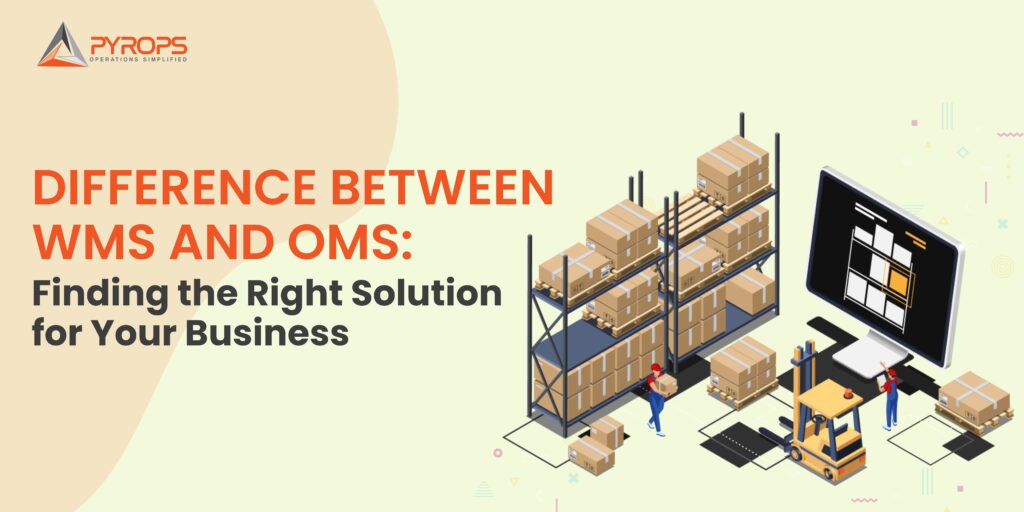
Compare WMS with OMS: Finding the Right Solution for Your Business

Warehouse Management Systems (WMS) and Order Management Systems (OMS) are essential software solutions for B2B businesses. Warehouse mgmt software helps you manage your inventory and warehouse operations, while OMS order management system helps you manage your orders and fulfillment process. WMS systems and OMS systems  both play a vital role in optimizing your supply chain, but they have different strengths and weaknesses. WMS is better suited for businesses with large inventories and complex warehouse operations, while OMS is better suited for businesses with a high volume of orders and a complex fulfillment process. The 2022 State of the Third-Party Logistics Industry Report found that supply chain technology transformation is one of the top trends for the year. As 3PL warehouses evolve to offer more omnichannel fulfillment options, it’s essential to embrace the right technology.  The two technologies are not interchangeable, and choosing the right software solution is crucial for B2B businesses –  is a big decision.By understanding the key differences between WMS software and OMS software, you can make an informed decision about which solution is best for your business. What is a Warehouse Management System? A Warehouse Management System (WMS) is a software application designed to streamline and automate warehouse operations. It provides businesses with the necessary tools to efficiently manage inventory, track stock movement, and improve overall warehouse productivity. WMS management system enables businesses to optimize space utilization, enhance order fulfillment accuracy, and minimize manual errors. Key Features and Benefits of WMS WMS software offers a wide range of features that contribute to effective warehouse management. Some key features include: Inventory Management: WMS system allows businesses to track and manage inventory levels accurately. It provides real-time visibility into stock availability, enabling efficient order fulfillment and preventing stockouts. Order Fulfillment: With best Warehouse management systems, businesses can optimize order picking and packing processes. The system suggests the most efficient picking routes, reducing the time and effort required to fulfill orders. Warehouse Optimization: Warehouse management system software helps optimize warehouse layout and space utilization. By analyzing data on product demand, storage capacity, and order frequency, businesses can arrange their inventory strategically, minimizing unnecessary movement and maximizing storage efficiency. Real-time Tracking: WMS system provides real-time visibility into the movement of goods within the warehouse. This feature enables businesses to track and trace individual items, enhancing inventory accuracy and minimizing the risk of lost or misplaced items. The key benefits of implementing a warehouse mgmt system in your business include: – Improved inventory accuracy – Enhanced order fulfillment speed – Increased warehouse efficiency – Reduced labor costs – Minimized errors and improved order accuracy Use Cases of WMS System WMS software is highly beneficial for businesses operating in various industries. Some common use cases include: E-commerce and Retail: E-commerce and retail businesses often deal with high order volumes and complex inventory management requirements. Warehousing management enables efficient handling of these challenges by automating processes and ensuring accurate inventory control. Manufacturing and Distribution: In manufacturing and distribution, Warehouse management systems plays a critical role in optimizing supply chain operations. It helps businesses manage inventory, track shipments, and streamline order fulfillment, ensuring timely delivery and customer satisfaction. Third-Party Logistics (3PL): 3PL providers rely heavily on effective warehouse management to meet the diverse needs of their clients. WMS software enables them to efficiently handle multiple clients, manage inventory across different warehouses, and track shipments accurately. What is an Order Management System (OMS)? An Order Management System (OMS) order management system is a software solution that centralizes and automates order processing, from initial customer request to final delivery. OMS enables businesses to manage orders across multiple channels, ensuring seamless order fulfillment and enhancing customer satisfaction. It consolidates data from various sources, allowing businesses to gain valuable insights into customer behavior and preferences. Key Features and Benefits of OMS Order management system offers several features that contribute to effective order management and fulfillment. Some key features include: Order Processing: OMS system automates the order processing workflow, from order capture to shipment. It eliminates manual data entry, reduces errors, and accelerates order fulfillment, resulting in improved customer satisfaction. Inventory Visibility: Order management process provides real-time inventory visibility across multiple channels and locations. It enables businesses to prevent overselling, allocate stock effectively, and fulfill orders from the most suitable warehouse or store. Customer Relationship Management (CRM) Integration: OMS order management system integrates with CRM systems, enabling businesses to maintain a comprehensive view of customer information. This integration facilitates personalized customer experiences, enhances upselling and cross-selling opportunities, and fosters customer loyalty. Analytics and Reporting: Order management software generates detailed reports and analytics on order metrics, customer behavior, and sales performance. These insights help businesses make data-driven decisions, identify trends, and optimize their overall operations The key benefits of implementing an OMS in software your business include: – Streamlined order processing– Improved inventory management– Enhanced customer experience– Increased order accuracy– Effective sales and marketing strategies Use Cases of OMS OMS system is valuable for businesses operating in diverse industries. Some common use cases include: Retail and E-commerce: OMS software sloutions is essential for managing orders across various sales channels in the retail and e-commerce sectors. It ensures seamless order processing, inventory management, and efficient order tracking, resulting in a positive customer experience. Wholesale and Distribution: Wholesale and distribution businesses benefit from OMS order management software by automating order processing, managing bulk orders, and tracking shipments across multiple locations. It enables accurate inventory control and timely order fulfillment. Omnichannel Operations: Businesses with a presence across multiple channels, such as physical stores, online platforms, and mobile applications, rely on OMS systems to synchronize and streamline their order management processes. It ensures consistency and efficiency across all channels, leading to improved customer satisfaction. Use Cases of OMS While OMS and WMS share some similarities in terms of optimizing supply chain operations, they differ in their primary focus and functionalities. Here are the key differences between Warehouse management system and Order management system: Focus: WMS software primarily focuses on warehouse operations, including inventory management, order

Warehouse Management System

3PL Warehouse: Streamlined WMS Implementation for Multi-Warehouse Operations

Effective warehouse management is vital for the success of 3PL and e-commerce businesses. To meet growing customer demands and navigate the complexities of managing multiple warehouses, implementing a robust Warehouse Management System (WMS) is crucial. A centralized WMS across various warehouse locations can optimize operations, enhance inventory accuracy, streamline order fulfillment, and deliver overall efficiency gains. However, implementing a WMS in a multi-warehouse environment requires careful planning and execution.  In this blog, we explore challenges faced by warehouse managers, highlight the benefits of a powerful WMS, discuss key features for selection, and provide insights and strategies for successful implementation. Whether you’re a 3PL provider or a business with a vast network of warehouses, this blog offers the knowledge needed to streamline operations and achieve remarkable efficiency through WMS implementation. Need of WMS System in 3PL Warehouse Management Running a 3PL operation without a reliable Warehouse Management System (WMS) is akin to sailing an ocean without a compass—an extremely challenging endeavor. WMS is indispensable for 3PL operations, providing order to the complexity of handling diverse inventory for multiple clients. It improves inventory accuracy, minimizes order fulfillment errors, and accelerates delivery times—critical factors for sustaining client satisfaction and staying competitive in the logistics industry. What is a 3PL Warehouse Management system? A 3PL Warehouse Management System (WMS) is a software solution designed to efficiently manage and optimize the operations of third-party logistics providers (3PLs) responsible for handling and storing inventory on behalf of multiple clients. 3PL WMS system streamlines various warehouse processes, including inventory tracking, order fulfillment, and shipment management. By providing real-time visibility into inventory levels, improving accuracy, and enhancing overall operational efficiency, a 3PL WMS software contributes to effective logistics management and client satisfaction. Challenges faced in Multi warehouses Juggling multiple warehouse operations presents a slew of challenges that businesses must face head-on. These challenges cover a wide range of critical areas, each of which necessitates careful attention and strategic solutions. Let’s look at the main challenges that come with running multiple warehouses: Inventory Visibility: Lack of real-time visibility into inventory levels across all warehouses can lead to stockouts, overselling, and poor customer satisfaction. Order Fulfillment Efficiency: Coordinating order fulfillment across multiple warehouses can be complicated, resulting in delays, errors, and increased costs. Scalability: As the number of warehouses and inventory volumes grows, managing operations manually becomes increasingly challenging, leading to inefficiencies and operational bottlenecks. Data Integration: Consolidating data from multiple warehouses and ensuring accurate and up-to-date information can be time-consuming and prone to errors. Resource Utilization: Optimizing resource utilization across multiple warehouses is complex, across labor, equipment, and space. Inefficient resource allocation can lead to underutilization or overutilization, impacting operational costs and productivity. Vendor and Client Collaboration: Coordinating with vendors and clients across multiple warehouses requires effective communication and collaboration. Ensuring timely and accurate information exchange, managing vendor relationships, and meeting client-specific requirements can be challenging without streamlined processes and tools. How 3PL WMS software Helps solve these challenges Unlocking the potential of an efficient Warehouse Management System (WMS) can be a game changer for businesses with multiple warehouses. This powerful software solution is designed specifically to streamline and optimize various aspects of warehouse operations. Organizations can effectively address the aforementioned challenges and achieve significant improvements in: Centralizing Inventory: An Enterprise WMS provides real-time centralized visibility into inventory levels across all warehouses, enabling businesses to make data-driven decisions, avoid stockouts, and optimize stock allocation. Order Consolidation and Routing: A WMS streamlines order fulfillment by consolidating orders from various warehouses and determining the most efficient routing, minimizing shipping costs and delivery times. Scalability and Flexibility: WMS systems are scalable and can accommodate the growth of a multi-warehouse network. They can handle increased inventory volumes and adapt to changing business requirements. Data Integration and Accuracy: A WMS integrates with various systems, such as Enterprise Resource Planning (ERP) and Transportation Management Systems (TMS), ensuring accurate and synchronized data across all warehouses. Key Features of WMS for 3PL warehouse system A robust 3PL Warehouse management software should include essential features to ensure seamless operations and efficient inventory management. These features have been meticulously designed to provide businesses with the tools they require to thrive in the ever-changing world of warehousing. The following are key features of a high-quality WMS software: Multiple Units of Measure: The software should be able to handle products measured in different units, such as weight, volume, or quantity. It should be able to seamlessly convert between other units, allowing for accurate inventory tracking and order fulfillment. Vendor Management: In a multi-vendor warehouse, effective vendor management capabilities are critical. The software should allow for streamlined vendor onboarding, as well as easy communication, performance tracking, and collaboration. This feature improves vendor relations and ensures smooth coordination. Inventory Tracking and Management: In a multi-vendor warehouse environment, accurate and real-time inventory tracking is critical. The software should include comprehensive inventory management features that allow for accurate tracking, monitoring, and control of stock levels in various units of measurement. It should support automated replenishment and provide real-time inventory movement updates across vendors. Order Fulfillment: The software should have strong order fulfillment capabilities tailored to multi-vendor operations. It should make order management, picking, packing, and shipping processes easier by considering multiple measurement units. This feature allows for the efficient consolidation of orders, the optimization of picking routes, and the generation of accurate shipping labels and documentation. Integration Capabilities: Seamless integration with other systems is crucial in a multi-client warehouse. The software should have the ability to integrate with e-commerce platforms, ERP systems, transportation management systems, and other relevant software. This integration ensures the smooth flow of data and eliminates manual data entry or reconciliation efforts, especially when dealing with different units of measure. Reporting and Analytics: Comprehensive reporting and analytics features are vital for monitoring enterprise resource planning and making data-driven decisions. The software should provide customizable reports, dashboards, and analytics tools that offer insights into key metrics related to inventory turnover, order accuracy, vendor performance, and fulfillment cycle times, considering the multiple units

Warehouse Management System

Does your Warehouse really need a WMS?

Warehouse Management Systems (WMS) are crucial for growing businesses with on-hand inventory. While businesses cite the benefits of operational efficiency, accuracy, and centralized control. Many times businesses may not be exploiting the complete capability of a WMS. This brings us to the question – does your warehouse really need WMS software? Warehouse management systems (WMS) can have a direct impact on your ROI by increasing throughput and maintaining efficient processes. WMS system software also helps to ensure that the right products are shipped, the necessary products are stocked, and redundancy and discrepancies are avoided. Warehouse management software provides the tools you need to remain competitive and comply with rules and regulations. Warehouse management systems (WMS) are crucial for growing businesses with on-hand inventory. While businesses cite the benefits of operational efficiency, accuracy, and centralized control, Many times, businesses may not be exploiting the complete capabilities of a WMS. This brings us to the question: does your warehouse really need WMS software? They fill the managerial gaps in integrating all functions in a warehouse operation to boost productivity with the power of warehouse automation and real-time data. Let us evaluate different scenarios in which a company can enjoy the true benefits of WMS software if it invests in the right software. The global warehouse management systems market is expected to grow at a compound annual growth rate (CAGR) of 15.3% from 2021 to 2028. Read report summary by Grand View Research What type of logistic operations can benefit from a WMS  system? WMS logistics and warehouse management systems (WMS) can play a significant role in optimizing picking operations and reducing costs. Picking constitutes a substantial portion of warehouse operation costs and is directly associated with customer satisfaction. In typical warehousing operations, pickers spend 60% of their time walking between locations. Adopting the right picking strategy is key to driving down picking costs by increasing picker productivity and accuracy. As in all areas of operations management, there is often a trade-off between competing objectives—productivity, accuracy, and time required for an activity.  Warehouse management systems (WMS) can help you optimize order picking operations by selecting the right picking method for your specific needs. There are many factors to consider when choosing a picking method, such as the characteristics of the product being handled, the total number of orders, picks per order, quantity per pick, picks per SKU, and the total number of SKUs. Additionally, many businesses need to use a combination of picking methods to handle diverse product and order characteristics. 1. Third-party logistics WMS logistics can help 3PLs manage multi-client warehouses efficiently and effectively. The idea behind a multi-client warehouse is that tenants can share resources, such as labor, material handling equipment, packaging material, and storage space, to avoid a large upfront investment. However, the multi-client structure of a warehouse can make operational efficiency challenging. A logistics warehouse management system can help 3PLs carefully allocate warehouse resources to clients based on logically defined patterns, such as product type, order volume, and delivery deadlines. This can help to improve operational efficiency and ensure that all clients are satisfied with the level of service they receive. A WMS system increases the operational efficiency of all the users in tandem through: Automated allocation of warehouse resources like labor and material handling equipment based on contract terms, changing requirements, and dynamic needs for services like kitting, bulk packaging, cross-docking, etc. A WMS solution is compatible enough for integration with ERP systems of multiple clients. Smart routing is crucial than ever as the operatives might fulfill orders originating from different clients that make coordination difficult. The most basic utility of increased visibility is important because of complex material storage. 2. Multi-location warehouse Multi-location warehouse management systems help spread the inventory, increasing operational and fulfillment capability. The perks of this arrangement include cutting down on shipping time, internal transfers to high-demand warehouses, moving products from overstock warehouses, easy deliveries to remote locations, etc. The complex structure of multi-location warehousing management requires equally efficient supervision of inventory movement and storage. So the WMS solutions come into play as they serve the following requirements: Understand the patterns of different SKU requirements at different locations to maximize the utility of having a multi-location warehouse. Low-stock & out-of-stock alert thresholds for different locations. Precise internal transfers based on requirements of concerned facilities. Real-time data and intuitive dashboard to present an instant view of what’s where. The WMS works as centralized administration to effectively manage the movement of products. 3. Omni-channel retail The best warehouse management systems (WMS) can help companies transform their traditional warehouses into omnichannel fulfillment centers.Omnichannel supply chains face incoming orders from all directions, including stores, marketplaces, internal transfers, and product returns. This requires a thorough analysis of current processes and a detailed transformation roadmap. WMS software can enhance a company’s visibility into various operations and reconfigure them to meet the requirements of an omnichannel warehouse. WMS system software also provides one-touch integration across various sales channels and stakeholders, such as delivery service providers, distributors, and suppliers. Modern WMS solutions are being considered facilitators of Omnichannel presence because of the following reasons. Order status updates. The WMS system software is linked to major online marketplaces. Omni-channel visibility of incoming orders, orders in transit, product returns, and material procurement. Tech-driven data exchange through API integrations. What type of industry can benefit from WMS software? The type of industry and nature of fulfillment determine the supply chain complexity of an organization. Additionally, business dynamics are fast evolving, given the unprecedented situation the world is currently facing. Every industry faces supply chain challenges specific to its operations and processes. An evolved WMS solution helps to tackle such challenges systematically. 1. E-commerce Warehouse management systems (WMS) can help e-commerce businesses overcome the challenges of fulfilling online orders accurately and efficiently.E-commerce businesses typically have a large variety of SKUs with low inventory levels and small order baskets. This requires precise location management and put-and-pick orchestration to ensure efficient order fulfillment. Online sales also generate

Pyrops® WMS is a warehouse management software designed, developed, and implemented by Precision Pyramid Private Limited.

For more info visit: www.precisionpyramid.com

India Head Office

A-1, Forest Lane, Near Ghitorni Metro Station, MG Road, Sultanpur, New Delhi – 110030

Nepal Corporate Office

Precision Pyramid Nepal Private Limited 6th Floor, Radha Bhawan, Tripureshwar, Kathmandu, Nepal

Contacts

Follow us

Scroll to Top