Warehouse Operations Simplified

Warehouse Management

Dark Stores: The Future of Retail
Warehouse Management

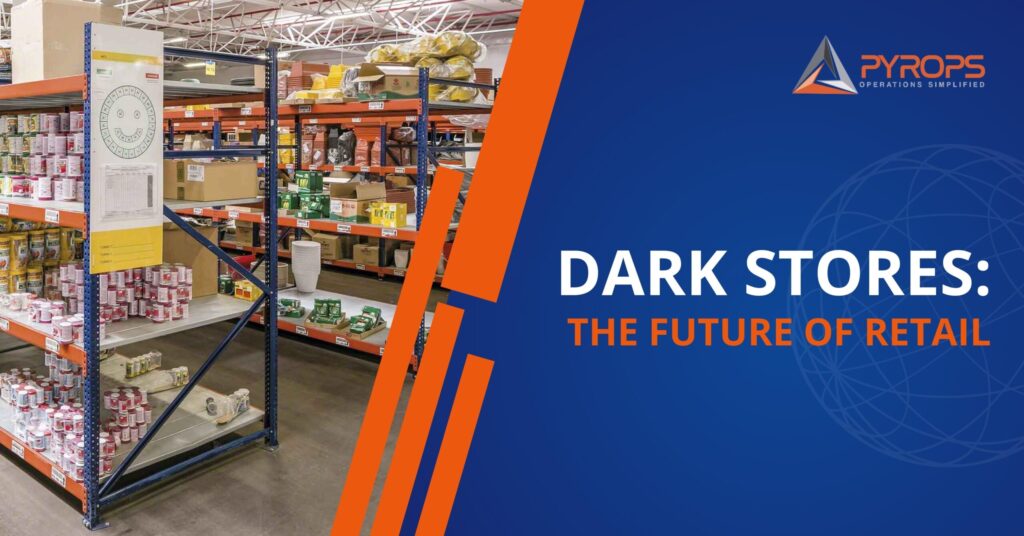
Dark Stores: The Future of Retail Warehouse Management System

Customers today seek immediate satisfaction when shopping, which is why a significant number prefer the in-person retail experience. The ability to locate desired items, complete a purchase, and leave with the product in hand is a major draw. However, the challenges posed by the pandemic have hindered the seamless provision of this type of shopping encounter. Consequently, numerous physical retailers, both small and large, have embraced a strategy known as “dark stores.” These establishments utilize their retail spaces to serve as warehouse management systems where a substantial inventory is stored and orders are fulfilled. To enhance customer options, they leverage ecommerce warehouse management systems and warehousing management software, enabling features such as swift delivery and same-day pickup. Dark stores play a pivotal role in streamlining the handling of online orders within physical distribution centers, whether or not these centers are accessible to customers. Nonetheless, they notably elevate different facets of the retail experience, offering optimal convenience through efficient delivery and pickup options, along with an extensive product selection, all facilitated by the best software for warehouse management systems. What are Dark Stores? Traditional retail stores that have been transformed into local fulfillment centers are known as dark store models. Grocery stores, clothing labels, and home goods retailers are among them. Their layouts are designed and optimized for retail fulfillment of online orders. Picking and packing of all the ordered items take place in the dark warehouse. The customer either ship or pick up the orders. This approach provides retailers with versatile options catering to both local and external customers, facilitated by an efficient retail warehouse management system. The COVID-19 outbreak has had a major influence on the retail industry. To allow customers to purchase from a brick-and-mortar retail store without visiting a store, businesses are turning to dark stores as a future of stores.They provide the space in the dark warehouse needed to fulfill orders for shipping or prepare them for pickup without requiring customers to enter a crowded store. Why Are Dark Stores Becoming More Popular in the FMCG Industry? The FMCG industry faces a lot of unique concerns such as perishability and the need for a large number of SKUs. Managing SKUs and tracking perishability in a traditional store can be a time-consuming task. Dark stores meaning, on the other hand, focus primarily on click-and-collect functionality. They prioritize ecommerce warehouse management and employ FMCG warehouse management systems, enabling more efficient control over SKUs and addressing the unique concerns of perishable goods. Dark stores are extremely efficient because they do not require a specific location or design for the shopping experience. They don’t need any space to display in-store advertisements. Furthermore, the dark store model can serve multiple online retailers at the same time. Dark grocery stores keep a large volume of goods in a smaller space. It facilitates easy picking and packing. Fulfillment of orders occurs in dark warehouses. It allows merchants to make the most of available space for easy picking. Instead of the customers, store pickers now walk the aisles to find the products required in the customer order. Benefits of using Dark Stores The benefits of utilizing dark stores extend beyond a mere trend, emphasizing the advantages of employing warehouse management systems. These  include the ability to serve local customers. And also to expand the customer reach at a lower cost. Here are a few reasons why the benefits of warehouse management systems make dark warehouses a lasting and impactful strategy. Stocking Space Customers are not permitted inside functional dark stores. So, their layout can be designed to improve storage and picking capabilities. Improving storage capacity ensures a wider product assortment. Faster picking ensures that orders are filled more quickly without sacrificing order accuracy. Stock Levels Dark store models are significantly smaller than typical warehouses. So, it is much easier to keep track of inventory levels. Many dark stores also have Warehouse Management Software. It allows them to keep track of stock levels in real-time. This software also assists retailers in determining if they have too much inventory (known as “deadstock”) or not enough. This can result in stockouts. You can ensure that you always have an ideal level of inventory by streamlining the inventory control process. Order efficiency Dark stores can handle a big volume of orders because they are customer-free zones. So, pickers can also easily walk aisles without having to dodge shoppers and their trolleys. The activity is significantly faster than an end customer doing the same because the pickers are working on confirmed orders. And, they are more familiar with the layout. Dark store warehouse efficiency can be increased by automating fulfilment activities with the right technology, such as Warehouse Management Software (WMS). Order consumption Consumers are more likely to become long-term, loyal customers after they become familiarised with your brand’s speedy, trustworthy, and accurate delivery of items. Dark stores can easily provide customers with more delivery options. This results in increased sales and customer lifetime value. Dark Store Order Fulfillment Models For all types of retailers, dark store fulfilment is a strategic and productive alternative. However, to be fully sustainable, it should offer a variety of delivery and pickup options.  Below are the three most typical delivery options for dark businesses. 1. Home delivery Home delivery has become more common, particularly among local shops. Customers will benefit from fast, convenient, and frictionless delivery, especially when it comes to essentials. However, home deliveries can also be made by starting an online store and shipping orders to clients who are located further away. 2. In-store pickup Many classic dark businesses have a designated pick-up space located near the front entrance. Customers won’t have to walk through the dark store to get their product this way. This provides flexibility and reduces delivery costs. 3. Curbside pickup Customers can quickly pick up orders with curbside pickup. It typically consists of designated parking areas where a retailer staff will bring out the order. So the customer does not have to get out of their

Warehouse Management

The Rise of D2C Brands

  Retail in India is booming. The Indian retail business is expected to grow to $1 trillion by 2025, up from $750 billion in 2020. As the pandemic has accelerated the use of digital channels for shopping by Indian customers, direct-to-consumer (D2C) brands have grown tremendously. In direct-to-consumer marketing, corporates can create their products and sell them directly to consumers by eliminating other intermediaries. They can be e-commerce platforms, retail stores, or social media businesses. The purpose is to remove resellers and retail stores from the process before the final consumer. Why the D2C bandwagon? Profitability: By removing intermediaries, brands can lower distribution costs and have more control over profit margins. Also, it offers a better value proposition to consumers. Personalization: The brand retains control of the customer relationship, allowing it to manage the entire experience chain, from the website to the product delivery. Data Control: A high-quality customer connection necessitates real-time access to all data. To understand their customers’ preferences, patterns, trends, and demands must be identified. Fulfilment Technologies D2C brands have to invest significantly in the fulfilment experience to deliver an acceptable offering for the consumer, especially when the consumer is used to an Amazon / Flipkart kind of fulfilment experience. Their fulfilment is complex and predictability of the supply chain can be tricky unless the D2C brands invest in the right systems and processes. Thanks to technological advancements so these issues can be easily resolved. Order Management Systems When selling direct-to-consumer (D2C) products, a brand must invest in order management solutions. It offers benefits such as Maintain a centralised database of inventory spread across all locations Provide complete visibility of stock movement Allow for faster order processing by integrating all sales channels into a single platform. Implementation of Warehouse Management System (WMS) For smooth supply chain operations, a direct-to-consumer(D2C) business needs warehouse management software so that assists in Error-free barcode label driven and scan-based operations Optimize order picking & shipping for faster dispatches Provide real-time information on the inventory Return Management Solutions Returns are an integral part of e-commerce. Customers are more likely to shop with a retailer that offers a simple returns process. To increase productivity, D2C brands should invest in a return management solution that offers the following benefits: Create a return manifest to track shipments Quick return processing and capturing codes for further analysis Ensure quick re-listing for sales Warehouse management in D2C businesses A D2C business requires warehouse management software because it assists in acquiring goods and placing them on the appropriate shelf. They require WMS to enhance order picking & shipping and provide real-time inventory information as well. It can also be integrated with your existing ERP system. Here are a few tips for effectively managing your warehouse: Keep your warehouse organized An organized warehouse ensures smooth warehouse operations for your business. So, adhere to the following points to manage your warehouse: Place frequently selling items at an accessible spot Track products using barcodes and labels. Use a shelf system to make the most of your warehouse’s vertical space. Use the FIFO and FEFO methods. Stock level Maintaining product stock levels to ensure that you never run out of products. And, it should have the appropriate stock positions across multiple warehouses aligned with geographical demand and forecasting. You can also analyse sales of products based on seasons, months, and other parameters by marking out the minimum and maximum stock for each product in your warehouses. Forecasting & cycle analysis You should improve the forecasting and cycle analysis. The best benefit of improving product forecasting and performance cycle track is that there will never be a shortage or overflow of items. You’ll know when to restock and how much to reorder with smart data management. So, you can maintain optimal availability and inventory levels. Invest in warehouse technologies that automate and improve inventory management. It further improves the forecasting of product flow. Because of an effective warehouse management system, you can prepare for holiday seasons well ahead of time. Storage space By monitoring the process and looking for inefficiencies, you can improve the efficiency of your warehouse storage space. Meanwhile, ensure the maximum utilization of space. Warehouse optimization enhances accuracy, on-time delivery and the healthier bottom line. Pyrops WMS processes orders from all platforms in real-time. It allows inventory to be handled effectively and assures error-free & timely product deliveries. As a result, it provides a better customer experience and builds a solid relationship with customers.  

Warehouse Management

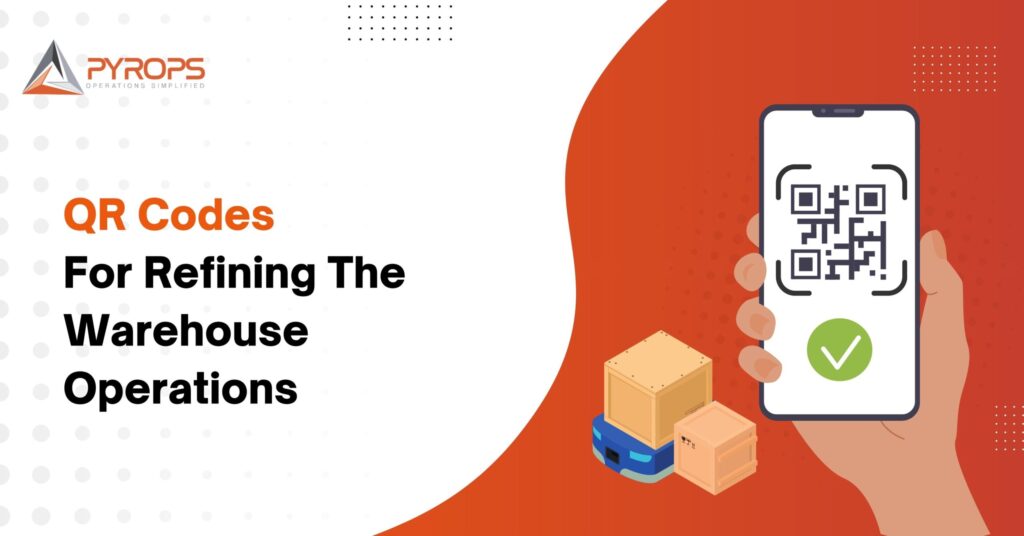
QR Codes For Inventory Management To Refine The Warehouse Operations

In the wake of COVID-19, warehouses look to implement scalable processes to manage unpredictable demand. Emerging technologies are focused on refining the warehouse operations through the utilization of advanced systems such as warehouse scanning systems and barcode warehouse management systems, with a particular emphasis on efficiently managing inventories. Traditional inventory management is slow, messy, and prone to errors. QR code inventory management is fast, accurate, and easy. QR code inventory management is the best solution for businesses that need to track their physical products efficiently. In the 1990s, Denso Wave Corporation innovated QR codes to encode additional information on product labels. These labels, integrated into a warehouse barcode system and utilized through barcode scanners for warehouse inventory, play a pivotal role in streamlining complex warehouse operations and expanding consumer outreach. This method serves as an effective means to store relevant product information in-store, especially for individuals who are used to spreadsheet-based solutions. WHAT IS A QR CODE? QR codes (short for “Quick Response”) are two-dimensional barcodes in a a warehouse management system. You can scan them in both directions i.e vertically and horizontally. Instead of a single linear sequence of black lines and white spaces, you’ll get small square codes that convey a lot of information about product details The QR code’s pixelated pattern strengthens its ability to store information. A single QR code stores more than 4,000 characters. The code can include product information as well as links to images, videos, and dedicated websites. Through the utilization of WMS scanners and a warehouse barcode scanning system, both employees and customers can effortlessly access crucial information about the specific part or product they are examining. QR codes offer enhanced versatility and capabilities compared to traditional one-dimensional barcodes. They can store a wealth of product information, including product details, batch numbers, serial numbers, and other relevant data. This makes them a valuable tool for warehouse management system (WMS) barcode scanners, enabling efficient inventory tracking, product identification, and data collection. QR codes for inventory management can assist you in tracking a batch number or determining where a product was manufactured or imported from. QR codes are also secure because the data can be encrypted. How To Use QR Code For Inventory Management? Establishing a warehouse inventory scanning system with QR codes may initially require time and present some challenges. However, once the system is set up, and users become acquainted with the platform, the invested effort proves to be undeniably worthwhile. Steps to set up the system: Use a QR code generator to create a unique QR code for each item in your inventory. Put a QR code on a sticker and stick it to each item in your inventory. This will make it easy to track each item. Store the QR code and important information about each item in your inventory software. To use the QR codes, just point your phone’s camera at them. This is much faster than looking up each item in your records. THE PERKS OF USING A QR CODE FOR WAREHOUSING Because QR Codes can hold more information than Barcodes, they were originally developed to modernize large inventory management systems. Today, they are used in many warehousing systems to manage large product volumes. Mainly, barcode scanners for warehouse management and the integration of barcodes in warehouse systems have become prevalent, especially for efficiently handling substantial product volumes. The following are some of the advantages of using QR code inventory management software for warehouse operations over barcodes. Readability QR codes are 360 degrees scannable and you can scan them from any direction. Assume you’ve placed a slanted QR Code on your product. You can scan it and it is directed to the key information. Storage Space When you encode information in a QR code, it does not grow vertically. Data modules are used to store the information contained in QR Codes inventory management system. As a result, the QR Code becomes denser as more information is added. As a result, QR Codes are small. It occupies less space and can easily place it on products of very small size. Data Storage QR codes for inventory tracking can store significantly more information and you can add up to 7,089 characters while one-dimensional barcodes can only store around 20-25 characters. Qr codes can store product information, website URLs, and plain text and maintain detailed information about every piece of Inventory. Damage Resistant An advantage of QR codes over barcodes is that a scanner can read partially damaged QR codes. Inventory management with QR codes can withstand up to 30% of damage. Miscounts caused by multiple scans of the same item are also excluded by QR codes. THE BENEFITS OF USING CODE BASED OPERATIONS Code-based operations are a powerful tool for warehouse management. They combine barcode scanners and warehouse management systems (WMS) to streamline processes, enhance visibility, and improve overall performance. This combination makes it easier to capture data, automate tasks, and make informed decisions, leading to a more efficient and proactive approach to warehouse management. The use of QR code inventory management software in warehouse operations bring some of the following benefits: Speed and Accuracy Code-based operations allow for faster and more accurate data transfer which benefits the tracking of materials. You can track exactly the items location and can help speed up the processes. It saves your organisation time in responding to inquiries and changes. As it provides timely data information about products, it enhances warehouse productivity and maintains accurate inventory management. Reduce Errors Data capture that is quick and accurate reduces paperwork and the risk of errors. If an employee scans the particular code, the item gets entered. This capability eliminates errors when manually entering a damaged code. Code-based scans are fast, reliable, and less time-consuming than manual data entry. When scanners read the codes, their graphics are quickly and accurately translated to a display without the errors often associated with manual data entry. CHALLENGES IN THE ADOPTION OF QR CODES It’s important to choose a system

Best Practices For FMCG Warehouse
Warehouse Management

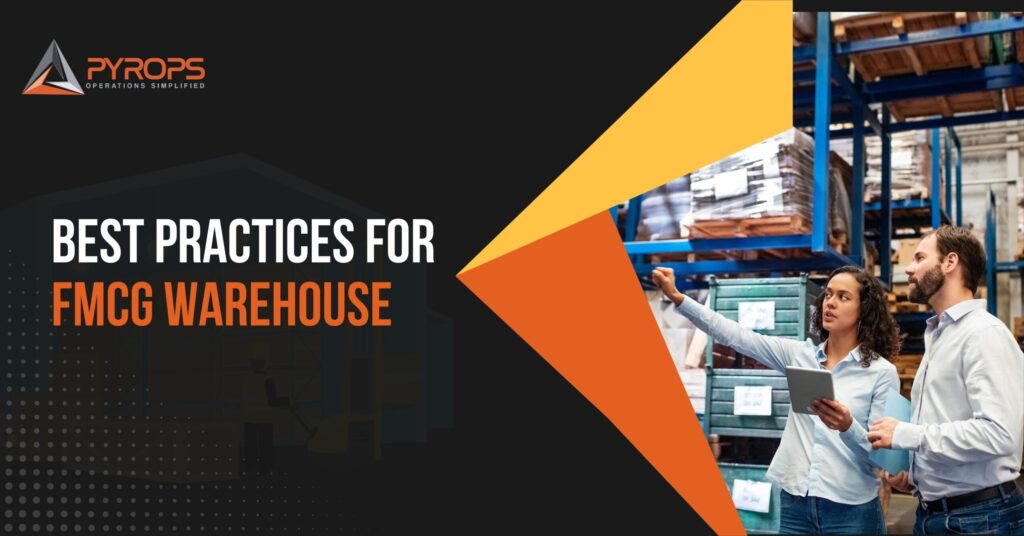
Warehouse Management Best Practices For FMCG

What is a warehousing management system? A Warehouse Management System (WMS) solution plays a pivotal role in efficiently overseeing the reception, storage, and movement of materials within a warehouse, as well as facilitating their timely shipment to customers or other destinations. WMS software is instrumental in managing inventory control, optimizing order fulfillment processes, and streamlining material handling operations. Within the broader scope of the supply chain, a WMS System solution serves as a central hub for coordinating the inbound and outbound flow of goods. This encompasses the seamless coordination of goods from the manufacturing facility to the warehouse and ultimately to end customers. The WMS software also ensures the meticulous tracking and management of stored goods, emphasizing the safe and secure handling of materials within the warehouse environment. Best Practices For Warehouse Management Good warehouse practices require maintaining high quality and safety standards for goods in storage. This includes everything from receiving and storing raw materials to distributing finished products. In the FMCG industry, the competition is fierce. As a result of consumers’ high expectations, the focus remains on delivering products efficiently to the market. The availability of products at relevant channels and the best warehousing practices have become important competitive differentiators. Also, the FMCG industry has a minimal margin for error due to the reduction in product life cycles. Hence, it determines how to plan and execute supply chain management effectively. FMCG WAREHOUSE Improved warehousing and logistics solutions are major productivity drivers in the FMCG industry. Warehouse management can play an essential role in the integrated logistics strategy. They (warehouses) develop and maintain positive relationships with the supply chain partners. Simultaneously, warehouse management system software directly impacts customer service, brand sales, and marketing initiatives. A warehouse firmly manages the fluctuations in market supply and demand. A warehouse management software focuses on storing products whenever supply exceeds demand. Warehouses can speed up product delivery by offering additional price tagging, product packaging, or final assembly. As a result, the warehouse’s good practices serve as a link between the producer and the customer. Warehouses are specially designed spaces for storing and handling materials. FMCG warehousing operations increased ROI and reduced costs by improving their processes, picking stock more efficiently, and managing their locations better. They also need to keep their partners and customers happy to stay competitive. WMS software should be able to handle tasks like cross-docking, loading and unloading bays, using handheld devices, packing in bulk, and scheduling tasks. FMCG warehouse management teams need powerful and flexible WMS software to make their operations more efficient. The goal is to consistently improve service levels, both for internal and partner operations, while reducing operational costs and increasing revenue. FMCG warehousing operations increased ROI and reduced costs by improving their processes, picking stock more efficiently, and managing their locations better. They also need to keep their partners and customers happy to stay competitive. WMS software should be able to handle tasks like cross-docking, loading and unloading bays, using handheld devices, packing in bulk, and scheduling tasks. FMCG warehouse management teams need powerful and flexible WMS software to make their operations more efficient. The goal is to consistently improve service levels, both for internal and partner operations, while reducing operational costs and increasing revenue. CHALLENGES IN FMCG WAREHOUSE Optimizing FMCG warehouse design A company must optimize the warehouse storage spaces inside warehouses. In simple terms, a firm must use FMCG warehouse design for various purposes, such as inventory. Also, goods in areas must equip themselves with well-designed pick pathways for smooth operations. Stock Tracking & Accuracy If a company uses a WMS Software or an ERP system, then purchase order data availability becomes feasible. One must not compromise upon accuracy. Poor customer service results in less accuracy in the FMCG warehouse. Seamless Compatibility  All of the systems in a Retail Distribution Warehouse must operate smoothly to achieve maximum efficiency. It is essential to integrate the warehouse management system and ERP systems perfectly. Multiple Locations The demand for inventory tracking grows 10X when warehouses operate at multiple locations. Warehouse managers need real-time monitoring and reliable data to locate the position of inventory. For example, the manager can call and process it faster if the stock is yet to leave the warehouse. BEST PRACTICES FOR YOUR FMCG WAREHOUSING Here are the five best warehousing practices for FMCG  that can help in the FMCG’s warehouse growth. 1. FEFO One must consider various factors while establishing a First-Expiry-First-Out (FEFO) strategy in the warehouse. Improving the operations by using a FEFO put-away and pick process helps a company in the long run. Many FMCG customers choose to store their products in many locations with a variety of SKUs or inflow racks. Choose a WMS software that takes FEFO into account at the receiving and pick-up process. 2. Cross-docking It involves unloading a product from one truck and loading it directly into another. A company doesn’t require storing the product in the warehouse again as it directly gets loaded into another. A company saves valuable time and money by delivering the products on time and saving the cost for extra storage. As much as feasible, follow this approach to keep your operations smooth. 3. Wave replenishment Space on your level and equipment such as lifts have a lot more to do with wave replenishment than anything else. Your warehouse replenishment team may need to coordinate their efforts if there aren’t enough lifts available, especially for a given set of activities. This factor will help to prevent unnecessary traffic on the floor. 4. Visibility The consumer products industry must have complete insight into the supply chain. It helps the industry to benefit from thorough product traceability. A warehouse supplier allows you to locate your products right from inbound shipments to storage. It also gives the facility of warehouse picking, packing, and shipping. So that the needs of end customers are met. It becomes easier to plan more effectively and cut the cost once the needs are met. 5. Co-packing, labelling, kitting If

Warehouse Management

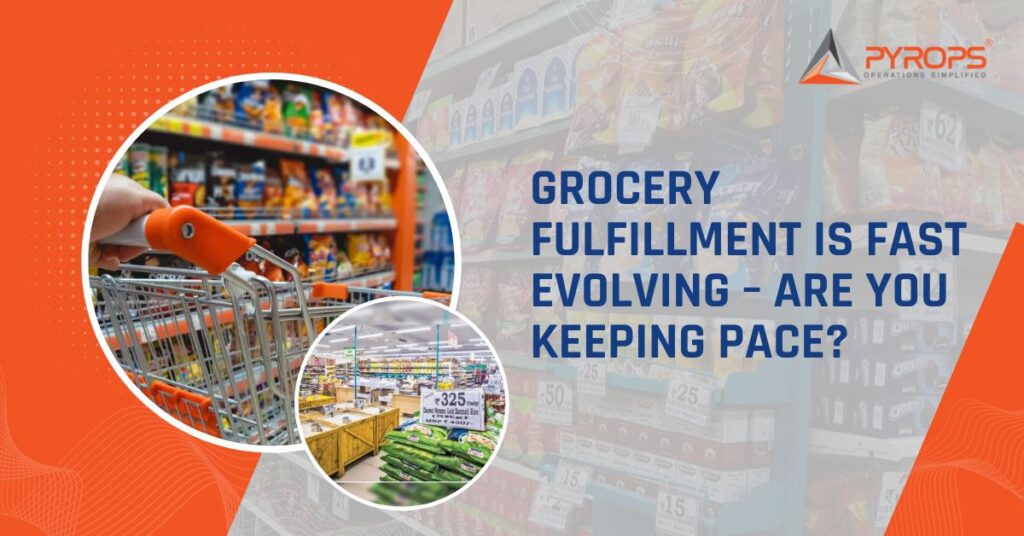
Grocery fulfillment is fast evolving – Are you keeping pace?

Grocery fulfillment is fast evolving!. Customer expectations for precision, flexibility, and fast deliveries are continually increasing with grocery shopping. These rising expectations warrant increasing efforts and investments in technology. Hence, comprehensive order management and warehouse management systems play a vital role in streamlining multiple functions related to the throughput of groceries and their delivery. The following are some key aspects of grocery fulfillment that apply to tech-enabled operations: Controlling pilferages/ shortages/damages and expiry Extended produce quality and shelf-life – Rejected items are more efficiently separated and removed from good quality grocery products with the help of quality checks, both while receiving and outbound operations. This prevents cross-contamination and premature deterioration. Expiry date tracking – Pyrops WMS lets you track minimum shelf life so that you don’t accept orders that are likely to expire and add to your costs of wastage and also the outward shelf life to ensure the consumer has sufficient time for consumption before it goes stale. Pilferage -With accurate visibility of location-wise stock and continuous inventory control activities. Pyrops helps to reduce grocery pilferages. Identification and segregation of damaged products – It helps in timely corrective action. This helps get better visibility of stock. Also, it helps project the right inventory levels to the sales channels. Replenishment between locations Some organizations have multiple location-based fulfillment operations or they may have a mother warehouse. That can replenish the stock of its distribution centers in various locations. Also responsible for the shipping and delivering the orders to consumers. Pyrops WMS strengthens the coordination between the mother warehouse and the distribution centers. Real-time updating of inventory Facilitating quick decision making The customized procedure of transfer orders and approval Benchmarking and monitoring the inventory thresholds Batch/Lot management For maintaining First Expiry First Out (FEFO) operations, you need clear visibility of batch-wise stock in the warehouse The system should ensure that it doesn’t allow multiple batches of the same product to get mixed on the same storage location. It helps to Batch control/lot control is critical for grocery warehousing Fulfillment accuracy – scan based order packing Aligns the packaging process with picking strategy – Picking is also optimized by Pyrops, ensuring that it reduces the travel time considering the location of the products and the number of pickers available with various picking strategies. Considering the packing parameters like scanning an item, wrapping, printing, and the time that is required to pack the next item. Pyrops helps to avoid that waiting time and congestion. Real-time visibility of workflows – This is the most important aspect that ensures that you can achieve the required TAT through a user-friendly dashboard, intuitive graphical representation of workflow information, and optimal visual monitoring. Demand planning – This enables the warehouse to get prepared and organized in a forward-thinking manner. You can also organize the storage of goods in a way that products with frequent demand are easily accessible. Also, you can adjust other resources and strategies, like the required workforce and picking/packing strategies, according to the changes. Pick a face and bulk storage areas in the warehouse Pyrops help to add agility and speed in the everyday fulfillment activates by organizing the warehouse processes that are already being performed. Pick face is the zone in which you keep material quantities worth 2-3 days of fulfillment. Therefore, this zone is highly accessible. And bulk storage is the place where you store and use most of the products for replenishing the pick face area so that there is no hindrance in the picking activities. The WMS governs this arrangement in a way that it- Reduces the transit time during picking by optimizing the picking footprint Supports various picking activities according to the orders and the product characteristics Ensure that there is proper coordination, ensuring that pick faces are being replenished as and when required. Fulfillment optimization/ Material distribution Pyrops not only can increase the efficiency of labor and internal activities but apply a holistic approach towards supply chain management. As it also supports efficient material distribution with the following approaches: – 1. Prioritize order fulfillment based on customer SLA – It allows to prioritize orders for delivery allotment based on the order SLA. You can then choose the delivery service partner best suited to accomplishing the desired SLA. 2. Route plan-based fulfillment – It will be extremely beneficial to have your fleet tied in from various delivery service partners to your WMS to track their capabilities. Some service partners are quick with certain locations and pin codes, also they are efficient in handling certain kinds of products. So you can automatically rout them across customer orders. Returns management Returns management is a significant part of products like groceries where consumer preferences are not too specific and the prices are not that significant. Hence, Pyrops understands the opportunities, and the challenges associated with reverse logistics and helps you to make the most out of it by: Ensuring prompt and needful actions for returned goods Identify fit to use stock ERP integration, ensuring swift returns management for the consumers Fulfillment visibility/tracking Fulfillment visibility is even more significant for shop floor inventory transactions and increasing the throughput for groceries as the demand is frequent and relatively small in quantities. Real-time data for work order and labor movement becomes a necessity to ensure:- Better use of existing facilities Prompt confirmations and auto-assignment of storage bins Control inventory levels to reduce operating costs Increased mobility and convenience. We ensure that we meet these goals through standardized reporting and efficient data capture, both of which are conducive to the following WMS capabilities: – 1. Dock management When loads of perishables arrive, dock management becomes more critical. You can prepare your staff for inbound shipments, knowing exactly what is due to come in. They’ll verify products and quantities, record any discrepancies, perform quality checks and move the process smoothly into the put-away stage. Detailed visibility of your inbound operations allows you to optimize and manage the flow of goods. 2. Replenishment Cycles Pyrops WMS helps you

Pyrops® WMS is a warehouse management software designed, developed, and implemented by Precision Pyramid Private Limited.

For more info visit: www.precisionpyramid.com

India Head Office

A-1, Forest Lane, Near Ghitorni Metro Station, MG Road, Sultanpur, New Delhi – 110030

Nepal Corporate Office

Precision Pyramid Nepal Private Limited 6th Floor, Radha Bhawan, Tripureshwar, Kathmandu, Nepal

Contacts

Follow us

Scroll to Top