
Warehouse Operations Simplified

Author name: Gaju Don

Picking In Warehouse Management and Reserve Storage for warehouse & Challenges
Knowledge Series

Picking In Warehouse Management and Reserve Storage for warehouse & Challenges

In the world of modern Warehouse Management Systems, the strategic layout and organization of storage areas are pivotal for optimizing operations and enhancing efficiency. Two fundamental concepts that significantly contribute to this optimization are Active Pick Areas (also referred to as Picking In Warehouse Management) and Reserve Storage solutions for warehouses. These specialized storage structures are crafted to address diverse operational needs, ensuring a smooth flow of goods and minimizing delays. When utilizing the Best WMS Systems and warehouse inventory management systems, these concepts become integral components of a comprehensive warehouse management system solution, further advancing the efficiency and effectiveness of operations. Active Pick Area / Pick Faces An Active Pick Area, often referred to as Pick Faces, is a dedicated section of a warehouse management system specifically designated for the Storage In Warehouses of high-demand, fast-moving goods. This area is strategically located near order picking stations to minimize travel time and maximize the efficiency of the picking process in warehouse. Items stored in the Active Pick Area are easily accessible, reducing the need for extensive movement within the warehouse software. Why is it needed? Reserve/Buffer Storage & warehousing serves as a backup supply for the Active Picking Packing Area. It prevents stockouts by enabling quick replenishment without interrupting the picking process. This storage strategy ensures that the pick area remains well-stocked and that order fulfillment remains consistent. Suited Operations Active Pick Areas are best suited for a warehouse management system with a high volume of orders containing common products. Industries such as e-commerce, retail, and distribution centers benefit greatly from this setup, where rapid order fulfillment is crucial. Reserve/Buffer Storage Area A Reserve or Buffer Storage Area is a separate zone within the warehouse where excess inventory is stored. Items stored in this area are not intended for immediate picking but serve as a replenishment source for the Active Pick Area. Reserve Storage & warehousing helps maintain a continuous supply of goods for order picking without overloading the pick area. Why is it needed? Reserve/Buffer Storage & warehousing serves as a backup supply for the Active Picking Packing Area. It prevents stockouts by enabling quick replenishment without interrupting the picking process. This storage strategy ensures that the pick area remains well-stocked and that order fulfillment remains consistent. Suited Operations Industries dealing with seasonal fluctuations, varying demand patterns, and products with irregular sales cycles find Reserve Storage particularly advantageous. Manufacturing facilities and industries with customized or made-to-order products can also benefit from this storage arrangement. Balancing Efficiency and Storage The synergy between Active Pick & Pack Areas and Reserve/Buffer Storage & warehousing Areas is crucial for maintaining a harmonious balance between operational efficiency and effective inventory management. By strategically placing high-demand items in the Active Pick Area and utilizing the Reserve Storage for excess stock, warehouses can ensure streamlined picking processes while preventing congestion and disorganization. Setting up a warehouse management system with an Active Pick Area and Reserve Storage Area offers several advantages, but there are also practical challenges that need to be addressed to ensure the success of this storage strategy. Some of the on-ground challenges include: Inventory Management Complexity: Managing inventory across two distinct warehousing & storage areas requires careful coordination. Warehouse mgmt system managers need robust inventory management systems to track stock levels accurately and ensure seamless replenishment between the Active Pick Area and the Reserve Storage. Replenishment Timing: Timely replenishment from the Reserve Storage and warehousing services to the Active Pick & Pack warehousing Area is critical. Delays or inaccuracies in replenishment can lead to stock outs in the pick area, affecting order fulfillment and customer satisfaction. Stock out Risk: While the Reserve Storage is designed to prevent stock outs, miscalculations or unexpected spikes in demand can still lead to temporary shortages in the active warehouse picking area. Balancing the right quantity of stock in each area is a continuous challenge. Picking Process Efficiency: The success of the Active Pick Area depends on efficient order picking. Inaccurate placement or organization of products in this area can lead to longer pick times and decreased productivity. Warehouse Layout Optimization: Designing the layout to accommodate both storage areas requires careful planning. Warehouse space should be allocated optimally to ensure efficient movement of goods and minimize travel distances for picking staff. Staff Training: Warehouse staff must be trained to navigate between the Active Pick Area and the Reserve Storage  for warehouse while following established procedures for picking and replenishment. Adequate training is essential to avoid confusion and errors. Technology Integration: Implementing technology solutions for inventory tracking, order management, and replenishment coordination is crucial. Integrating these systems seamlessly can be complex and requires careful integration planning. Order Variability: Warehouses serving diverse customers may encounter challenges in managing varying order sizes and requirements. Adapting to fluctuations in demand while maintaining efficient operations is a balancing act. To overcome these challenges, warehouses must invest in robust technology solutions, develop effective inventory management strategies, provide ongoing staff training, and continuously monitor and adjust their processes. Conclusion In conclusion, the integration of Active warehouse picking Areas and Reserve/Buffer Storage for warehouse Areas offers a strategic approach to warehouse organization that enhances efficiency, minimizes picking times, and improves inventory management. While Active Pick Areas cater to rapid order fulfillment, Reserve Storage provides a safety net for maintaining optimal stock levels. When implemented according to the specific needs of different industries, these storage strategies can significantly elevate warehousing operations, making them adaptable to evolving demands and ensuring customer satisfaction.

Packaging Material in Warehousing
Knowledge Series

Packaging Material in Warehousing

Packaging stands as a cornerstone in the warehousing domain, playing a pivotal role in ensuring the protection, organization, and efficient movement of goods throughout the supply chain.  This informative article explores the significance of packaging, various packaging types, strategies for optimization, waste prevention, and effective management of packing materials. The Role and Importance of Packaging in Warehousing Packaging serves as a protective shield for products during storage, handling, and transportation. It safeguards goods from damage, contamination, and environmental factors, ensuring they reach their destination in pristine condition. Beyond protection, packaging aids in inventory management by categorizing products, streamlining order fulfillment, and enhancing overall warehouse organization. Types of Packaging Optimizing Packaging Usage Right-sizing: Choose packaging sizes that closely match the product dimensions to minimize empty space and reduce material waste. Preventing Wastages Material Efficiency: Opt for eco-friendly materials that offer both protection and sustainability. Biodegradable or recyclable packaging reduces environmental impact. Managing Packing Material Stock Conclusion In the modern warehousing landscape, packaging is more than just a means to contain products—it’s a strategic tool for enhancing operational efficiency, reducing waste, and fostering sustainable practices. By carefully selecting packaging types, optimizing usage, preventing wastages, and managing packing material stock effectively, warehouses can not only protect their products but also contribute to a greener and more streamlined supply chain.

Knowledge Series

Location Accuracy in Warehouse

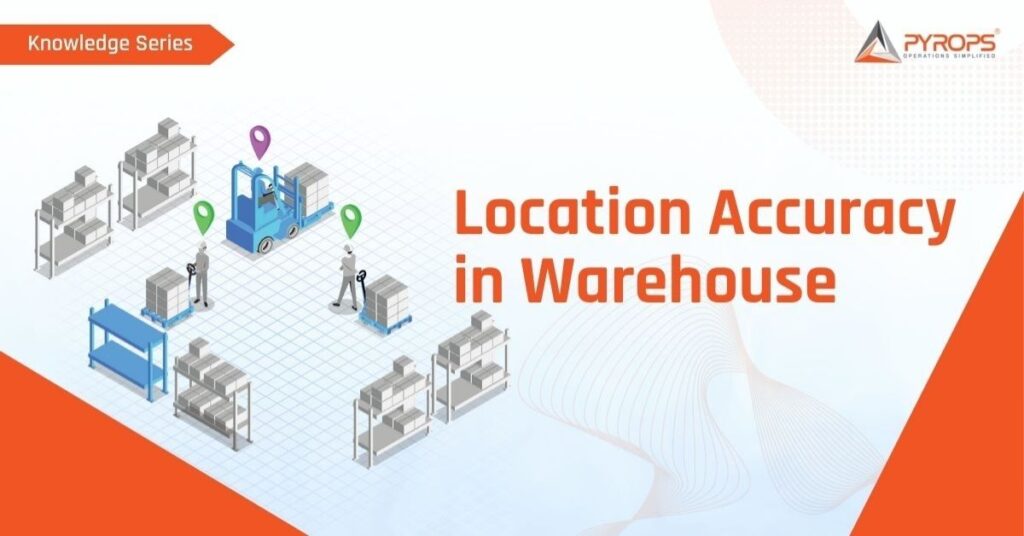
Trainer: Hey there! Today, I want to talk to you about an important aspect of warehouse operations— inventory accuracy in a warehouse management system. It plays a significant role in maximizing productivity, reducing errors, and optimizing inventory management. Let’s dive into this topic and understand why stock accuracy is crucial in the Wms System. Warehouse User: Sounds interesting! So, what exactly is Warehouse location accuracy? Warehouse User: Ah, I see! But why is warehouse inventory management system location accuracy so important? Trainer: Great question! Let me walk you through its significance. First, accurate warehouse stock location data enables us to efficiently manage inventory. We can quickly locate items, reducing the time spent searching for products. This streamlines warehouse inventory management processes like stock counting, picking, and Inventory Replenishment Strategy, leading to improved operational efficiency. Warehouse User: That makes sense. But how does inventory accuracy in warehouse location help reduce errors? Trainer: Excellent point! When we have precise location information, we minimize errors in order fulfillment and shipping. Warehouse employees can easily identify the exact location of items, ensuring that the right products are picked, packed, and shipped correctly with the help of warehouse inventory management software. This reduces the chances of shipping errors, customer dissatisfaction, and costly returns. Warehouse User: That’s a big advantage indeed. Does warehouse location accuracy affect order fulfillment speed as well? Trainer: Absolutely! Accurate location data significantly impacts order fulfillment speed. When our order pickers can easily find requested items, they can fulfill orders more quickly. This enables us to meet customer expectations for fast and accurate deliveries, improving overall customer satisfaction by using inventory warehouse software. Warehouse User: It seems like accurate location information in the WMS system also helps optimize space utilization. How does that work? Trainer: You got it! Accurate wms system location data allows warehouse management system managers to optimize space utilization. By knowing the precise location of each item, we can arrange storage configurations more efficiently, identify underutilized areas, and make better use of our available space. This leads to increased storage capacity and cost savings. Warehouse User: That’s great! So, does inventory accuracy in warehouse location provide any other advantages? Trainer: Absolutely! Real-time visibility is another advantage. Accurate location data in stock accuracy gives us real-time visibility into the movement of goods within the warehouse inventory management system. Managers can track order progress, monitor inventory levels, and identify potential bottlenecks. This visibility helps in making informed decisions, improving resource allocation, and enhancing overall supply chain visibility. Warehouse User: I can see how valuable that would be. Are there any best practices for achieving warehouse location accuracy in inventory management system & warehousing? Trainer: Yes, indeed! Here are a few best practices: Warehouse User: Thank you for sharing these best practices! They sound very useful. Trainer: You’re welcome! Remember, investing in technologies and best practices that promote inventory accuracy is vital for optimizing wms software operations, maximizing efficiency, and delivering exceptional customer service. Warehouse User: I completely agree. Location accuracy seems like a crucial aspect to focus on. Thanks for the insightful conversation! Trainer: You’re welcome! If you have any more questions or need further guidance, feel free to reach out. Happy warehousing!

Inbound Discrepancy Scenarios
Knowledge Series

Warehouse Management System Solutions for Inbound Discrepancies

The inbound process in a warehouse plays a pivotal role in maintaining accurate inventory levels and ensuring the smooth flow of goods throughout the supply chain. However, various discrepancies can arise during this critical stage, leading to inventory inaccuracies and disrupting operational efficiency. This educational article delves into common discrepancy scenarios encountered in warehouse inbound operations and explores effective strategies for mitigating and resolving them, leveraging the power of Warehouse Management Software (WMS) and warehouse management system software (WMS software). Inbound Warehouse Management System Solutions Effectively managing inbound warehouse operations is vital for efficient logistics and optimal inventory control. A Warehouse Management System (WMS System) is pivotal in enhancing these functions, offering real-time inventory tracking to minimize discrepancies and prevent stock outs or overstock situations. The WMS systemalso streamlines order processing by automating tasks like receiving, sorting, and categorizing incoming goods, reducing errors and accelerating the inbound process. Moreover, the WMS software optimizes Storage Area For Warehouses through intelligent algorithms, maximizing storage capacity and simplifying retrieval during outbound operations, thus reducing picking and packing times. Seamless integration with other business systems ensures a cohesive flow of information, minimizing data silos, and providing a unified view of inventory levels and order statuses. Quantity Discrepancies A common discrepancy scenario in the realm of warehouse inbound operations is inventory discrepancies, specifically discrepancies in the quantity of received goods compared to the recorded quantity. These discrepancies arise when there’s a mismatch between the actual number of goods received and the quantity indicated on the purchase order or shipping document. Inbound operations within the Warehouse Management System (WMS) software are susceptible to discrepancies that can have a detrimental impact on inventory accuracy and overall operational efficiency. To effectively address these discrepancies, warehouse managers should implement robust inspection procedures, maintain accurate data entry practices, and utilize warehouse management systems (WMS system) with automated reconciliation capabilities. Additionally, establishing clear communication channels between warehouse personnel, suppliers, and purchasing teams can facilitate prompt resolution of discrepancies. Using warehouse inventory management software, regularized reconciliation exercises and continuous process improvement initiatives can further minimize the occurrence of inventory discrepancies and maintain accurate inventory levels. To handle this: By implementing these strategies in the warehouse inventory management system, warehouse managers can effectively manage inventory discrepancies, ensuring the integrity of inventory records and maintaining efficient supply chain operations. Quality or Condition Discrepancies In warehousing & inventory management, discrepancies can arise in various forms, including quality-related discrepancies. These discrepancies occur when received goods fail to meet the specified quality standards or arrive damaged. Such discrepancies can disrupt warehouse inventory tracking processes, affect warehouse inventory management system efficiency, and lead to financial losses.To effectively identify and address quality-related discrepancies, businesses should implement comprehensive inventory tracking processes in warehouse management systems and robust quality control measures. To address this: By implementing above measures, businesses can effectively identify and resolve quality-related discrepancies, minimizing their impact on inventory accuracy, operational efficiency, and profitability. Documentation Discrepancies Discrepancies can arise between the received goods and accompanying documentation, such as purchase orders or packing lists. To mitigate this: Documentation discrepancies scenarios can be further elaborated as below Incorrect Purchase Orders An essential aspect of inbound operations in warehouse management system software involves receiving goods accurately and ensuring they match the information specified in the purchase order (PO). It could involve discrepancies in product quantities, SKU numbers, pricing, or even incorrect items altogether. To handle this situation: Missing or Incomplete Packing Lists In this scenario, the packing list accompanying the shipment is either missing or incomplete, making it challenging to verify the received goods accurately. To manage this situation: Discrepancies in Product Descriptions Sometimes, discrepancies can occur in the product descriptions between the documentation and the actual received goods. It could involve incorrect dimensions, colors, or variations in product specifications. To address this issue: Inaccurate Shipment Dates This scenario involves discrepancies in the recorded shipment dates compared to the actual arrival of the goods. Inaccurate shipment dates can impact inventory planning and disrupt supply chain operations. To manage this situation: Variances in Packaging Details Discrepancies can occur when the packaging details provided in the documentation, such as box dimensions, weight, or labeling, do not match the actual packaging of the received goods. To handle this: Weight Discrepancies Weight discrepancies occur when the actual weight of received goods differs from the expected weight. To handle this: Packaging Discrepancies In some cases, the packaging of received goods may not match the expected packaging specifications. To address this: Conclusion In warehouse management software and the inbound processes of warehousing, discrepancies can be tough challenges. They can mess up inventory tracking, put accuracy at risk, and slow down overall efficiency. To handle these issues well and keep the inbound operation smooth, warehouse operators should take a proactive approach. This means having strong receiving processes, using advanced technology solutions, and maintaining smooth communication with suppliers. Handling discrepancy scenarios effectively is essential for maintaining accurate inventory levels and optimizing warehouse operations. By implementing robust receiving processes, leveraging technology solutions, and fostering effective communication with suppliers, warehouse operators can proactively identify and address discrepancies, reducing operational disruptions and ensuring a streamlined inbound operation. Ultimately, effective inbound discrepancy management contributes to improved efficiency, customer satisfaction, and overall Supply Chain performance.

RFID Scanning- An Overview
Knowledge Series

RFID Scanning- An Overview

RFID stands for Radio Frequency Identification which uses radio frequency waves to transfer data wirelessly and without contact. Functionally, barcodes are different from RFID scanners because the scanner needs a line of sight to the barcodes. RFID tags & scanners do not need a line of sight—they communicate with the RFID tags on items without needing to see them individually. An RFID tag ensures a manufacturer can track every single part it uses in its goods, providing visibility over every moving part in the supply chain. One of the fastest-growing technologies in today’s warehouse is radio frequency identification (RFID). Increases in RFID adoption as well as advances in related technology have made it a much more affordable and cost-effective option for warehouses looking to better automate their inventory management and workflows. What is an RFID Scanner? How does it work? What is the difference between RFID Scanners & Barcode Scanners? The key difference between RFID scanners and barcode technology is that RFID scanners do not require line of sight to read tags. This means that RFID scanners can read tags from a distance, even if they are hidden or obscured. Barcode scanners, on the other hand, require direct line of sight to read barcodes. Advantages of RFID Superior to barcodes RFID tags are foremost preferred over barcodes because the chips are not subject to failure in scans or human error and the tags do not require the reader to be in the same line of sight. Resource-intensive manual scanning processes are eliminated with RFID & the inventory is scan-able and traceable, even as these materials rest, out of view, beneath other items.  Enhances warehouse efficiency RFID helps in automating and streamlining scanning processes that used to be manual. All materials labeled with an RFID tag transmit wireless data communication to the warehouse software and central database. The RFID-tagged items automatically track and update arrival and departure events, with just about anything in between.  Reduced human errors RFID essentially eliminates the potential for human error because information transfers remotely and automatically, warehouse items are less prone to fall through the cracks. There are no missed scans attributable to human error or barcode reader malfunctions. Better inventory control and accuracy By being able to capture inventory data and locations automatically and accurately, RFID can know exactly what products or materials are in stock and how many are needed to maintain and replenish. Flexibility & durability RFID tags are generally placed as stickers, which can be applied or removed from any object either wood, plastic or metal and offer the freedom to be placed on any point since these tags do not necessarily have to come in direct contact with the scanner and can be easily detected from a distance. RFID tags are quite durable, encrypt able, non-vulnerable to harsh weather conditions or tampering.  Disadvantages of RFID Scanning single vs multiple items If a pallet contains multiple boxes of different shapes and sizes, capturing data needs to happen at all angles to ensure every item is scanned. To use RFID effectively in a warehouse or loading dock environment, RFID blocks are used to form barriers between the readers, so that the same items are not scanned multiple times.  Material limitations RFID tags and labels are very specific to the type of material and size of the assets. For example, metal will deactivate the RFID antenna and the tag will not transmit at all. Liquid products can also affect the reliability of the signal.  Cost Comparison A typical barcode label costs a few cents each, while an RFID tag can run from one dollar upwards of 30 dollars depending on the type of tag. RFID readers are also about ten times more expensive than barcode scanners. In addition to the cost of the tags and readers, RFID implementation is significantly more expensive and complex than a barcode. Types of RFID Low Frequency Operating under 134.2 KHz, the low frequency range requires the tag to be in close contact with an RFID reader in order to transmit data. High Frequency Operating around 13.56 MHz, HF RFID tags have a read range of approximately one to three feet at the most Ultra High Frequency Operating between 800-900 MHz and higher, UHF RFID is typically used in large warehouses and distribution centers that need to track and identify multiple items at once Applications of RFID Low Frequency High Frequency Ultra High Frequency

Types Of Picking
Knowledge Series

Types Of Picking

The process of choosing the right materials, products, items or SKUs from the storage bins in a warehouse or fulfillment center for fulfilling an order placed by a customer is known as Picking. It is the first stage in fulfilling an order and must be flawless so that the remaining fulfilment processes—order packing; shipping, and post-sales activity—can also run smoothly. An efficient order picking process should be able to make sure that the right product is picked for every order. It has to be executed speedily and accurately because a lot of productive time of operators/pickers is wasted if they have to wait unduly to obtain the items.  Types of Picking There are three types of picking systems: piece picking, case picking, and pallet picking. Under these types are five different processes: single order picking, batch picking, multi-batch picking, zone picking, and wave picking. Let us look at them individually:- Piece Picking Pallet Picking Case Picking Methods of Picking Single order picking or discrete picking Batch picking or Cluster picking Zone picking or Pick and Pass Wave picking Best practices of Order picking systems The best strategies minimize picking times by making frequently picked items more accessible through a quicker pick path. Implementing one or more of the following order picking process refinements supports higher accuracy, increased productivity, greater throughput, and faster cycle times in order picking—ultimately maximizing efficiency while boosting customer satisfaction. Some of the best practices are- Warehouse Organization/Layout Reduce Walking Time Utilize Bins, Totes and Dividers Choose the Correct Picking Strategy Implement a WMS

Types of Warehouse Material Handling Equipment
Knowledge Series

Types of Warehouse Material Handling Equipment

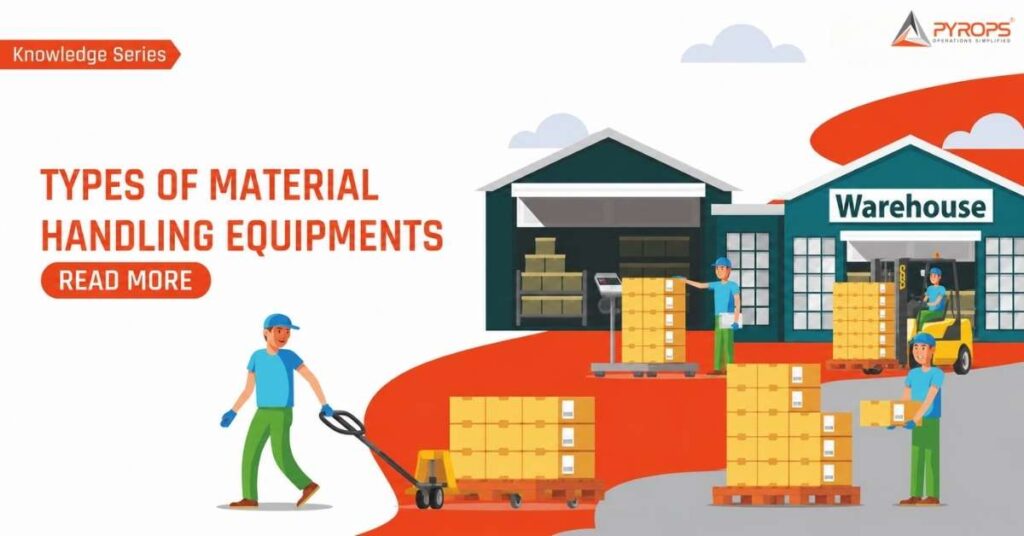
Warehouse software tools encompass a diverse array of applications and solutions crafted to streamline the movement, storage, and handling of goods within a warehouse or distribution center. These specialized software tools play a pivotal role in enhancing the efficiency, safety, and overall productivity of warehouse operations. Warehouse Management Software Solutions, often regarded as the best warehouse management software, are instrumental in orchestrating the various facets of warehouse logistics. These advanced solutions are designed to optimize inventory control, improve order fulfillment processes, and provide comprehensive tools for effective material handling. The integration of the Top Warehouse Management Software contributes significantly to the seamless coordination of warehouse activities, ultimately leading to enhanced operational efficiency. By leveraging these sophisticated warehouse software tools, organizations can bolster their capacity to manage goods effectively, ensure safety protocols, and boost overall productivity within the warehouse or distribution center. What is warehouse material handling equipment? Material handling in warehouses finds extensive use across various industries, with warehousing being a prominent sector where it plays a pivotal role in securely storing, retrieving, and dispatching goods. Warehouse Material handling equipment encompasses manual, semi-automated, and fully automated tools and machinery, all designed to aid in the movement and storage of materials within warehouse facilities. Warehouse handling equipment refers to the array of tools, machinery, vehicles, appliances, and devices employed in commercial settings to facilitate the movement, lifting, storage, and management of materials. For instance, a large warehouse operated by a major retail chain relies on material handling in the warehouse daily to efficiently relocate items within the facility, maintain inventory organization, and prepare packages for shipment, among other essential tasks. Warehouse Material Handling Equipment is one of the main activities in the warehouse and therefore, considerable attention needs to be given to this subject in order to ensure that handling methods and handling equipment contribute to efficiency and economy. A few factors involved in warehouse materials handling equipments are as follows:- Packaging If materials are received in the right type of packaging, they are easy to handle in the warehouse. Small components can be delivered in tote boxes or other containers of specified quantities convenient for production batches. Oils can be delivered in bulk from road tankers rather than in drums when feasible. Castings, forgings, etc. can be received in box pallets of suitable sizes and these can be handled easily with forklifts. Layout A good layout can contribute to efficient movement of equipment for material handling within the warehouse. This is an important factor in materials handling. A bad layout can similarly lead to considerable inefficiency and wasteful expenditure. Movement Warehouse Materials handling equipment is broadly based on three distinct actions – Lifting goods, transporting them, placing them in appropriate places. Suitability of Material Handling Equipment Four main purposes are served by the introduction of mechanical equipment – to cater for loads too heavy to be handled manually, to save time, to save labor and to save space. Types of Warehouse Material Handling Equipment The handling equipment available falls into three main groups: Some different types of warehouse material handling equipments are described below: Hand-operated Equipment Hand Trucks Selector Trucks Stillage Trucks Pallet Trucks Hand Stackers Pulley Blocks Monorails Roller Conveyors ChutesChutes Power-driven Equipment Forklift Trucks Platform Trucks Tractors Overhead Electric Cranes Goliath Cranes Mobile Jib Cranes Locomotive Cranes Roller Conveyors Belt Conveyors Overhead Bowline Conveyors Importance of Warehouse Material Handling Equipment Material handling in warehouses can greatly benefit companies in diverse industries. Many companies enjoy how warehouse handling systems and equipment improve their workplace’s efficiency and safety. Additionally, warehouse material-handling equipment can reduce waste, lower costs and optimize a facility’s space. Here are some of the most significant benefits of using material handling equipment: Greater efficiency: Outfitting your facility with relevant material handling equipment can reduce production stoppages by improving the circulation of materials around a facility. Many different types of material handling equipment can help you get your materials to key locations faster and maintain a more consistent flow, increasing efficiency as a result. Reduced waste: When a company relies on manual labor or improper equipment to handle its materials, its materials are much more likely to be damaged during transportation and storage, leading to higher material and product waste. Deploying your facilities with material handling equipment can reduce your waste significantly. For example, stacking frames can keep crushable items safe while stacked over one another, and forklifts can securely transport pallets to various locations. Lower costs: Another major benefit of material handling equipment is its ability to help a company lower its costs. When you use equipment designed to make your system more efficient and speed up processes, you can increase your profitability due to decreased work stoppages and errors. Additionally, material-handling equipment reduces waste, meaning you will reduce costs related to replacing damaged materials and products. Better use of warehouse space: You can use various types of material handling equipment, particularly storage and handling equipment, to save space in your warehouse. For example, you can install mezzanines to receive a second level of storage in your warehouse and tall racks to increase your vertical storage capabilities. Additionally, side loaders allow you to place your aisles more closely together. Increased employee safety: A major benefit of using material handling equipment is that it reduces the need for your staff to do strenuous manual labor. Since regularly lifting and hauling heavy materials by hand leads to chronic injuries, machinery designed to do these tasks for them can increase employee safety. Contact Pyrops WMS for Warehouse Material Handling Equipment We offer a wide range of material handling equipment and systems for your warehouse operations. Our team of experts can help you find unique solutions for your needs, whether you are updating your warehouse management system (WMS) or choosing the right type of material handling equipment. Conclusion Reach out to us today to learn more about how our warehouse systems can benefit your operations.

Inventory Cycle Count
Knowledge Series

Inventory Cycle Count

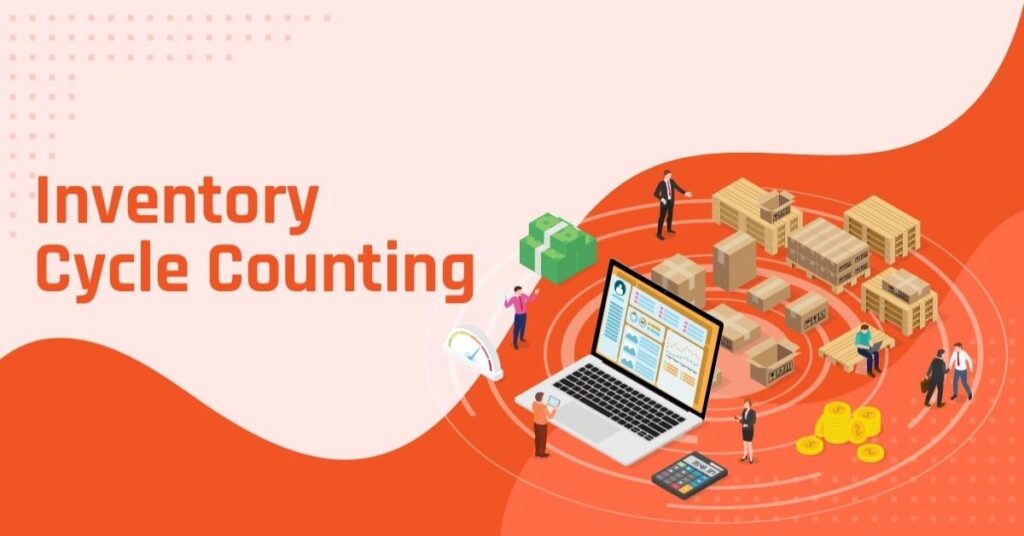
Warehouses run like well-oiled machines when audits are conducted. Reconciling on-hand products with records is foundational to accurate data at all stages of the logistics pipeline. The most efficient inventory management plans lead to minimal transaction error rates and extremely high stock record accuracy without taking away from staff’s essential tasks. Regardless of whether a company uses periodic or perpetual inventory practices to track their inventory, regular cycle counting is a necessary auditing process to manage inventory counts. Inventory counting system offsets the burden of traditional audits by rotating product counting in a cyclical schedule. Inventory cycle counting is ideal for large warehouses with lots of products or many different types of products. Inventory Cycle Counting Cycle counting is a method of checks and balances by which companies confirm physical inventory counts match their inventory records. It is a more efficient way to keep track of inventory accuracy and helps to identify discrepancies sooner. The process involves dividing inventory into smaller, manageable portions and counting each portion at set intervals, such as daily, weekly, or monthly. This allows for continuous monitoring and adjustment of inventory levels, leading to improved accuracy and cost savings in the long run. Methods of conducting cycle counts ABC Counting Usage-based Counting Hybrid Count Geographic Counting Opportunity Based Counting Advantages of cycle counting  Inventory cycle counts do not interrupt warehouse operations 2. Inventory cycle counts are more flexible than traditional audits 3. Inventory cycle counts are more accurate than physical audits 4. Inventory cycle counts uncover problems that traditional audits miss Best practices for Inventory cycle counting Ensure your inventory data is up-to-date 2. Randomly alternate between counting staff 3. Leverage technology to mitigate errors and count efficiently

Bin Consolidation & Slotting
Knowledge Series

Warehouse Consolidation & Slotting

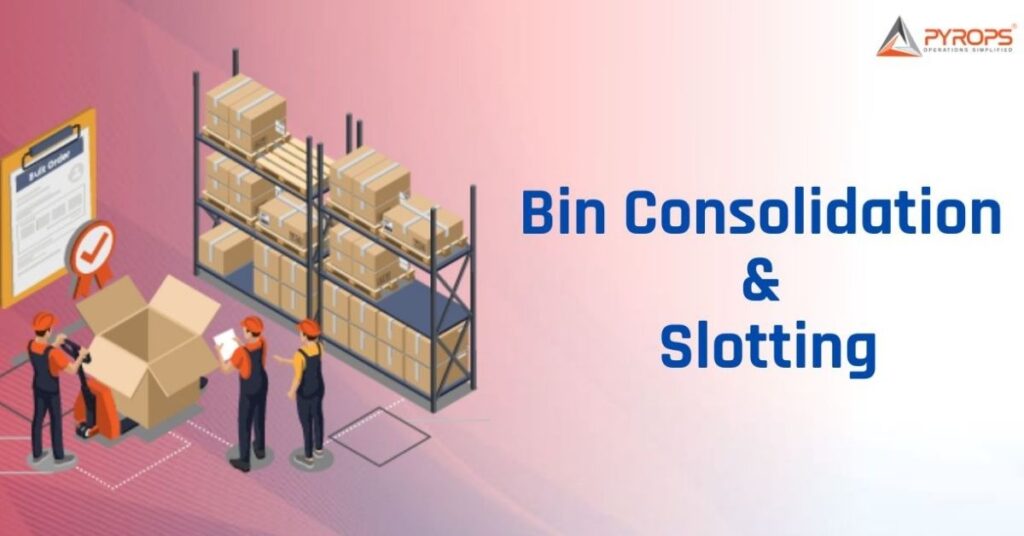
Warehouse slotting is the process of organizing the inventory in a Warehouse Management System to maximize space and efficiency. It is a form of inventory management. A warehouse’s purpose is to act as a buffer between production and customer demand, thanks to Warehouse Management System (WMS) Software. This allows businesses to manufacture products and store them in a way that’s decoupled from immediate needs.  With a need for a WMS System, businesses can fulfill customer orders faster and more efficiently, ultimately reducing costs. WMS software uses a process called slotting to determine the optimal location for each item in the warehouse. Slotting takes into account various factors like item velocity (how often it’s picked), dimensions (cube size), weight, and product groupings. By strategically placing items, businesses can minimize picking times and optimize warehouse space utilization. In essence, WMS software empowers businesses to leverage their warehouses as strategic assets, not just storage facilities. It’s all about bridging the gap between supply and demand smoothly and cost-effectively. Warehouse Slotting Strategy Warehouse slotting optimization strategies can help businesses reduce costs and improve efficiency in a number of ways, including: Let’s see how warehouse management software (WMS) with slotting capabilities can truly supercharge your warehouse operations: Boost order accuracy: Forget the mix-ups! WMS-powered slotting ensures the right items are always in the right places, minimizing picking errors and ensuring customers get exactly what they ordered. Minimize product damage: Say goodbye to bumps and bruises! Slotting considers product dimensions and fragility, placing delicate items in secure, easily accessible locations, reducing the risk of damage during storage and retrieval. Prioritize worker safety: Safety first! By strategically placing heavy or bulky items within easy reach, WMS (Warehouse Management System) slotting optimizes picking routes and minimizes awkward lifting, keeping your team safe and sound. By incorporating these improvements, WMS systems empower businesses to not only store goods efficiently but also cultivate a warehouse that hums with accuracy, protection, and safety. It’s a win-win for business efficiency and employee well-being. What Does Slotting Means in Warehouse Management? Warehouse slotting is a complex process that requires careful planning and consideration. It is important to consider all of the factors that can impact slotting decisions, including: Importance of Warehouse Slotting Different Methods of Slotting Random Slotting Fixed Slotting Macro Slotting Micro Slotting Benefits of Slotting Reorganizing zones, or even an entire warehouse management system, can seem like a daunting and time-consuming project because we need to determine how to store inventory in an optimal way and move large amounts of inventory to different locations correctly, so it does not cause any issues during the picking process. While the slotting process can be a major project that takes time and continuous improvement, it ultimately can benefit your business and positively affect the bottom line. Here are a few ways that slotting helps:- Proper slotting can improve picking accuracy by eliminating any possible confusion for the picker. Storing products that make the most sense for the picker such as by type, size, weight, etc., allows for faster picking. Workers can always know the location of items and how to get there without ever hunting through shelves. Slotting processes can help identify opportunities to increase storage capacity. Taking the time to optimize the warehouse means one can delay expanding and/or spend extra costs on an additional warehouse. By optimizing warehouse space and improving processes, one can keep one’s overall carrying costs down rather than hiring more help or renting out more warehouse space. Besides avoiding damage during transit or packing, a warehouse slotting strategy can also help avoid damage to stored items during handling and processing. Good slotting helps improve employee productivity by allowing them to locate items immediately. This process helps managers and employees immediately understand when an item is not in the right place, which reduces the possibility of errors. What is a Consolidation Warehouse? A consolidation warehouse is a third-party storage facility where several small shipments are gathered together and sorted into groups based on destination, so that  each group can be sent out as one larger, consolidated shipment.Consolidation warehouses are a valuable tool for businesses of all sizes, but they are especially beneficial for businesses that ship a large number of small orders or that need to ship to multiple destinations. Consolidation in warehousing that is operated by a third-party logistics (3PL) company that is responsible for merging small loads into large-size shipments. Inventory Consolidation

Putaway Rules
Knowledge Series

Put Away Rules

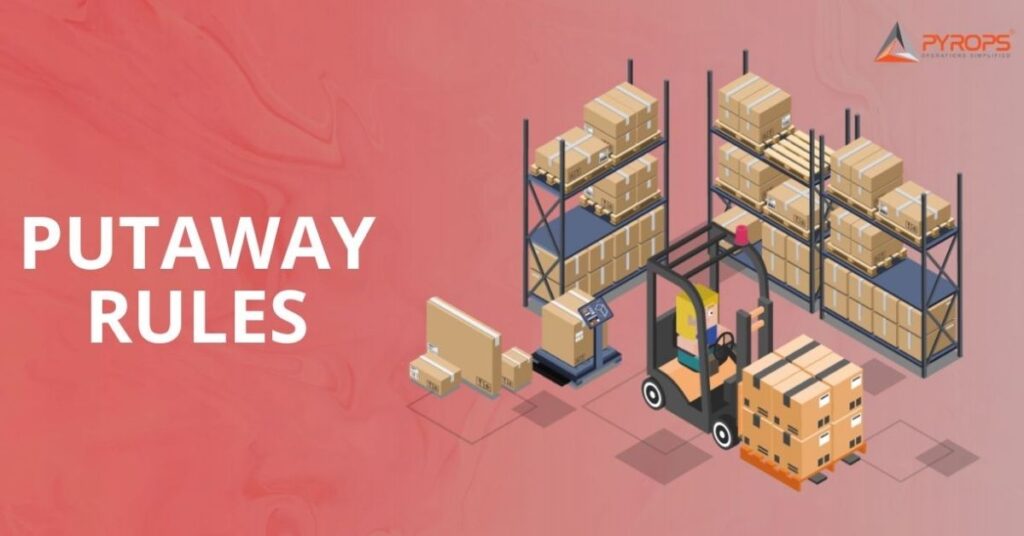
Put away in warehouse is a crucial aspect of warehouse management, which involves several processes starting with warehouse receiving and ending with ensuring that inventory is stored in the right warehouse locations such as racks, shelves etc.  Put away is a rule-based system of moving items from a received shipment to the right places in warehouses. The initial placement of goods has a direct impact on all subsequent warehouse processes, especially the picking process. With a strategic warehouse put away system in place, it becomes so much more efficient and straightforward to store inventory without misplacing any SKUs. This process also improves warehouse tidiness and makes it easier for pickers to find the right SKU quickly. Putaway process in warehouse that determines how efficiently your inventory is stocked and accessible. When done correctly, putaway in warehouse management can minimize the time and effort needed to find and retrieve products. However, when done poorly, it can lead to confusion, lost time, and even safety hazards for warehouse managers and staff. Here, we will provide information on what is putaway meaning, the different putaway methods, and how you can optimize your own Warehouse Putaway process using WMS software. Objectives of Put Away The prime objective of the put-away process is to move goods from the dock to the most optimal warehouse storage location. Other objectives include Types of Put away The putaway process is a critical part of warehouse management. Putaway in WMS involves storing incoming products in the most efficient and accurate way possible. A well-implemented put away warehouse can help businesses to reduce stockouts, improve order fulfillment times, and reduce inventory costs.Many steps are followed to implement warehouse putaway using different methods. Depending on the criteria such as type of materials, physical weights of materials, quantity, size of warehouses and other unique features of the business, there are four different types of warehouse put away as shown- Put away based on space availability Depending on available storage space, i.e., whether items had to be put away to final locations immediately or later, there are two categorizations. Direct Put away Indirect Put away Using indirect put away gives more control and precision when sending items to their correct locations in warehouses. For the large drums to be placed over floor markings, indirect put-away is used. When the large drums arrive at the docking station, they are brought down with forklifts and stored at a temporary area. After finding ideal spots for these drums, workers move the drums to marked locations and not racks or bins since each drum is huge. Indirect out away is used in more locations with huge warehouses meaning it is hard to locate where to put away. Put away based on location rules Fixed Location Put away Dynamic Location Put away Put away process in warehouse: Optimization Is Key Every warehouse has its own putaway process, but without proper optimization, it is difficult to achieve the best results. A warehouse management system (WMS) can help businesses to optimize their putaway process and get the most out of it. Advantages of Put away Reduces the chance of lost or misplaced items Improve the picking process Effective use of storage space Pyrops WMS: The key to efficient & accurate putaway Pyrops WMS software is a powerful and easy-to-use warehouse management system that can help businesses of all sizes to optimize their putaway process. With Pyrops WMS, businesses can improve efficiency, accuracy, and visibility, while also reducing costs and improving customer satisfaction.

Pyrops® WMS is a warehouse management software designed, developed, and implemented by Precision Pyramid Private Limited.

For more info visit: www.precisionpyramid.com

India Head Office

A-1, Forest Lane, Near Ghitorni Metro Station, MG Road, Sultanpur, New Delhi – 110030

Nepal Corporate Office

Precision Pyramid Nepal Private Limited 6th Floor, Radha Bhawan, Tripureshwar, Kathmandu, Nepal

Contacts

Follow us

Scroll to Top