Warehouse Operations Simplified

Author name: pyrops

WMS Integration

Challenges of Integrating Disparate Supply Chain Systems

In recent years, many companies have turned to centralized control towers to optimize their supply chain operations. A control tower provides a single view of the entire supply chain, enabling real-time monitoring, analysis, and decision-making. This can help companies reduce costs, increase efficiency, and improve customer satisfaction. However, achieving a centralized control tower is not without its challenges. Here are the four major challenges companies face when integrating disparate supply chain systems: Challenge 1: Incompatible Systems One of the biggest challenges in integrating disparate supply chain systems is compatibility. Not all systems are designed to work together, and some systems may use different data formats, protocols, or languages. This incompatibility can lead to errors, delays, and data loss, making it difficult to achieve a centralized control tower. Challenge 2: Data Quality Another challenge in integrating disparate supply chain systems is ensuring data quality. The different systems may use different data formats, have different levels of data granularity, or use different data definitions. This can lead to inconsistencies, inaccuracies, and incomplete data, which can compromise the quality of the centralized control tower. Challenge 3: System Complexity Integrating disparate supply chain systems can be a complex process. The different systems may have different configurations, versions, and customization, which can make it difficult to connect them. Moreover, the integration process may require changes to existing systems, which can be time-consuming and disruptive. Challenge 4: Security and Compliance Integrating disparate supply chain systems can also pose security and compliance risks. The different systems may have different security protocols, access controls, and compliance requirements. Integrating these systems can create vulnerabilities, expose sensitive data, and compromise regulatory compliance. Overcoming The Challenges of Integrating Disparate Supply Chain Systems To overcome the challenges of integrating disparate supply chain systems, companies must invest in integration technologies, data governance, change management, and security controls. Integration technologies can help bridge the gap between incompatible systems, while data governance can ensure data quality and consistency. Change management can help minimize disruptions and ensure that employees are trained and prepared for the new system, while security controls can help mitigate security and compliance risks. The Benefits of a Centralized Control Tower Despite the challenges of integration, a centralized control tower can provide many benefits to companies. By providing real-time visibility, analytics, and decision-making capabilities, companies can optimize their supply chain operations and achieve greater efficiency and customer satisfaction. A centralized control tower can also help companies respond quickly to disruptions and make data-driven decisions that can improve their bottom line. In conclusion, integrating disparate supply chain systems is a complex and challenging task, but it is necessary to achieve a centralized control tower. The challenges of integration include incompatible systems, data quality, system complexity, and security and compliance. To overcome these challenges, companies must invest in integration technologies, data governance, change management, and security controls. By addressing these challenges, companies can create a centralized control tower that provides real-time visibility, analytics, and decision-making capabilities for their supply chain operations. Read More: Supply Chain 4.0


How Precision Pyramid became a pioneer in Supply Chain Digitization
News

How Precision Pyramid became a pioneer in Supply Chain Digitisation

It was 2015, the startup revolution had just started spreading its wings and the country along with Vineet Baid, Manish Jain, Vikas Kapoor was in an entrepreneurial mood. The trio had met and formed a close bond during their stint at Jabong. As their days passed in the fast-paced working world of Jabong, the lack of software and services catering to mid-sized retail, ecommerce, third-party logistics and distribution became obvious. Though this gap first became pronounced and noticeable particularly in the supply chain, the trio soon found other existing gaps. Being citizens of New India, they took the natural course of action and founded the startup Precision Pyramid. Read More: How Precision Pyramid became a pioneer in Supply Chain Digitisation

Warehouse Productivity

Environmental Impact of E-commerce

Global e-commerce has grown by leaps and bounds since COVID-19 hit us. A lot more users have become comfortable with digital shopping in the last 3 years. Easy and convenient e-commerce offers are addictive, especially when bundled with the feeling of getting a deal or a discount. Many times, customers are induced into buying stuff that was unplanned/unnecessary due to specially promoted events like Big Billion day etc. This is largely due to the FOMO effect. While all this is creating a wow, this causes a severe environmental impact of online shopping. E-commerce warehouses are essential for efficient e-commerce fulfillment. They also play a key role in reducing the environmental impact of online shopping. Sustainable practices in e-commerce warehousing, such as smart inventory management and green packaging, can help to lower the carbon footprint of online shopping.As the e-commerce industry continues to grow, it is increasingly important to prioritize ecommerce and fulfillment strategies to address the environmental challenges posed by this booming industry. Let us look at some facts to assess the situation. Packaging The packaging of products contributes significantly to CO2 emissions from plastics production, pollutes ecosystems, and adds a vast amount of waste to our landfills. Sustainable packaging solutions can help to reduce these negative impacts on the environment. Forest conservation group Canopy estimates 241 million tons of shipping cartons are produced every year from 3 billion trees. In China, statistics from the State Post Bureau showed that the country’s courier handled more than 74 billion parcels in 2021 alone. Riding on the e-commerce and food delivery trends, last year, China’s growth rate of plastic and packaging increased from 2.3% in 2020 to 4.4% in 2021. Furthermore, plastic for packaging reached over 40% of the entire world’s plastic waste. The amount of waste recycled is only 8.7%. Organizations want their products to deliver in perfect condition. This can result in excessive padding techniques using Styrofoam or additional paper. This does not include other materials like plastic, bubble wrap, and tape, all of which create landfill waste and often are not, or cannot be, recycled, which further causes the environmental impact. A recent report by Oceana, an advocacy organization dedicated to ocean conservation, estimated that Amazon generated 600 million pounds of plastic. packaging waste in 2021 and up to 23.5 million pounds of plastic for packaging entered the world’s marine ecosystems. The carbon footprint from electronic devices and Internet use reached almost 4% of total carbon emissions and is expected to become 8% by 2025. Shipping Shipping emissions are another environmental impact of online shopping. The transport of e-commerce goods across the world is responsible for a huge portion of CO2 emissions. Emission figures for India are estimated to be 285g CO2 per parcel and 51% share of total delivery emissions, compared to an estimated 194g CO2 and 53% respectively for Europe. One of the major problems is consumers’ desire for convenience. It is estimated that by 2030, the number of delivery vehicles will increase by 36%, reaching approximately 7.2 million vehicles. This will not only increase to about 6 million tons of CO2 emissions, but it will also increase commutes by 21%, as vehicles will take longer to travel due to higher traffic congestion. Faster delivery requirements tend to create an environmental impact situation in which trucks are moving half-empty and leading to high fuel consumption. The transportation and logistics industry is the biggest contributor to CO2 emissions in the U.S., accounting for 29% of greenhouse gases. Modelled research was conducted on the movement of goods from the factory through to the end consumer, termed “last mile delivery” analyzed the carbon footprint of the “last mile delivery” for the three most prevalent types of shopping channels in the United Kingdom -physical stores, “brick & clicks” (when people order online and a physical store delivers the items to them), and “pure players” (strictly online sellers). Three models examined greenhouse gas emissions from the number of products bought, transportation, warehouse storage, delivery, and packaging. The analysis showed that total greenhouse gas footprints per item purchased were higher from physical stores than those from bricks & clicks purchases in 63% of the shopping events but lower than those of pure players in 81% of shopping events in the United Kingdom. In the United States, greenhouse gas emissions from shopping at physical stores were also estimated to be higher than from the brick & click channel, and lower than the pure play channel, on average. Returns Ecommerce and  fulfillment Companies like Amazon have offered free shipping and returns to juice growth and help customers overcome their hesitations about ordering online from the initial days. Giving consumers, the security of being able to return easily the unwanted products has always been indeed a driver for the conversion, and retention of clients. Every year the United States generates 15 million tons of carbon emissions due to product returns. As more and more online retailers, big and small, offer the option to send back goods easily and often free, return rates, especially of fashion items, have skyrocketed, exceeding 30% of all purchased goods. A study on consumers’ behaviour showed that 79% of consumers want free return shipping. In addition, 92% of them are likely to buy again if the items they purchase are easy to return. Also if an item needs to be returned, it takes double the amount of transportation used to get the item to the consumer. Exchanged items result in a tripling of travel time for one item – essentially a tripling of transportation emissions. Who are the stakeholders? What are their behavioural characteristics? E-commerce companies All e-commerce product fulfillment companies want to deliver securely and quickly to win and keep the customer’s loyalty. Most major companies receive VC funding at a loss, so growth numbers trump unit economics largely. When compared with winning customers/improving customer service, shipping/packing material/returns/reverse logistics generally take a secondary position. Very few companies present customers with options to consolidate/have the capability to consolidate/urge customers to consolidate.

Warehousing

10 Common Warehousing Mistakes

Managing warehouses has become increasingly intricate due to supply chain bottlenecks and a surge in online sales, compounded by heightened expectations for rapid shipping. The evolving landscape places significant pressure on warehouses to deliver optimal performance. Regardless of size or experience, many companies encounter challenges in the warehouse management system. Efficient warehousing is pivotal in logistics, encompassing inventory storage, packaging, and product distribution. Leveraging comprehensive warehousing solutions is imperative for seamless operations, ensuring customer satisfaction and the smooth flow of business processes. Here are the top ten warehousing mistakes made by organizations and steps to be taken to avoid them: – Inaccurate Inventory Management The most important responsibility in warehouse management is inventory accuracy. Inaccurate inventory numbers lead to several issues like operational confusion, unfulfilled orders, need for inventory audits, failed customer SLAs, increased time for finding products in the warehouse and many more. Today’s warehouses should have a robust warehouse management system (WMS) that integrates things like inventory management and tracking, order fulfilment, shipping, receiving, reverse logistics, and more. These systems can even integrate with other technology solutions, like mobile carts, wireless headsets, and automated shelving or conveyors. Wrong KPIs Measuring KPIs such as average time for order picking or the number of time products spends on the shelves is great, but if the whole picture is missing – from receiving through shipping – it will be difficult to notice the inefficiencies and expenses that could be avoided. Understanding the critical metrics for business operations is the initial step in gathering actionable data within a warehouse. To ensure effective tracking of these metrics, implementing top warehouse management systems is crucial. Once these systems are in place, collecting and analyzing data becomes a straightforward process. If unsure about the specific information to collect for warehouse operations, consider engaging a warehouse optimization specialist or logistics consultant well-versed in top warehouse management systems. Investing in their expertise can streamline the process of determining what should be tracked, leading to the establishment of efficient processes and KPIs for continuous monitoring. Poor layout It is imperative to design the facility layout carefully to prevent non-essential movement. Involving a warehousing layout expert to design a facility with a smoother flow helps in accurately positioning & setting up different areas. When warehouse space is at a premium, it can seem a luxury to designate separate areas for shipping out orders and receiving goods. However, not separating these areas at least in some way can lead to inefficiencies and mistakes that cost money. During peak activity, mistakes like placing just-received products directly onto outbound trucks or returning a packed order to shelves can cause significant delays and inefficiencies. These errors severely impact customer satisfaction and lead to wastage. Implementing the best warehouse system and employing effective warehouse management solutions is crucial to prevent such occurrences and maintain seamless operations. Consider placing shipping and receiving in completely different bays of the warehouse so there is little chance for confusion. Proper planning of different types of storage areas and operating areas with physical and visual demarcation tremendously helps in enabling a seamless operational flow Failure to optimize Picking path Another common mistake organizations make is poor optimization of order picking paths in the warehouse. Picking costs are a significant contributor to warehousing costs. Inefficient pick planning directly impacts unit economics and profitability. Besides, optimizing picking effort helps boost employee productivity and morale. To make the best use of their time and energy, one should carefully study the location of the items about one’s pick speed. Often picking products must place in close vicinity to each other as much as possible. Achieving this type of analysis is much more complicated, but with the right software packages, one can resolve this challenge. Sticking to paper-based processes There’s no justification for warehouses to rely on paper-based workflows when numerous options in the digital realm can optimize documentation processes. Employing paper for every task raises the risk of errors and lost paperwork, demanding additional person-hours for management and causing unnecessary cost escalations. Embracing top WMS (Warehouse Management Systems) ensures streamlined and efficient documentation processes, reducing the likelihood of mistakes and enhancing overall operational efficiency. Embracing the technology that is available by installing effective software to manage data and inventory will help gain better visibility, so it can be known exactly where the products are at all times, how many are in stock, the stock levels and when is there a need to restock or filter out an obsolete item. Switching even portions of operations over to digital processes can increase efficiency and accuracy, leading to an overall decrease in costs over time. Holding excess Inventory Having too much inventory on hand can be costly in many ways. Firstly, it takes up storage space that could be used for other products. In addition to this, excess inventory can delay other processes such as picking, restocking, etc. Items that sit at the back of the warehouse can become obsolete and forgotten, preventing organizations from making profits off those items. Reducing the levels of inventory as much as possible can lead to a leaner supply chain without losses. Utilizing software packages and receiving large orders in smaller batches are both ways to accomplish this. This helps to maintain optimum inventory levels. Lack of Safety Policies Even an organized warehouse isn’t always safe.   If employees are constantly injured, they will need to spend more time off work or will work slowly to prevent their injuries from getting worse. Lack of safety policies can have serious consequences. It can lead to injuries, which will invite workforce-related issues. Apart from injuries, working in an unsafe manner can slow down your process and increase labour costs. It is important to maintain strict safety policies. This ensures employees are not cutting corners and following ergonomic practices. Rules & directives have to be made to ensure strict adherence to such policies Lack of proper training & workforce development Another big challenge in warehousing is employee turnover. When a worker leaves

Do we really need 10-minute warehouse delivery
Warehousing

Do we really need 10-minute warehouse delivery?

Market dynamics are forcing e-commerce companies to constantly evolve and undercut each other. Companies are competing not only on pricing and quality but also on how fast they reach your doorstep i.e 10-minute delivery. The pandemic played a pivotal role in catapulting premier online grocery shopping services into the mainstream, transforming a significant portion of the $2 trillion global grocery market. As a result of widespread preference for grocery delivery services during the pandemic, industry leaders and emerging players are now delving into a burgeoning sector known as quick commerce or q-commerce. The integration of warehouse management systems (WMS) solutions has become a key enabler in this evolution. The market penetration of quick-commerce, with the aid of WMS solutions, reached an estimated $0.3 billion in 2021, and projections indicate substantial growth to $5 billion by 2025 in India. Quick commerce startups, commonly referred to as 10-minute delivery apps, empower customers to conveniently order groceries and essential items through their mobile phones. These products are housed in dark stores, compact warehouses strategically positioned across urban areas. Utilizing warehouse management system software, these startups efficiently manage inventory and logistics. However, towards the end of 2022, these quick commerce ventures encountered significant challenges, including substantial financial losses, insufficient funding, and heightened competition. Consequently, they had to streamline operations, downsize their workforce, and shutter dark stores. Numerous startups, ranging from major players to smaller entities, are swiftly entering the realm of q-commerce. A significant shake-up has occurred in the grocery delivery sector with the emergence of Zepto, a new entrant that employs a 10-minute grocery home delivery service. Blinkit, formerly known as Grofers, has initiated 10-minute grocery delivery in multiple cities. Swiggy has introduced Instamart, committing to a delivery timeframe of 20-30 minutes. Dunzo has rolled out Dunzo Daily, and Ola is in the early stages of testing rapid grocery delivery in Bengaluru, showcasing the industry’s dynamic landscape driven by warehouse management software. Who needs 10-minute delivery? Shifting to digital platforms to promote cashless transactions, the world has gone through extreme ramifications that now appear to be promoting a permanent behavioral shift. India’s retail market is huge: $800 billion. And it’s dominated by the 11 million Kirana shops!! One can get all things from nearby Kirana shops. So why should one order online? More importantly – who needs 10-minute delivery and is there a real business use case here? To answer this, let’s understand how we are wired as humans. Humans optimize for time naturally, regardless of whether there is an urgency or not. In general, we tend to optimize for time if there is a way to accomplish something in less time. To this extent – whether consumers ‘need’ delivery services near– is a moot question. If two companies are offering the same products at the same prices, we will naturally choose the one which services in less time. Having said that – quick commerce is more relevant for unplanned buys, impulse or emergency purchases but whether 10-minute delivery is feasible as a business model is a completely different discussion that requires delving into the economics of best grocery online. Is 10-minute delivery the next big thing in the warehouse management system? Speed delivery with warehouse management system According to Supply Chain Dive, as the industry approaches its peak season, supply chain leaders will confront fresh challenges attributable to expansion. Although this season is poised to establish new benchmarks, growth rates are not anticipated to surpass those observed in 2018. Nonetheless, escalating and distinctive customer demands persist, and any oversight in preparing for heightened demand, particularly within systems of record, will not be excused. It is imperative for supply chain leaders to comprehend the potential repercussions of failures in the warehouse management system (WMS) on customer experiences and operational efficiency. Additionally, adopting a set of best practices is crucial to enhance the speed of fulfillment and delivery during the peak season and beyond. How to Use a WMS to Increase Delivery Speed Using a Warehouse Management System (WMS) can really speed up deliveries and make things run more smoothly. WMS lets you see what’s in stock in real-time, making it easier to manage orders. It automates tasks like picking, packing, and shipping, which reduces mistakes and makes the whole order process faster. Keeping track of inventory efficiently ensures that products are ready to ship, cutting down on delays. WMS also gives you data and reports to find any issues in your supply chain and improve them. If you add technologies like barcode scanning and RFID tracking, it makes handling goods even quicker. So, by making the most out of a WMS, businesses can handle busy times better and meet customer expectations with faster and more accurate deliveries. Many startups are considering using dark stores in their supply chain delivery. How does 10-minute delivery work? Let’s first understand how 10-minute delivery works as a concept. Mini Warehouses or Dark Stores To deliver items in 10 minutes, warehouses need to be closer to people’s homes. That’s why these quick delivery apps create lots of mini-warehouses or dark stores in every city. Dark stores or micro-warehouses are located close to the point of delivery. Each dark store manages a focused set of 2,000-2500 stock-keeping units (SKUs) or distinct product items. Startups are using Technologies inside these dark stores to reduce the processing time for orders. Dark stores, also known as micro-fulfillment centers (MFCs), are small, hyper-localized warehouses that store products for online orders. They are typically located in densely populated areas, and customers cannot visit them in person. Instead, customers order products through a mobile app, and dark store employees pick and pack the orders for delivery. Dark stores are much smaller than traditional e-commerce warehouses, typically occupying only 2,000 to 5,000 square feet. Dark stores need automation, good locations, smart design, and efficient order pickers to be successful. Their layouts are different from retail stores and warehouses because they are only used to fulfill orders quickly with quick delivery apps. For example, Blinkit (formerly

Warehouse Management

Is Returns Management Costing You A Lot of Money?

Let’s Evaluate & Find a Solution! Ecommerce returns are notoriously famous. Generally accepted as inevitable, returns are sometimes in the blind spot of many merchants. Abnormally high return rates eat into margins. Returns management has a direct impact on your warehousing and storage, as well as inventory management. Many e-commerce businesses are struggling to effectively manage returns and minimize the costs associated with them. Let’s look at some of the key elements of returns management and how technology can help to optimize it. What is the actual cost of returns to the company? Returns coordination costs Many companies lack responsive web/mobile interfaces. This can facilitate a largely contact-less returns processing. Deploying agents to serve this need through call/chat results in additional costs. Logistics costs This is the cost your shipping partner will charge you to bring the product back to your facility. Returns processing costs at the warehouse. Returns occupy space in the warehouse while awaiting processing. They require more diligent segregation, quality checks, and coordination as compared to forward orders. Restocking costs – repackaging, refurbishing, scrap It is important to clean returned items, and repackage them in a marketable condition before reselling them. The need for refurbishment may arise at times. Lastly, not every returned product can be salvaged for sale – some of them need to be scrapped. Working capital costs The return leg blocks your working capital. Opportunity cost During the return leg, the product loses the chance to sell. Despite being expensive, returns are part of doing business. They do provide an opportunity to find areas of improvement. If analyzed correctly and diligently, they can turn into a fantastic customer feedback mechanism. Also, if the returns process is seamless and friction-free – you end up building a loyal customer with high lifetime value. Reasons why customers returned products There can be a variety of reasons for a customer to return a product, some of them being Incorrect product information on the website Inaccurate returns policy on the website Information on the website is not clearly visible in the right place during the purchase journey Damaged Product Wrong product shipped Delayed delivery Customer changed their mind Product no longer needed Packaging related issues When analyzed right, the action areas generally converge into these four buckets.   How can technology help reduce returns or optimize return costs? Clickstream analytics Using Clickstream analytics to understand the gaps in information availability and consumption. PIM (Product Information management) Using Product Information Management tools to manage product information in a structured and standardized manner. Real-time analytics and recommendations Using customer history to prompt the customer, in case the customer is attempting to buy a size deviant from his/her regular size. Data Analytics Using Data analytics to identify the core issues and find potential solutions. Data analytics can help slice and dice and analyze data at product/seller/customer/fulfilment centre/payment mode/and so many other levels. QC checks  Customized QC prompts based on product category at the time of packaging help ensure meaningful QC. Video capture Capturing video of the packaging process at outbound to trace back operator errors. LRFO Last returned first out ensure that, if a product is ordered – a returned unit of the product gets priority for shipping over other fresh non-returned units. Serialized tracking Serializing and identifying every unit with a barcode allows identifying problems at the unit level. It may so happen that one particular unit of a product is faulty and is being returned over and over. Return reason cross-verifications with customer claims While a customer may choose any reason to submit a return request, capturing the condition/reason code at the warehouse level for the same product is important. Looking at the two together throws reveals invaluable insights. In Nutshell When you perform all these tasks at the same time, you will be able to achieve greater results and minimize your overall costs.  But managing each of them at the same time can be a real challenge, especially if you have manual dependencies. By implementing returns management through a software solution, you can automate the return process, deliver better customer service, and almost get real-time updates. Pyrops’ Returns Management system is designed to manage end-to-end order returns with complete efficiency. It streamlines the returns process and increases profitability by ensuring that items are quickly returned to inventory and ready to sell again!  

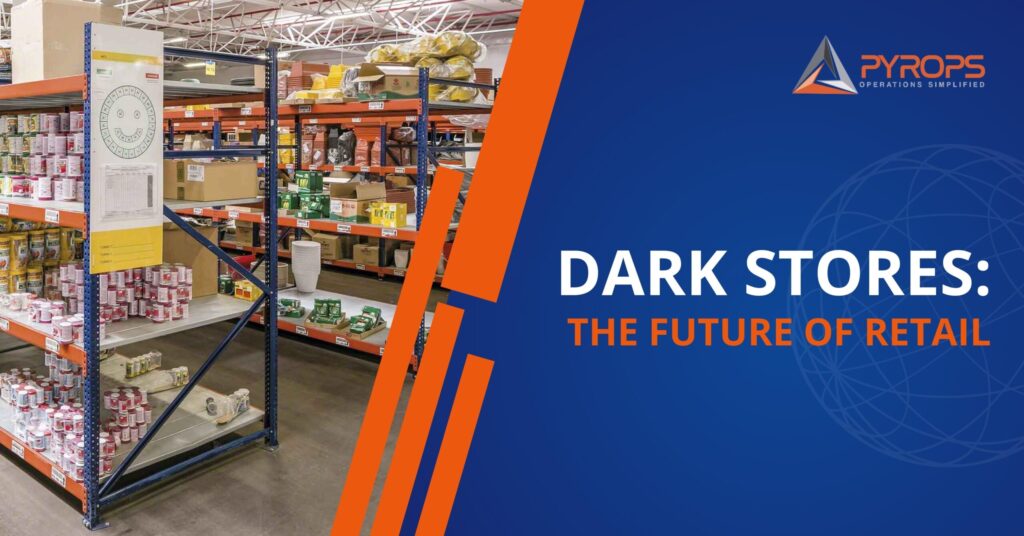
Dark Stores: The Future of Retail
Warehouse Management

Dark Stores: The Future of Retail Warehouse Management System

Customers today seek immediate satisfaction when shopping, which is why a significant number prefer the in-person retail experience. The ability to locate desired items, complete a purchase, and leave with the product in hand is a major draw. However, the challenges posed by the pandemic have hindered the seamless provision of this type of shopping encounter. Consequently, numerous physical retailers, both small and large, have embraced a strategy known as “dark stores.” These establishments utilize their retail spaces to serve as warehouse management systems where a substantial inventory is stored and orders are fulfilled. To enhance customer options, they leverage ecommerce warehouse management systems and warehousing management software, enabling features such as swift delivery and same-day pickup. Dark stores play a pivotal role in streamlining the handling of online orders within physical distribution centers, whether or not these centers are accessible to customers. Nonetheless, they notably elevate different facets of the retail experience, offering optimal convenience through efficient delivery and pickup options, along with an extensive product selection, all facilitated by the best software for warehouse management systems. What are Dark Stores? Traditional retail stores that have been transformed into local fulfillment centers are known as dark store models. Grocery stores, clothing labels, and home goods retailers are among them. Their layouts are designed and optimized for retail fulfillment of online orders. Picking and packing of all the ordered items take place in the dark warehouse. The customer either ship or pick up the orders. This approach provides retailers with versatile options catering to both local and external customers, facilitated by an efficient retail warehouse management system. The COVID-19 outbreak has had a major influence on the retail industry. To allow customers to purchase from a brick-and-mortar retail store without visiting a store, businesses are turning to dark stores as a future of stores.They provide the space in the dark warehouse needed to fulfill orders for shipping or prepare them for pickup without requiring customers to enter a crowded store. Why Are Dark Stores Becoming More Popular in the FMCG Industry? The FMCG industry faces a lot of unique concerns such as perishability and the need for a large number of SKUs. Managing SKUs and tracking perishability in a traditional store can be a time-consuming task. Dark stores meaning, on the other hand, focus primarily on click-and-collect functionality. They prioritize ecommerce warehouse management and employ FMCG warehouse management systems, enabling more efficient control over SKUs and addressing the unique concerns of perishable goods. Dark stores are extremely efficient because they do not require a specific location or design for the shopping experience. They don’t need any space to display in-store advertisements. Furthermore, the dark store model can serve multiple online retailers at the same time. Dark grocery stores keep a large volume of goods in a smaller space. It facilitates easy picking and packing. Fulfillment of orders occurs in dark warehouses. It allows merchants to make the most of available space for easy picking. Instead of the customers, store pickers now walk the aisles to find the products required in the customer order. Benefits of using Dark Stores The benefits of utilizing dark stores extend beyond a mere trend, emphasizing the advantages of employing warehouse management systems. These  include the ability to serve local customers. And also to expand the customer reach at a lower cost. Here are a few reasons why the benefits of warehouse management systems make dark warehouses a lasting and impactful strategy. Stocking Space Customers are not permitted inside functional dark stores. So, their layout can be designed to improve storage and picking capabilities. Improving storage capacity ensures a wider product assortment. Faster picking ensures that orders are filled more quickly without sacrificing order accuracy. Stock Levels Dark store models are significantly smaller than typical warehouses. So, it is much easier to keep track of inventory levels. Many dark stores also have Warehouse Management Software. It allows them to keep track of stock levels in real-time. This software also assists retailers in determining if they have too much inventory (known as “deadstock”) or not enough. This can result in stockouts. You can ensure that you always have an ideal level of inventory by streamlining the inventory control process. Order efficiency Dark stores can handle a big volume of orders because they are customer-free zones. So, pickers can also easily walk aisles without having to dodge shoppers and their trolleys. The activity is significantly faster than an end customer doing the same because the pickers are working on confirmed orders. And, they are more familiar with the layout. Dark store warehouse efficiency can be increased by automating fulfilment activities with the right technology, such as Warehouse Management Software (WMS). Order consumption Consumers are more likely to become long-term, loyal customers after they become familiarised with your brand’s speedy, trustworthy, and accurate delivery of items. Dark stores can easily provide customers with more delivery options. This results in increased sales and customer lifetime value. Dark Store Order Fulfillment Models For all types of retailers, dark store fulfilment is a strategic and productive alternative. However, to be fully sustainable, it should offer a variety of delivery and pickup options.  Below are the three most typical delivery options for dark businesses. 1. Home delivery Home delivery has become more common, particularly among local shops. Customers will benefit from fast, convenient, and frictionless delivery, especially when it comes to essentials. However, home deliveries can also be made by starting an online store and shipping orders to clients who are located further away. 2. In-store pickup Many classic dark businesses have a designated pick-up space located near the front entrance. Customers won’t have to walk through the dark store to get their product this way. This provides flexibility and reduces delivery costs. 3. Curbside pickup Customers can quickly pick up orders with curbside pickup. It typically consists of designated parking areas where a retailer staff will bring out the order. So the customer does not have to get out of their

Warehouse Management

The Rise of D2C Brands

  Retail in India is booming. The Indian retail business is expected to grow to $1 trillion by 2025, up from $750 billion in 2020. As the pandemic has accelerated the use of digital channels for shopping by Indian customers, direct-to-consumer (D2C) brands have grown tremendously. In direct-to-consumer marketing, corporates can create their products and sell them directly to consumers by eliminating other intermediaries. They can be e-commerce platforms, retail stores, or social media businesses. The purpose is to remove resellers and retail stores from the process before the final consumer. Why the D2C bandwagon? Profitability: By removing intermediaries, brands can lower distribution costs and have more control over profit margins. Also, it offers a better value proposition to consumers. Personalization: The brand retains control of the customer relationship, allowing it to manage the entire experience chain, from the website to the product delivery. Data Control: A high-quality customer connection necessitates real-time access to all data. To understand their customers’ preferences, patterns, trends, and demands must be identified. Fulfilment Technologies D2C brands have to invest significantly in the fulfilment experience to deliver an acceptable offering for the consumer, especially when the consumer is used to an Amazon / Flipkart kind of fulfilment experience. Their fulfilment is complex and predictability of the supply chain can be tricky unless the D2C brands invest in the right systems and processes. Thanks to technological advancements so these issues can be easily resolved. Order Management Systems When selling direct-to-consumer (D2C) products, a brand must invest in order management solutions. It offers benefits such as Maintain a centralised database of inventory spread across all locations Provide complete visibility of stock movement Allow for faster order processing by integrating all sales channels into a single platform. Implementation of Warehouse Management System (WMS) For smooth supply chain operations, a direct-to-consumer(D2C) business needs warehouse management software so that assists in Error-free barcode label driven and scan-based operations Optimize order picking & shipping for faster dispatches Provide real-time information on the inventory Return Management Solutions Returns are an integral part of e-commerce. Customers are more likely to shop with a retailer that offers a simple returns process. To increase productivity, D2C brands should invest in a return management solution that offers the following benefits: Create a return manifest to track shipments Quick return processing and capturing codes for further analysis Ensure quick re-listing for sales Warehouse management in D2C businesses A D2C business requires warehouse management software because it assists in acquiring goods and placing them on the appropriate shelf. They require WMS to enhance order picking & shipping and provide real-time inventory information as well. It can also be integrated with your existing ERP system. Here are a few tips for effectively managing your warehouse: Keep your warehouse organized An organized warehouse ensures smooth warehouse operations for your business. So, adhere to the following points to manage your warehouse: Place frequently selling items at an accessible spot Track products using barcodes and labels. Use a shelf system to make the most of your warehouse’s vertical space. Use the FIFO and FEFO methods. Stock level Maintaining product stock levels to ensure that you never run out of products. And, it should have the appropriate stock positions across multiple warehouses aligned with geographical demand and forecasting. You can also analyse sales of products based on seasons, months, and other parameters by marking out the minimum and maximum stock for each product in your warehouses. Forecasting & cycle analysis You should improve the forecasting and cycle analysis. The best benefit of improving product forecasting and performance cycle track is that there will never be a shortage or overflow of items. You’ll know when to restock and how much to reorder with smart data management. So, you can maintain optimal availability and inventory levels. Invest in warehouse technologies that automate and improve inventory management. It further improves the forecasting of product flow. Because of an effective warehouse management system, you can prepare for holiday seasons well ahead of time. Storage space By monitoring the process and looking for inefficiencies, you can improve the efficiency of your warehouse storage space. Meanwhile, ensure the maximum utilization of space. Warehouse optimization enhances accuracy, on-time delivery and the healthier bottom line. Pyrops WMS processes orders from all platforms in real-time. It allows inventory to be handled effectively and assures error-free & timely product deliveries. As a result, it provides a better customer experience and builds a solid relationship with customers.  

Warehouse Management

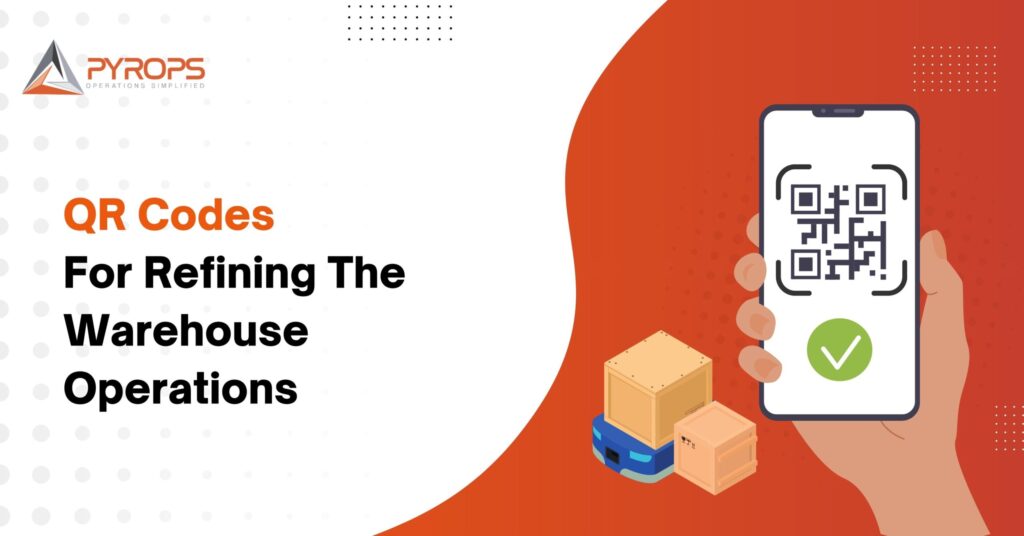
QR Codes For Inventory Management To Refine The Warehouse Operations

In the wake of COVID-19, warehouses look to implement scalable processes to manage unpredictable demand. Emerging technologies are focused on refining the warehouse operations through the utilization of advanced systems such as warehouse scanning systems and barcode warehouse management systems, with a particular emphasis on efficiently managing inventories. Traditional inventory management is slow, messy, and prone to errors. QR code inventory management is fast, accurate, and easy. QR code inventory management is the best solution for businesses that need to track their physical products efficiently. In the 1990s, Denso Wave Corporation innovated QR codes to encode additional information on product labels. These labels, integrated into a warehouse barcode system and utilized through barcode scanners for warehouse inventory, play a pivotal role in streamlining complex warehouse operations and expanding consumer outreach. This method serves as an effective means to store relevant product information in-store, especially for individuals who are used to spreadsheet-based solutions. WHAT IS A QR CODE? QR codes (short for “Quick Response”) are two-dimensional barcodes in a a warehouse management system. You can scan them in both directions i.e vertically and horizontally. Instead of a single linear sequence of black lines and white spaces, you’ll get small square codes that convey a lot of information about product details The QR code’s pixelated pattern strengthens its ability to store information. A single QR code stores more than 4,000 characters. The code can include product information as well as links to images, videos, and dedicated websites. Through the utilization of WMS scanners and a warehouse barcode scanning system, both employees and customers can effortlessly access crucial information about the specific part or product they are examining. QR codes offer enhanced versatility and capabilities compared to traditional one-dimensional barcodes. They can store a wealth of product information, including product details, batch numbers, serial numbers, and other relevant data. This makes them a valuable tool for warehouse management system (WMS) barcode scanners, enabling efficient inventory tracking, product identification, and data collection. QR codes for inventory management can assist you in tracking a batch number or determining where a product was manufactured or imported from. QR codes are also secure because the data can be encrypted. How To Use QR Code For Inventory Management? Establishing a warehouse inventory scanning system with QR codes may initially require time and present some challenges. However, once the system is set up, and users become acquainted with the platform, the invested effort proves to be undeniably worthwhile. Steps to set up the system: Use a QR code generator to create a unique QR code for each item in your inventory. Put a QR code on a sticker and stick it to each item in your inventory. This will make it easy to track each item. Store the QR code and important information about each item in your inventory software. To use the QR codes, just point your phone’s camera at them. This is much faster than looking up each item in your records. THE PERKS OF USING A QR CODE FOR WAREHOUSING Because QR Codes can hold more information than Barcodes, they were originally developed to modernize large inventory management systems. Today, they are used in many warehousing systems to manage large product volumes. Mainly, barcode scanners for warehouse management and the integration of barcodes in warehouse systems have become prevalent, especially for efficiently handling substantial product volumes. The following are some of the advantages of using QR code inventory management software for warehouse operations over barcodes. Readability QR codes are 360 degrees scannable and you can scan them from any direction. Assume you’ve placed a slanted QR Code on your product. You can scan it and it is directed to the key information. Storage Space When you encode information in a QR code, it does not grow vertically. Data modules are used to store the information contained in QR Codes inventory management system. As a result, the QR Code becomes denser as more information is added. As a result, QR Codes are small. It occupies less space and can easily place it on products of very small size. Data Storage QR codes for inventory tracking can store significantly more information and you can add up to 7,089 characters while one-dimensional barcodes can only store around 20-25 characters. Qr codes can store product information, website URLs, and plain text and maintain detailed information about every piece of Inventory. Damage Resistant An advantage of QR codes over barcodes is that a scanner can read partially damaged QR codes. Inventory management with QR codes can withstand up to 30% of damage. Miscounts caused by multiple scans of the same item are also excluded by QR codes. THE BENEFITS OF USING CODE BASED OPERATIONS Code-based operations are a powerful tool for warehouse management. They combine barcode scanners and warehouse management systems (WMS) to streamline processes, enhance visibility, and improve overall performance. This combination makes it easier to capture data, automate tasks, and make informed decisions, leading to a more efficient and proactive approach to warehouse management. The use of QR code inventory management software in warehouse operations bring some of the following benefits: Speed and Accuracy Code-based operations allow for faster and more accurate data transfer which benefits the tracking of materials. You can track exactly the items location and can help speed up the processes. It saves your organisation time in responding to inquiries and changes. As it provides timely data information about products, it enhances warehouse productivity and maintains accurate inventory management. Reduce Errors Data capture that is quick and accurate reduces paperwork and the risk of errors. If an employee scans the particular code, the item gets entered. This capability eliminates errors when manually entering a damaged code. Code-based scans are fast, reliable, and less time-consuming than manual data entry. When scanners read the codes, their graphics are quickly and accurately translated to a display without the errors often associated with manual data entry. CHALLENGES IN THE ADOPTION OF QR CODES It’s important to choose a system

Warehousing

Effective Inventory Replenishment Strategies

Inventory management is an integral part of the supply chain that influences customer loyalty and brand experience. Timely inventory availability and efficient inventory management are mission-critical in today’s fast fulfilment environment where the customer is spoilt for choice. An effective inventory replenishment strategies assists organizations in determining when a product requires restocking (before it runs out). It’s also used to figure out how much stock to add to your inventory by reordering and how much back stock to move to active inventory. WHAT IS INVENTORY REPLENISHMENT? The process of sourcing inventory from suppliers or moving inventory from reserve storage to picking locations is known as inventory replenishment. It is also known as stock replenishment. Inventory replenishment solutions can also be used to move inventory from reserve storage to primary locations within a warehouse. Customized inventory replenishment solutions can make it easier to transfer products from one warehouse to another to replenish stock levels. The goal of replenishment stock is to keep inventory moving through the supply chain at an optimal rate by maintaining efficient order and line-item fill rates. This procedure helps to avoid inventory overstocking. IMPORTANCE OF INVENTORY REPLENISHMENT A strong inventory replenishment strategy is essential for businesses to avoid costly supply chain problems like stockouts and overstocks. As mentioned earlier, stockouts don’t only mean lost sales, but can also damage customer loyalty and trust in a brand. An efficient inventory replenishment process helps companies quickly fulfill every order, meet customer demand, and increase profitability while lowering costs. Here are three reasons why retailers need to replenish their inventory. Avoid Stockouts If a merchant doesn’t replenish inventory on time, they risk having a stockout, which means that items will be out of stock when customers want to buy them. Backorders and stockouts can cause frustration to your customers. The easiest method to minimize common stockout difficulties is to keep safety stock, backup inventory, or emergency inventory on hand at all times. It is also a good idea in case a supply chain issue arises unexpectedly. Prevent overstocking A smart inventory replenishment process can also help prevent overstocking on inventory. Replenishing stock too early or without considering changes in customer demand or seasonality can lead to dead stock, which increases carrying costs by having unsellable inventory sit on shelves for too long. With the Economic Order Quantity (EOQ) Formula, you can minimize overstocking and expensive warehouse logistics costs by finding the optimal amount of inventory to have on hand to fulfil order demand. By calculating EOQ, a greater understanding of inventory, including safety stock, is gained. It helps you to keep inventory and warehousing costs down to a minimum. Reduce shipping costs Sending items from a single order in multiple shipments can increase shipping costs, create more packaging waste, and confuse customers. A best practice is to split your replenishment stock across fulfillment centers to keep inventory close to your customers. This can help you save money on shipping and improve your last-mile delivery.  INVENTORY REPLENISHMENT METHODS The right inventory replenishment method ensures that your warehouse never runs out of stock, while also avoiding excess inventory. It can also help to maximize warehouse space and reduce product misplacement, leading to reduced operational costs. Stockouts can cause huge problems in terms of retention rates and customer satisfaction. Therefore, it is crucial to choose the right inventory replenishment model for your business’s needs. Your choice of inventory replenishment method will depend on a number of factors, including your purchasing process, business model, product lines, suppliers, order fulfillment methods, and more. According to Harvard Business Review, 72% of stock-outs happen due to faulty in-store ordering and replenishing practices—retailers ordering too little or too late, generating inaccurate demand forecasts, or otherwise mismanaging inventory. An efficient inventory replenishment necessitates careful planning that includes demand forecasting, inventory analysis and other supply chain metrics like in-stock status and product velocity (the rate at which an SKU sells). There are three main inventory replenishment strategies that organizations can use: Reorder Point Strategy: Inventory reorder points ensure that you always have enough stock on hand to meet customer demand. Reorder points also allow for greater financial flexibility by keeping a minimum amount of inventory on hand at all times. Based on historical order data, the reorder point formula assists you in calculating the appropriate stock levels to meet customer demand. Inventory replenishment points are a key part of any replenishment supply chain or warehouse replenishment strategy. Top off Method: When your inventory includes a lot of fast-moving SKUs, the top-off method tends to be the most suitable inventory replenishment strategy. Using this strategy, inventory levels for a particular product are “topped off” in their respective storage locations during downtime. So that you can maintain a high inventory turnover rate without encountering stockouts for pickers. Periodic Inventory Replenishment Method: Inventory is restocked at regular intervals using the periodic inventory replenishment method. Inventory levels are only evaluated at specific times or dates, regardless of how low stock levels may fall before that point. This method is most commonly used in warehouses with large storage capacities. BEST PRACTICES OF INVENTORY REPLENISHMENT It takes time and effort to build a successful inventory replenishment strategy. The following three best practices should always be considered when planning and implementing effective inventory replenishment strategies. Implement The Right Technology Implementing the right technology is a simple way to gain real-time visibility into inventory levels. It allows you to make better inventory decisions across all the locations. You can easily keep track of inventory control, inventory trends. It also avoids common stock issues by using inventory automation tools for inventory optimization. Use inventory replenishment data Knowing which items are slow-moving and which are fast-moving allows you to make better decisions about replenishment of inventory. With this data, you can improve demand forecasts, calculate safety stock numbers. It also identifies inventory turnover rates for your products. It addresses the other issues that may have a financial impact on your business. Better Inventory Management Strategies Regular inventory audits, standard

Pyrops® WMS is a warehouse management software designed, developed, and implemented by Precision Pyramid Private Limited.

For more info visit: www.precisionpyramid.com

India Head Office

A-1, Forest Lane, Near Ghitorni Metro Station, MG Road, Sultanpur, New Delhi – 110030

Nepal Corporate Office

Precision Pyramid Nepal Private Limited 6th Floor, Radha Bhawan, Tripureshwar, Kathmandu, Nepal

Contacts

Follow us

Scroll to Top