
Warehouse Operations Simplified

Warehouse Management System

Warehouse Management System

Top 10 Things to Do: Peak Season Warehouse Fulfillment

Peak season brings not just more orders, but more pressure—on people, processes, systems, and customer expectations.The difference between chaos and smooth execution? Preparation. Here’s a time-staggered checklist to ensure your warehouse is ready to conquer peak volumes without breaking a sweat: 3 Months Prior: Strategy & System Readiness 1. Forecast Volume Surge by Category & ChannelCollaborate with sales, marketing, and planning teams to anticipate volume spikes, new product launches, and promotions—down to the SKU level. 2. Stress-Test Your WMS and Fulfillment WorkflowsSimulate high-volume scenarios. Practice wave picking, returns handling, and order routing under pressure. Identify workflow bottlenecks early. 2 Months Prior: Space & Staffing Preparation 3. Reorganize Storage Layouts for Fast MoversRelocate high-demand SKUs closer to dispatch zones. Set up temporary pick faces for fast-selling or promotional items. 4. Plan & Train Temporary WorkforceBegin hiring and onboarding temporary staff. Cross-train them for picking, packing, and returns to maintain flexibility. 5. Check Equipment HealthAudit handhelds, printers, scanners, and packing stations. Order spares and fix underperforming devices before they become a problem. 1 Month Prior: Final Optimization 6. Review and Refine Picking StrategiesAdapt to wave, zone, or batch picking as needed. Aim to reduce picker travel time and boost picking efficiency. 7. Set Up Additional Packing & QC ZonesInstall extra packing lines or quality control areas to avoid backlogs. Expand shifts if required by projected volumes. 8. Lock Down Supplier & Courier SLAsConfirm commitments from suppliers and logistics partners. Ensure they’re equipped to handle the increased load. D-Day: Peak Season Kickoff 9. Run Real-Time Dashboards and Exception AlertsMonitor pick rates, dispatch cut-offs, and returns in real time. Set up alerts for SLA breaches or operational slowdowns. 10. Enable Backup ProtocolsHave contingency plans for system outages, courier delays, or inventory mismatches. Make quick, informed decisions to minimize impact. Ongoing Monitoring: Daily Pulse Begin each day with a quick team huddle to review key metrics.Use WMS data to adjust shift planning and workforce allocation.Track returns, damages, and delays to make real-time improvements. Final Thought Peak season is not a test of endurance—it’s a test of preparation, precision, and performance.The best-run warehouses don’t just survive peak—they thrive through it. Want a peak-readiness audit for your warehouse?Let our experts help you benchmark, prepare, and perform. Read More Read SCM News
Warehouse Management System

How to Determine Whether You Need a WMS

Warehouse Management Systems (WMS) are no longer reserved just for large enterprises or multinational supply chains. The need for a WMS is driven more by complexity than company size.So how do you know if it’s time to invest in one?Let’s break it down across five key types of complexity that act as clear indicators for when a WMS becomes essential. 1. Size Complexity – Large Warehouses, More Zones, More People If your warehouse is spread across tens of thousands of square feet, has hundreds of storage locations, or multiple floors/racks/zones, it’s likely you’re already losing time in: ExampleA furniture importer managing a 60,000 sq. ft. warehouse often misplaced bulky SKUs. Items were in stock, but teams couldn’t find them quickly. After implementing a WMS, every item had a mapped location, and average pick times dropped by 40%. WMS BenefitBin-level visibility, zone-wise picking, and route optimization. 2. SKU Complexity – High Variety, Expiry, Serial Numbers, and More Managing 500 SKUs is very different from managing 5,000—especially when: ExampleA D2C electronics brand selling routers and soundboxes couldn’t manage warranty and RMA returns efficiently. Serial tracking in their WMS helped trace every device from receipt to dispatch to after-sales service. WMS BenefitTracks each unit uniquely, supports batch, serial, expiry, and decimal inventory with precision. 3. Process Complexity – Tight SLAs, QC, Cross Docking, and Custom Logic If your warehouse has multiple teams and a mix of workflows, you likely struggle with: ExampleA fashion retailer needed FEFO-based picking for perishable stock, kitting for combos, and different QC flows for returns. A WMS automated all these based on rules set per category and customer. WMS BenefitWorkflow automation, rule-based task assignment, real-time alerts, and SLA tracking. 4. Fulfillment Complexity – Multi-Location, Multi-Channel, Multi-Client If you: …you’ve likely faced: ExampleA 3PL company serving 5 brands from 3 cities couldn’t keep inventory segregated and ended up shipping Brand A’s stock to Brand B’s customer. A WMS gave client-level stock visibility and order routing based on location and priority. WMS BenefitChannel-agnostic inventory view, rules for allocation/reservation, and accurate location-level tracking. 5. Volume & Velocity Complexity – High Order Volume, Frequent Stock Movement If your team spends most of their time: …then you’re dealing with high-velocity pain points that only automation can solve. ExampleAn FMCG distributor with 4,000 daily dispatches had a return rate of over 12% due to wrong picks and substitutions. After deploying WMS with barcode-based picking, error rates dropped to 1.4%. WMS BenefitScan-based accuracy, picker-wise performance tracking, load planning, and shift-wise analytics. Bonus Complexity: Lack of Visibility You don’t need to have every complexity listed above. Sometimes, the biggest clue is: If these sentences sound familiar, your warehouse is already operating in the dark. A WMS brings visibility, audit trails, and accountability—day 1 onward. So… Do You Need a WMS? If you nodded “yes” to any of these scenarios, it’s time to stop managing your warehouse like it’s 2010.A modern WMS isn’t just about inventory. It’s about: And as your business scales, it becomes your foundation for future growth. Want Help Evaluating Whether You’re WMS-Ready? Let’s run a free complexity assessment tailored to your operations.\ Read More Read SCM News

Warehouse Management System

Live Inventory Visibility: Why It Matters More Than Ever

Introduction: The Age of Instant Expectations Customers today don’t wait. Whether you’re fulfilling to distributors, retailers, or end-users, delays, inaccuracies, and unavailability can crush trust—and revenue. In this environment, inventory visibility isn’t a luxury. It’s a competitive edge. Yet, many businesses still operate with: Let’s unpack why live inventory visibility is no longer optional—and how modern WMS solutions make it possible. What Is Live Inventory Visibility? Live inventory visibility means knowing, in real-time: This includes inventory: And all of it available on a dashboard, updated by real-time transactions. What Happens Without It? Businesses without live visibility experience: Problem Impact Stockouts & over-ordering Lost sales or working capital locked in excess High returns due to wrong items Increased logistics costs and customer churn Internal confusion Teams spend hours checking and verifying stock Inaccurate forecasts Missed procurement and planning opportunities Low confidence in systems Staff bypass systems, leading to worse errors The Benefits of Live Inventory Visibility How WMS Delivers It A modern Warehouse Management System (WMS) ensures real-time visibility by: Real-World Example: Before vs. After Before WMS: “An order comes in, but the item is missing. Teams run around looking. Turns out, it was returned last week but still in QC hold—never updated in the system.” After WMS: “Order comes in. WMS shows 12 units in Zone B, all available. Picker is guided to the bin. Order packed and dispatched—within 15 minutes.” Final Thoughts: Visibility = Control In today’s supply chain, the only constant is change—new SKUs, new locations, unexpected disruptions. Without live inventory visibility, every decision is a guess. But with it? You take back control: Start with a demo. See how our WMS can deliver real-time visibility—and peace of mind. Read More Read SCM News

Warehouse Management System

Demystifying Quick Commerce, Rapid Commerce, and E-commerce — What’s the Real Difference?

Delivery speed has become a battleground in the e-commerce world. What once was a standard 3–5 day delivery is now considered slow. Consumers, especially in urban centers, expect same-day or even 10-minute deliveries. To meet these expectations, businesses are transforming their supply chain design, infrastructure, and operational strategy. In this article, we break down the three main e-commerce delivery models—Standard, Quick Commerce, and Rapid Commerce—and explore how each impacts the backend supply chain, geography, environmental footprint, and long-term sustainability. The 3 Layers of E-commerce Delivery Models 1. Standard E-commerce Delivery (1–5 Days) Examples: Amazon Standard Shipping, Flipkart, Myntra, Lazada Supply Chain Design: Strengths: Challenges: 2. Quick Commerce / Q-Commerce (10–30 Minutes) Examples: Zepto, Blinkit Supply Chain Design: Strengths: Challenges: 3. Rapid Commerce (Same-Day or 1–12 Hours) Examples: Amazon Prime, BigBasket Express, Instacart Supply Chain Design: Strengths: Challenges: Why Some Delivery Models Succeed Only in Specific Geographies Factors that influence delivery model viability: Which Model Is the Most Environmentally Friendly? Delivery Model Environmental Impact (Lower is Better) Why Standard E-com ✅ Lowest Fewer trips, consolidated loads, optimized line-haul routes Rapid Commerce ⚠️ Medium More delivery trips, but optimized routing and batch delivery possible Quick Commerce ❌ Highest 1-trip per order, limited load efficiency, high packaging & battery waste Conclusion: From a carbon footprint perspective, standard e-commerce is the most sustainable. However, rapid commerce can find a balance if deliveries are intelligently batched and eco-friendly transport (like e-bikes) is used. Final Thoughts: Strategy vs. Speed The choice of delivery model isn’t just about logistics—it’s a strategic decision: Ultimately, the right delivery model depends on what your customers want—and what your business can deliver consistently, profitably, and responsibly. Read More Read SCM News

Knowledge Series, Warehouse Management System

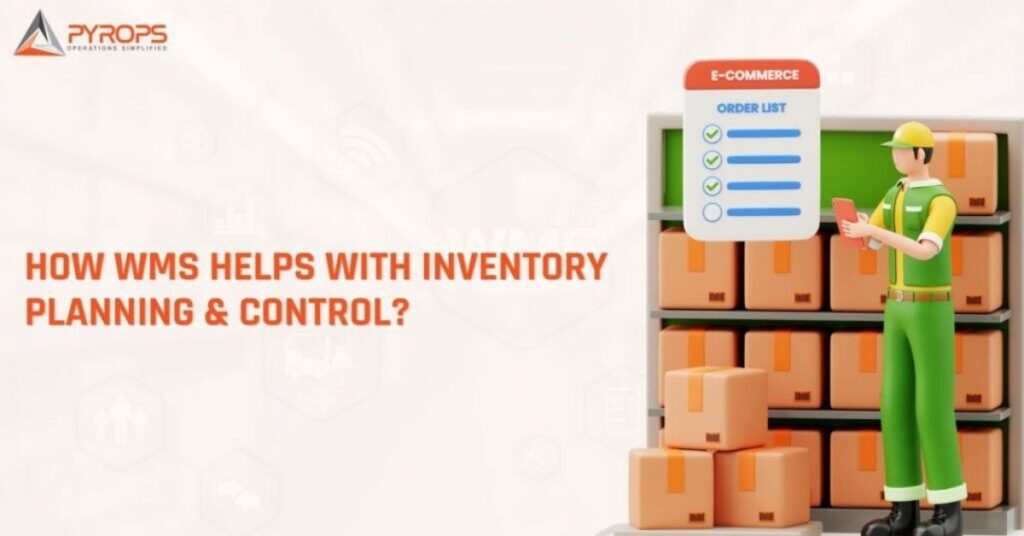
How WMS helps with Inventory Planning & Control?

What Is Inventory Planning and Control? Inventory planning refers to the forecasting and decision-making process to determine what products to stock, in what quantity, when to replenish them and at which location.  Inventory control, on the other hand, involves the day-to-day management of stock: knowing where items are, in what quantity, and in what condition—ensuring accuracy and minimizing shrinkage. A WMS sits at the center of both, turning physical operations into data-driven, rules-based workflows Key Ways WMS Aids Inventory Planning 1. Real-Time Visibility Across All Inventory States A WMS provides granular, real-time visibility into inventory: This visibility enables planners to make decisions based on actual availability rather than guesswork. 2. Historical Data for Demand Forecasting By capturing rich historical data—order volumes, SKU movement rates, pick frequencies—a WMS feeds inventory planning tools with accurate inputs. This data helps in: Planners can refine forecasts and adjust reorder points, improving service levels while reducing excess stock. 3. Location-Based Inventory Optimization Modern WMS platforms allow zoning, bin classification, and slotting—ensuring that: This optimization reduces handling time and errors, impacting how quickly stock turns around. 4. Support for Multiple Inventory Types A WMS handles complex inventory types such as: By tracking each unit’s attributes, the system ensures that aging stock is consumed first and that expiry/damage risks are minimized—feeding into better replenishment planning. How WMS Improves Inventory Control 1. Accurate Stock Counts with Cycle Counting WMS allows configurable cycle counting, often replacing physical inventory audits: This ongoing accuracy reduces stockouts, improves customer service, and enhances trust in data. 2. Real-Time Reconciliation of Goods Movements Whether it’s inbound, outbound, or internal movement, a WMS: This digital trail helps identify process gaps and enforces accountability—especially critical in large warehouses or multi-location networks. 3. Shrinkage and Discrepancy Detection A WMS can track reasons for stock discrepancies, such as: It flags abnormal patterns for review, enabling timely action and reducing untraceable shrinkage. 4. Integration with ERP, TMS, and Planning Systems The WMS acts as the execution engine, syncing with planning and financial systems to close the loop: This integration ensures aligned inventory plans and coordinated decisions across departments. The Business Benefits When WMS is used effectively for inventory planning and control, businesses experience: Benefit Impact ✔ Reduced stockouts Better order fulfillment and customer loyalty ✔ Lower carrying costs Less working capital tied in inventory ✔ Improved stock accuracy Fewer write-offs and returns ✔ Higher warehouse productivity Faster picking, packing, and restocking ✔ Leaner operations More agility with seasonal or demand shifts Final Thoughts To summarize, inventory is no longer something to simply “store”—it’s something to strategically manage. A well-implemented Warehouse Management System helps transform warehouses from cost centers into competitive advantages. By bringing discipline to control and insight to planning, a WMS empowers businesses to make smarter decisions, reduce waste, and serve customers better. Read More Read SCM News

Warehouse Management System

Why are Handheld terminals so expensive if they are just another mobile device?

Handheld terminals (HHTs) are an integral component of warehousing, quietly powering the movement of goods across the globe. What started as clunky barcode scanners has evolved into intelligent Android-powered devices—reshaping how inventory is handled, orders are picked, and supply chains are run. This article explores the evolution of HHTs, how Android changed the game, why these devices are costly, and which companies are leading innovation in this space. A Brief History: From Laser Guns to Mini Computers In the early 1990s and 2000s, HHTs were primarily: These devices were rugged but rigid—hard to integrate, expensive to update, and tied to legacy software stacks. The Android Revolution: A Game-Changer for Warehousing The introduction of Android as the default OS for modern HHTs in the mid-2010s was transformative: Benefits of Android-Powered HHTs: In short, Android helped bridge the gap between warehouse workflows and modern IT systems. What’s Inside a Modern Handheld Terminal? Today’s HHTs are more than barcode scanners—they are rugged smartphones with specialized capabilities. Here’s what makes them tick: Component Purpose ???? Barcode/QR Scanner Captures product or bin information ???? Rugged Battery Lasts a full shift or more ???? Touchscreen Display User-friendly interface for WMS apps ???? WiFi/4G/5G Module Real-time sync with backend systems ???? GPS/Bluetooth/NFC Location tracking, pairing, and validation ????️ Rugged Build Shockproof, waterproof (IP65–IP67 rated) ???? OS + MDM Software Android OS + Mobile Device Management tools Why Are These Devices So Expensive? Many businesses wonder: if these are “just Android phones,” why do HHTs often cost  ₹30,000–₹1.2 lakhs each? Key Reasons: Who Are the Big Players? Several global and Indian companies are innovating in the HHT space: Global Leaders: Final Thoughts The HHT has evolved from a basic barcode scanner into a smart logistics companion. Android played a pivotal role in this transformation—opening the door to real-time data, mobile-first apps, and cloud-driven warehouse operations.While they may seem pricey, HHTs offer long-term ROI by improving productivity, reducing errors, and enabling leaner operations. As warehouses become more digitized, these devices will continue to be the frontline enablers of smart supply chains.

Warehouse Management System

The Most Innovative Companies in Consumer Goods Packaging

What Makes a Company Innovative in Consumer Goods Packaging? The most innovative companies in consumer goods packaging aren’t just creating boxes—they’re crafting experiences. Whether it’s about sustainability, functionality, or visual appeal, these brands understand that packaging is the first interaction a consumer has with their product. From global tech giants to India’s boldest startups, these brands are redefining the standards. But which companies are leading the charge? Keep reading—some of these may surprise you. Why Does Packaging Innovation Even Matter? Packaging is no longer just a protective shell—it’s part of the brand experience. Here’s why smart brands invest in packaging innovation: Who Are the Most Innovative Companies in Consumer Goods Packaging Globally? Here are the global frontrunners who are rewriting the packaging playbook: Company Packaging Innovation Impact Why It Works Apple Minimalist, precision-fit boxes with recyclable materials Reinforces the premium feel of the product The iPhone box is almost as iconic as the phone itself Glossier Instagram-friendly pink bubble pouches, reusable, includes personal notes Turns every delivery into a shareable moment Appeals to millennials and Gen Z via aesthetics Amazon Machine learning to optimize box size, frustration-free packaging, eco mailers Reduces waste, improves delivery efficiency Streamlines operations while promoting sustainability IKEA Flat-pack modular packaging, minimal air space, visual instructions Easy transport, storage, and minimal waste Smart logistics for global scalability Lush Cosmetics “Naked” packaging (e.g., shampoo bars), recycled pots, return-reuse policy Reinforces eco-conscious branding Customers engage with and support sustainability efforts Uniqlo Tote-style paper bags, reusable packaging, uniform branding Enhances shelf appeal, consistent brand feel Functional yet aligned with eco-friendly values Ritual Transparent bottles, magnetic closures, refillable subscription boxes Adds elegance, encourages reuse Looks good on the shelf and saves waste Harry’s Drawer-style boxes, ergonomic designs, easy-open seals Delivers a premium unboxing experience Practical meets beautiful for daily-use products Which Indian Brands Are Revolutionizing Consumer Goods Packaging? India is no less innovative when it comes to packaging. Here’s how homegrown brands are setting trends: Company Packaging Innovation Impact Why It Works Paper Boat Doy packs with nostalgic storytelling and unique shapes Emotional connection, high shelf recall Blends tradition with convenience Forest Essentials Gold-embossed boxes, glass jars, biodegradable outer packaging Luxury feel and gift-friendly Appeals to premium Ayurveda consumers BoAt Bold, edgy packaging with reusable boxes Builds brand identity, resonates with youth Tech-first design that’s fun to unbox The Whole Truth Foods Clean, honest labeling with minimalistic design Instills instant trust in health-conscious buyers Transparency as a unique selling point SuperBottoms Zero plastic; cloth-based, paper-wrapped packaging Appeals to eco-conscious parents Every element of packaging is thoughtfully sustainable RAW Pressery Sleek PET bottles with clear, healthy branding Strong shelf presence Visual branding aligned with lifestyle goals Bombay Shaving Company Gifting-ready kits with organized compartments Makes self-care gifting easier and elegant Packaging reflects luxury and functionality Epigamia Funky yogurt cups with flavor-specific colors Stands out on shelves, appeals to younger consumers Vibrant colors draw attention in cold-storage aisles Minimalist Clinical, no-nonsense packaging inspired by pharma Science-first appeal in beauty-heavy category Simplicity builds authority and consumer trust Open Secret Resealable snack packs with warm, family-friendly colors Useful for gifting and daily snacking Packaging encourages repeated use and purchase What Can We Learn from These Packaging Pioneers? These brands prove that packaging isn’t an afterthought—it’s strategy. Whether you’re in tech, skincare, food, or apparel, there’s a consistent pattern: Final Thoughts: Is Your Brand’s Packaging Future-Ready? The most innovative companies in consumer goods packaging understand that the box, pouch, or bottle isn’t just a container—it’s communication. It’s the first “hello” to the customer. As consumer expectations evolve, so must packaging—towards more personalization, more sustainability, and more impact. Whether you’re a startup or a legacy brand, now’s the time to think outside the box—literally. Read More Read SCM News

Warehouse Management System

Behind the Scenes of the IPL: The Untold Story of Logistics & Supply Chain Excellence

When the floodlights blaze and the stadium erupts with cheers during an IPL match, what most fans don’t see is the enormous, high-stakes logistics machine operating behind the scenes. The Indian Premier League isn’t just a sporting event—it’s one of the largest logistical productions in the world of sports, played across multiple cities with tight timelines, high-value equipment, and a demand for zero error. Let’s pull back the curtain and explore how supply chain and logistics play an unseen, yet vital, role in every six, every cheer, and every strategic timeout. Team Travel & Movement: A Mobile Supply ChainEach IPL team travels across cities over a span of nearly two months. From chartered flights to buses, luggage vans to mobile fitness units, the logistics of moving players, coaching staff, personal gear, and training equipment requires surgical precision. The travel schedule is often modified based on match results or weather—leaving very little room for error. Stadium Readiness: A New Fulfillment Center Each DayEach venue becomes a mini city before match day. From hospitality zones to merchandise booths, LED signage to broadcasting infrastructure, everything is shipped, set up, tested, and torn down again for the next match in another city. Key Items Tracked & Managed: Ground & Pitch Preparation: The Manufacturing Line of CricketEvery pitch is different—and sacred. The pitch needs a certain number of days to “rest” before a match. Grounds teams are flown in with equipment to manage soil compaction, moisture, and wear & tear. This also includes maintenance of practice pitches, outfield readiness, and net arrangements. Associated Logistics: Merchandise & Retail Logistics: Demand Spikes on Every MatchdayEvery city sees a spike in demand for jerseys, caps, fan gear, and collectibles when a home team plays. Inventory has to be forecasted, stored, and distributed to pop-up stalls, online delivery centers, and stadium shops. Challenges Handled: Reverse Logistics: End of Match, End of SeasonPost-match or post-season, the entire setup needs to be disassembled, repackaged, returned, or redeployed. This includes broadcast gear, camera equipment, sponsorship branding, and even unused merchandise. Final Thoughts: IPL Logistics is a Case Study in Supply Chain ExcellenceThe IPL is not just a cricket league. It’s a moving supply chain with multiple touchpoints, real-time updates, constant movement, and a demand for flawless execution. So, next time you see a six being hit or a player sprinting between the wickets, remember—there are silent supply chain heroes behind the action. Read More Read SCM News

Warehouse Management System

Will Warehouses be operated by AI agents in future? Which jobs are at risk?

Will Warehouses Be Operated by AI Agents in the Future? In the wake of the AI revolution, warehouses — the backbone of supply chains — are standing on the edge of a monumental shift. From barcode scanners to robotics, we’ve already seen technology reshape warehouse operations. But the next leap? AI agents — intelligent systems capable of reasoning, learning, making decisions, and autonomously coordinating complex tasks. The big question is: Will warehouses eventually be run by AI agents? If so, what does that mean for jobs, processes, and systems as we know them? Let’s unpack this vision of the future. What Are AI Agents? AI agents go beyond traditional automation. These are systems that can interpret data and environments in real time, make decisions and take action independently, learn and improve with experience, and coordinate with other agents or human teams. Think of them as virtual warehouse managers, supervisors, or floor operators who never sleep, constantly optimize, and learn from every task. The Inevitable Evolution: Why AI Agents Make Sense Warehouses are under pressure like never before — faster delivery promises, soaring SKUs, tight labor markets, and customer expectations for perfect accuracy. AI agents can offer transformative benefits: In short, AI agents bring proactive intelligence to every edge of the warehouse — from receiving docks to shipping bays. Which Jobs Are at Risk? While the term “job loss” often sparks fear, the story is more nuanced. Here’s a breakdown of how different roles may evolve: How Far Away Is This Future? Some aspects of AI-driven warehousing are already here: robotics integrated with WMS, predictive analytics for demand forecasting, and vision-based AI for defect detection. But fully autonomous warehouses operated by AI agents — from inbound to outbound — will likely take 10–15 years to become mainstream, depending on the complexity of operations, investment appetite, and technological maturity. Adoption will likely follow a hybrid approach first: human-AI collaboration zones, gradually shifting to AI-first models in certain areas like micro-fulfillment centers or returns hubs. What Needs to Change? Conclusion: AI Agents Are Coming — But You’re Still in Control The rise of AI agents in warehousing isn’t about replacing humans — it’s about reimagining how humans and intelligent systems work together. Businesses that embrace this shift early, invest in AI-aligned training, and adopt flexible systems will gain a competitive edge. In the not-so-distant future, your warehouse could be a place where AI agents dynamically orchestrate operations, while your people focus on creativity, strategy, and customer delight. It’s not science fiction — it’s just the next evolution in supply chain intelligence. Read More Read SCM News

Warehouse Management System

Trump Tariffs and Their Impact on Global Supply Chains

The reimplementation and escalation of tariffs under President Donald Trump’s second term in 2025 have profoundly influenced global supply chains. These measures, aimed at protecting domestic industries and reducing trade deficits, have led to significant shifts in manufacturing, sourcing strategies, and international trade relations. Escalation of Tariffs and Trade Wars In early 2025, the U.S. dramatically increased tariffs on Chinese imports, with rates soaring to 145%. China retaliated with tariffs of up to 125% on U.S. goods and imposed restrictions on the export of critical rare earth elements essential for high-tech industries. These actions intensified the trade war, leading to increased costs and supply chain disruptions across various sectors. Strategic Shifts in Supply Chain Management In response to the heightened tariffs, companies are reevaluating and adjusting their supply chain strategies: Sector-Specific Impacts Economic Consequences The tariffs have led to increased costs for manufacturers and consumers, reduced employment in certain sectors, and a decline in economic output. Studies indicate that the benefits of protecting specific industries are outweighed by the broader negative impacts on the economy. Conclusion The Trump administration’s tariff policies have significantly reshaped global supply chains, prompting businesses to adapt through reshoring, diversification, and strategic partnerships. While aimed at bolstering domestic industries, these measures have introduced complexities and challenges that continue to influence international trade and economic stability. Read More Read SCM News

Pyrops® WMS is a warehouse management software designed, developed, and implemented by Precision Pyramid Private Limited.

For more info visit: www.precisionpyramid.com

India Head Office

A-1, Forest Lane, Near Ghitorni Metro Station, MG Road, Sultanpur, New Delhi – 110030

Nepal Corporate Office

Precision Pyramid Nepal Private Limited 6th Floor, Radha Bhawan, Tripureshwar, Kathmandu, Nepal

Contacts

Follow us

Scroll to Top